
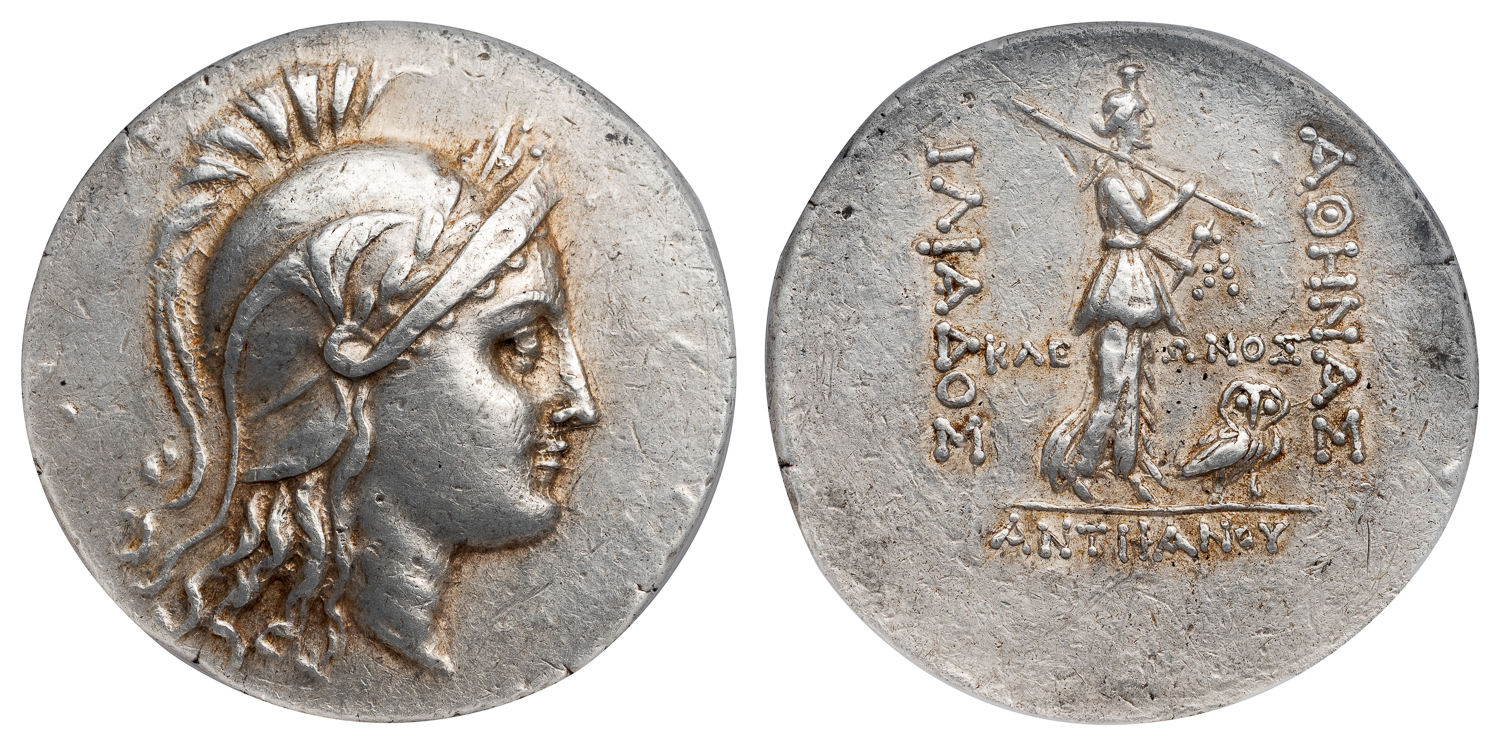
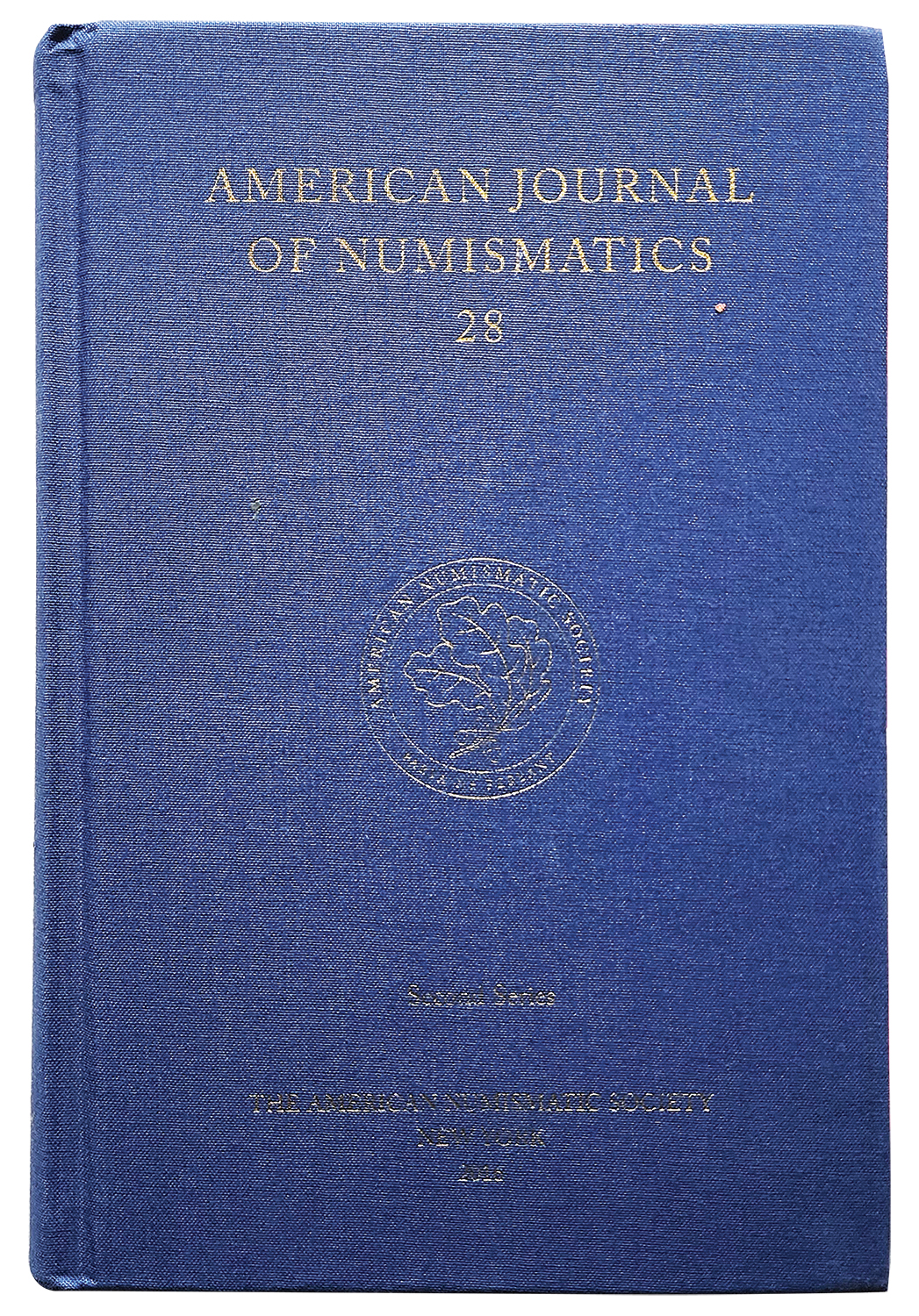
ILIUM TROY SILVER TETRADRACHM – 1 OF 2 KNOWN ISSUE OF KLEONOS PUBLISHED BY ELLIS-EVANS – AU NGC GRADED GREEK TROAS PUBLISHED AND PLATE COIN (Inv. 21132)
$16,500.00
21132. TROAS. ILIUM (TROY). Ca. 188–133 BC.
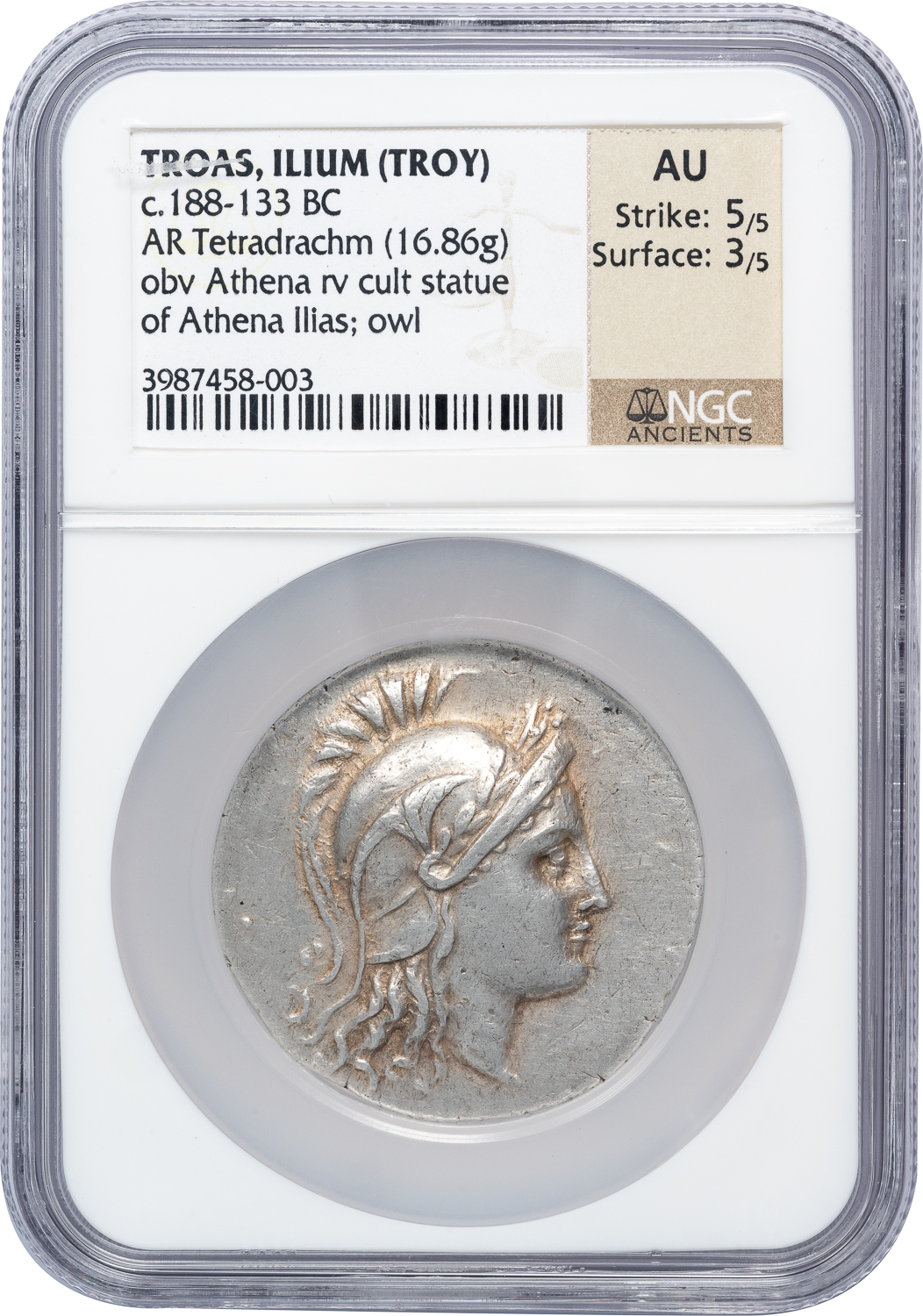
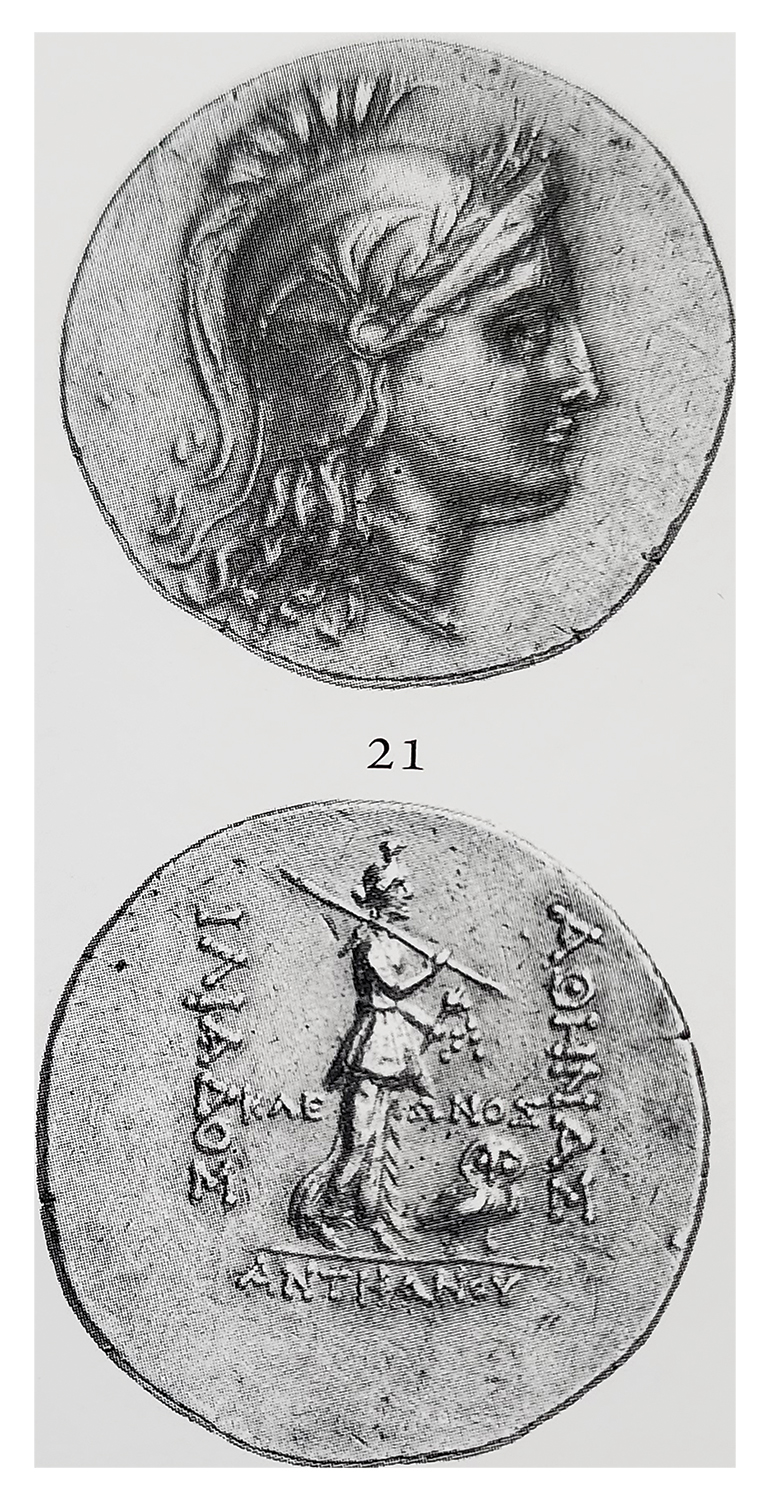
Silver Tetradrachm, 16.86 g, 33 mm.
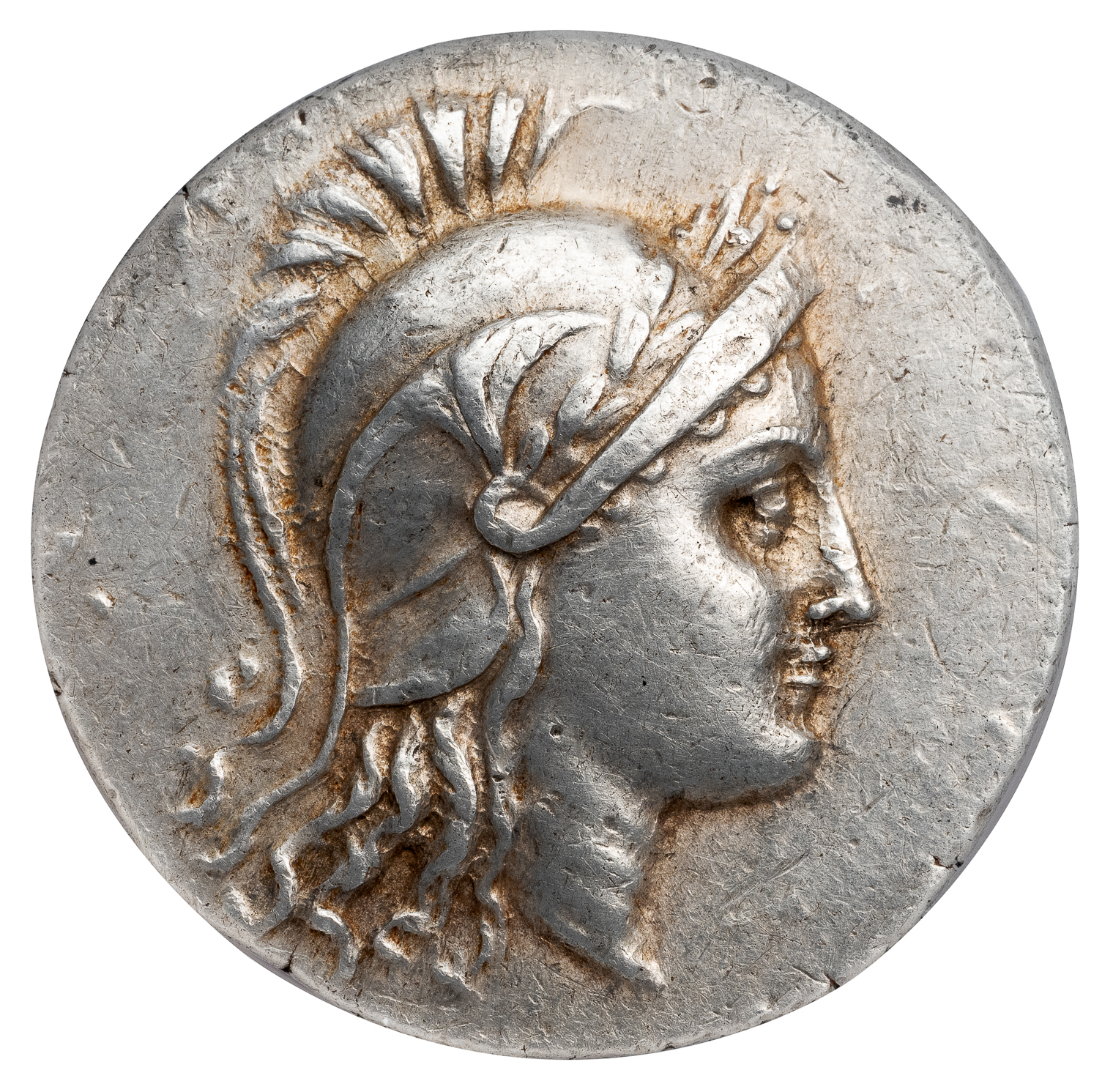
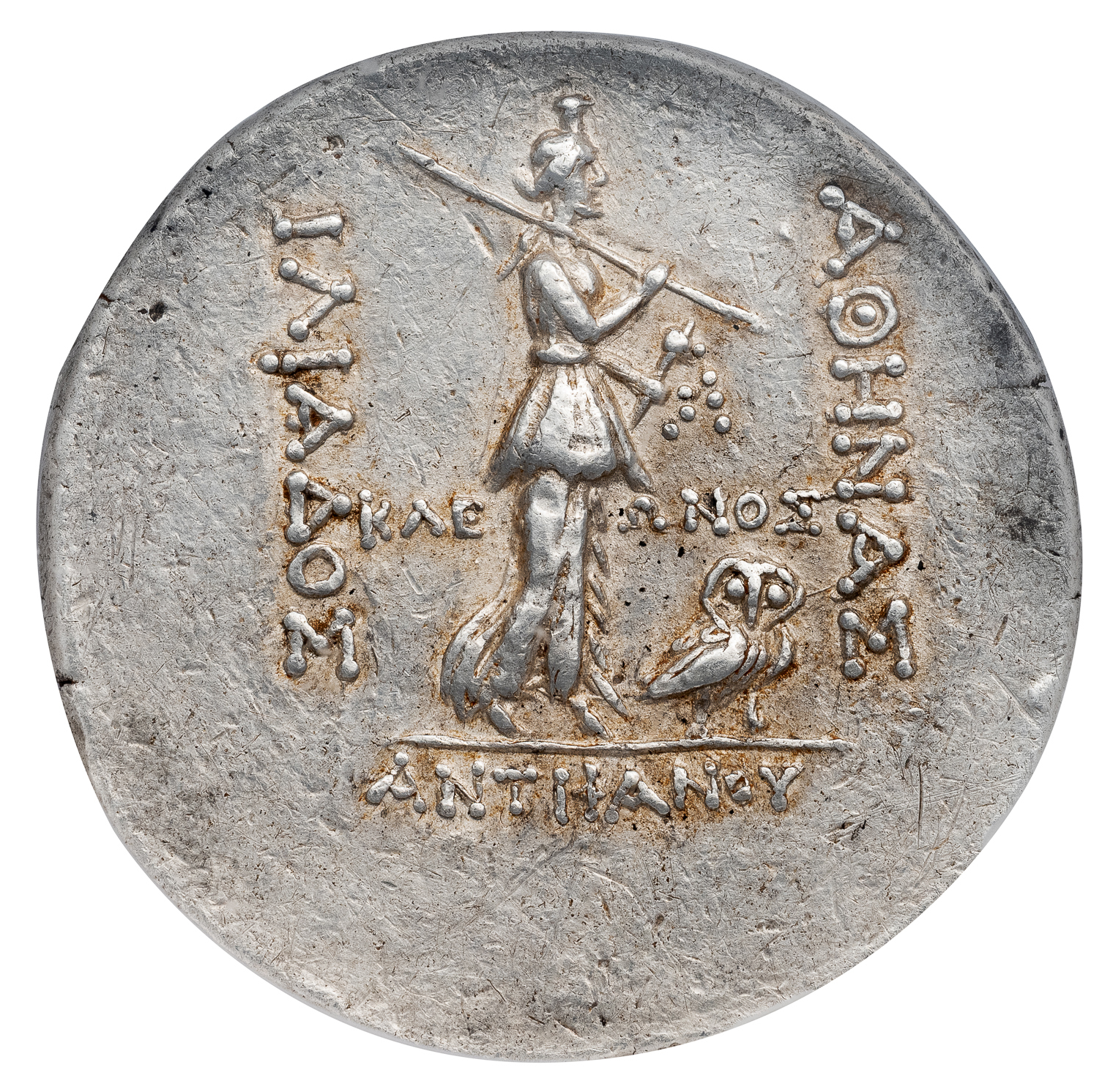
Obv. Head of Athena right, wearing laureate Attic helmet with three crests. Rev. ΑΘΗΝΑΣ ΙΛΙΑΔΟΣ, Athena Ilias striding right, holding a filleted spear on her shoulder and a distaff; facing owl at her feet, ΚΛΕ–ΩΝΟΣ field, ΑΝΤΙΦΑΝΟΥ in exergue.
Bellinger, Ilium, T 53; A. Bellinger, “The First Civic Tetradrachms of Ilium,” MN VIII (1958), 18.
Ex Vilmar Numismatics (inv. 9801, 2015) = Künker 262, 3/13/2015, lot 7168.
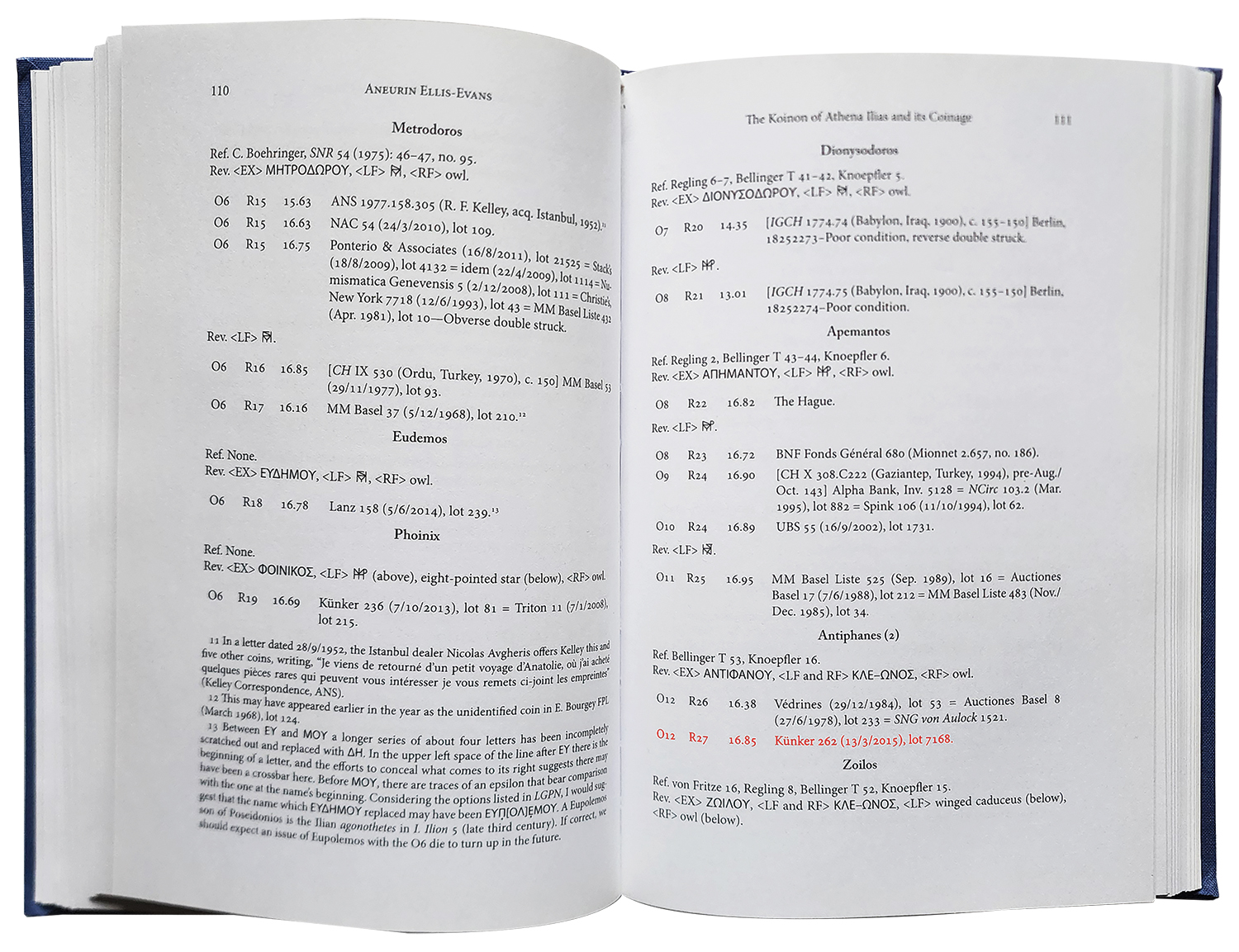
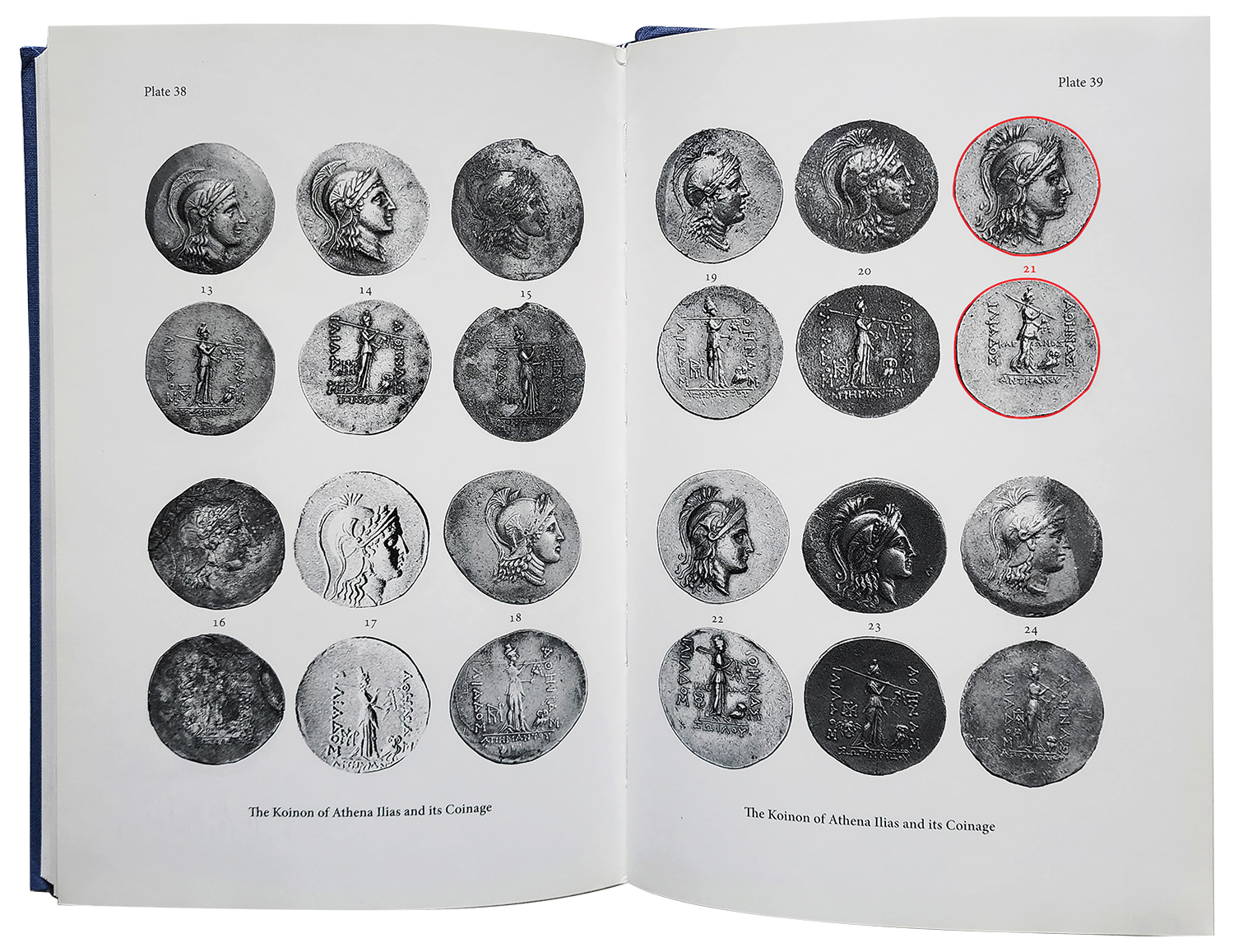
Published: Aneurin Ellis–Evans, “The Koinon of Athena Ilias and its Coinage,” AJN 28 (2016), p. 111 (O12/R27) and pl. 39.21 (this coin listed and illustrated).
NGC graded AU, Strike 5/5, Surface 3/5, an extremely rare variety signed by Kleonos, son of Antiphanos, with only one other specimen recorded in the die study of Ellis–Evans.
This series of Hellenistic tetradrachms was minted at Ilium, the Troy of Homeric legend and the Trojan War. The city prospered by remembering its past and the cult of Athena. The koinon of Athena Ilias was a cult association formed between 311/10 BC and 306 BC to organize the worship of the goddess, maintain her sanctuary at Ilium (Troy), and celebrate her annual festival—the Panathenaia. The organization is known to have included at least twelve member cities, ten of which were located in Troas or Mysia: Abydus, Alexandreia Troas, Assus, Dardanus, Gargara, Ilium, Lampsacus, Parium, Rhoiteium, and Skepsis. The Bithynian cities of Myrleia and Chalcedon were also members for a brief period in the third century BC. The organs of the koinon consisted of a synedrion (council) and a board of five agonothetai (superintendents) who were responsible for underwriting the costs of the Panathenaia.
In the second century BC, the koinon produced an attractive spread–flan coinage in the name of Athena Ilias, which was probably struck in connection with the Panathenaia. It is unclear whether the names (here, Kleon, son of Antiphanes) on the coins are those of “agonothetai” or of other wealthy citizens who provided the metal and paid for production costs. Whatever the case, such coins are likely to have financed the operation of the Panathenaia and served to advertise the cult of the goddess. The latter was especially important, as the connection between Ilium and Aeneas, the Trojan ancestor of the Romans, granted the city and its sanctuary privileges following the Roman reorganization of Asia Minor in 188 BC.
The standing figure of Athena Ilias on the reverse probably represents the cult statue that stood within the temple of Athena Ilias—the famous Palladium, believed to have been created by no human hand and to have fallen from the sky to be worshipped by the Trojans. Here, the goddess is shown with the standard attributes of Athena, such as the spear and owl, but her specific local character is indicated by the distaff she holds in her left hand and the calathus she wears on her head.