
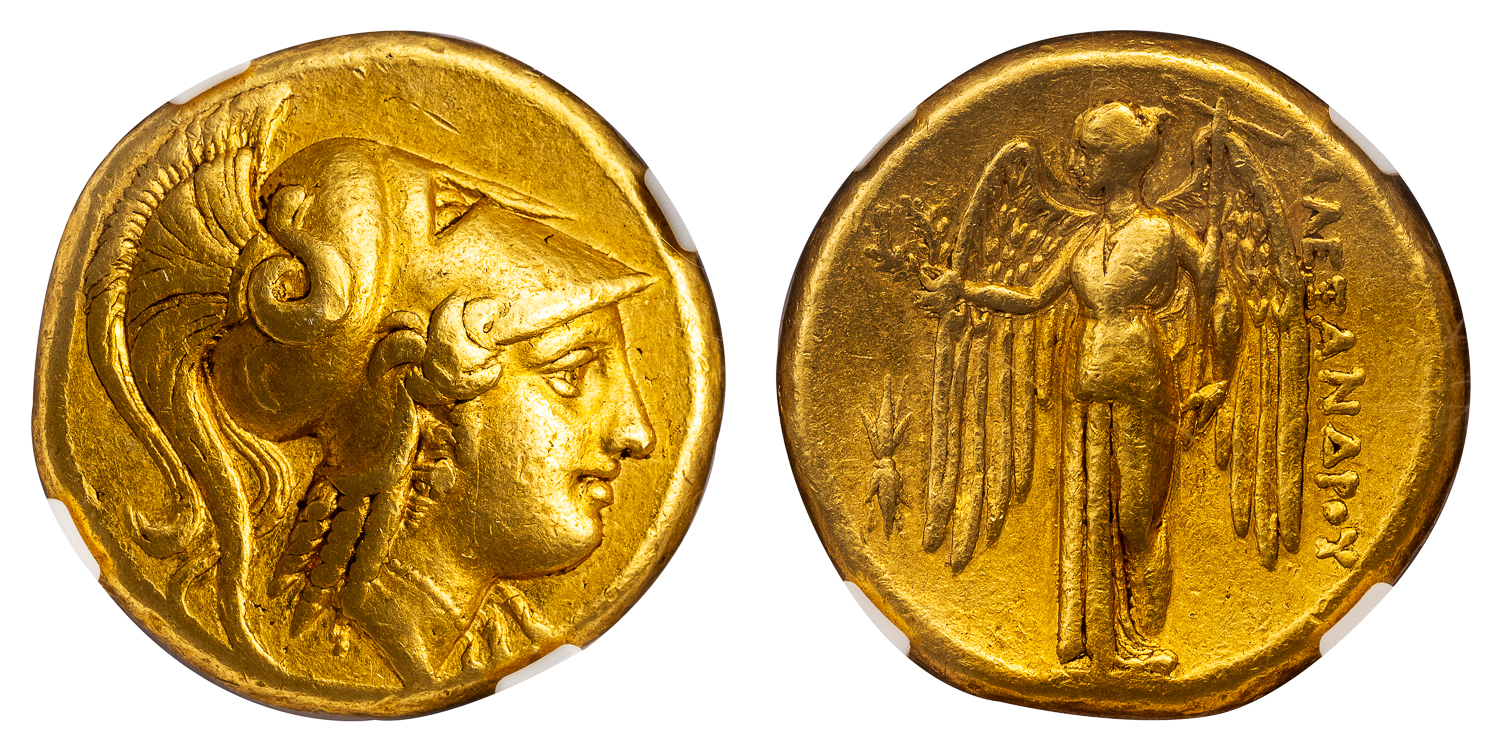

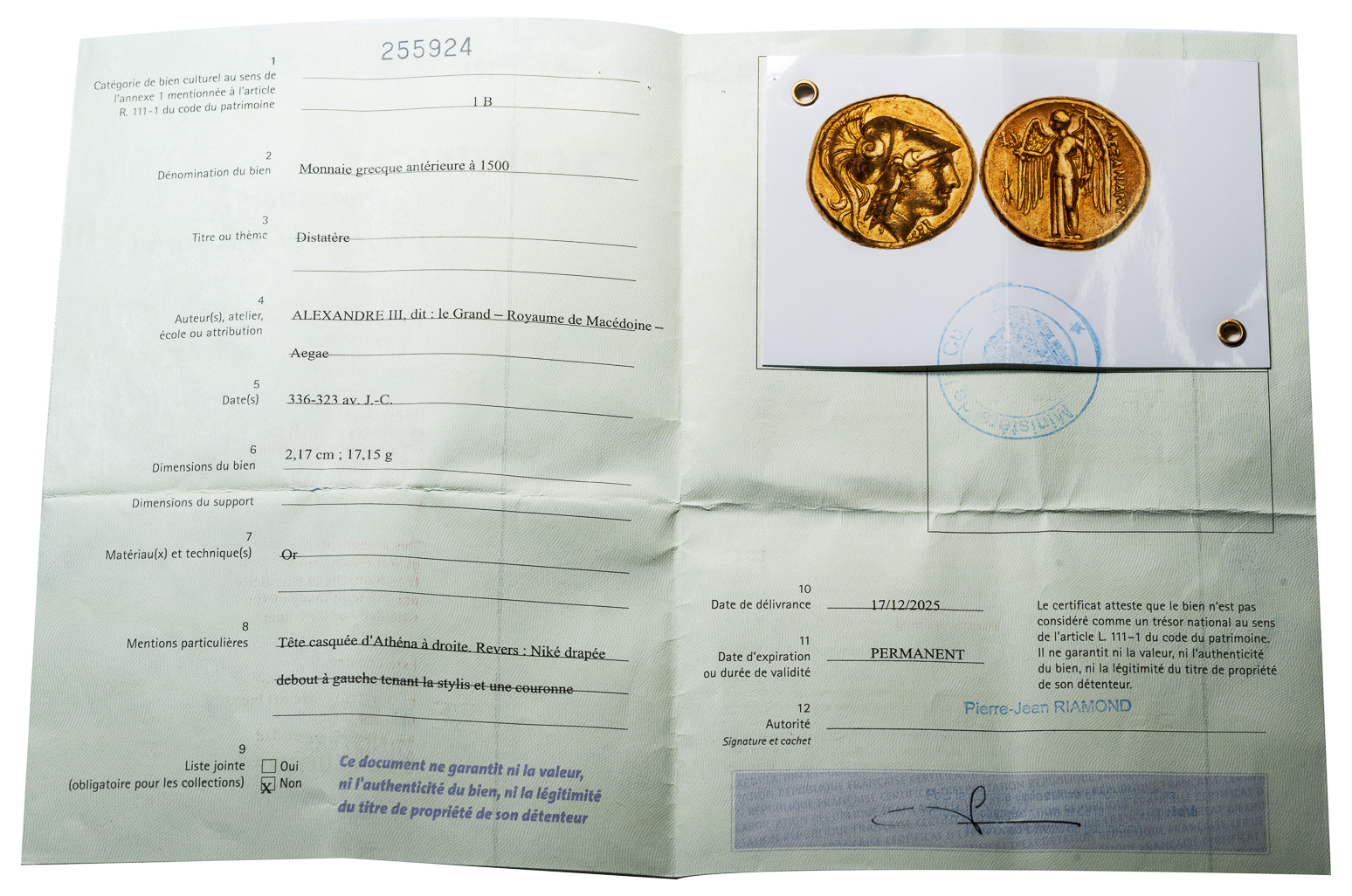
ALEXANDER THE GREAT GOLD DISTATER – LIFETIME/EARLY POSTHUMOUS ISSUE OF AMPHIPOLIS – CHOICE VF FINE STYLE NGC GRADED GREEK MACEDONIAN KINGDOM COIN (Inv. 21394)
$48,500.00
21394. MACEDONIAN KINGDOM. ALEXANDER III, THE GREAT, 336–323 BC.
Gold Distater (Two Staters), 17.19 g, 21 mm. LIFETIME/EARLY POSTHUMOUS issue of Amphipolis, ca. 325–323 BC.
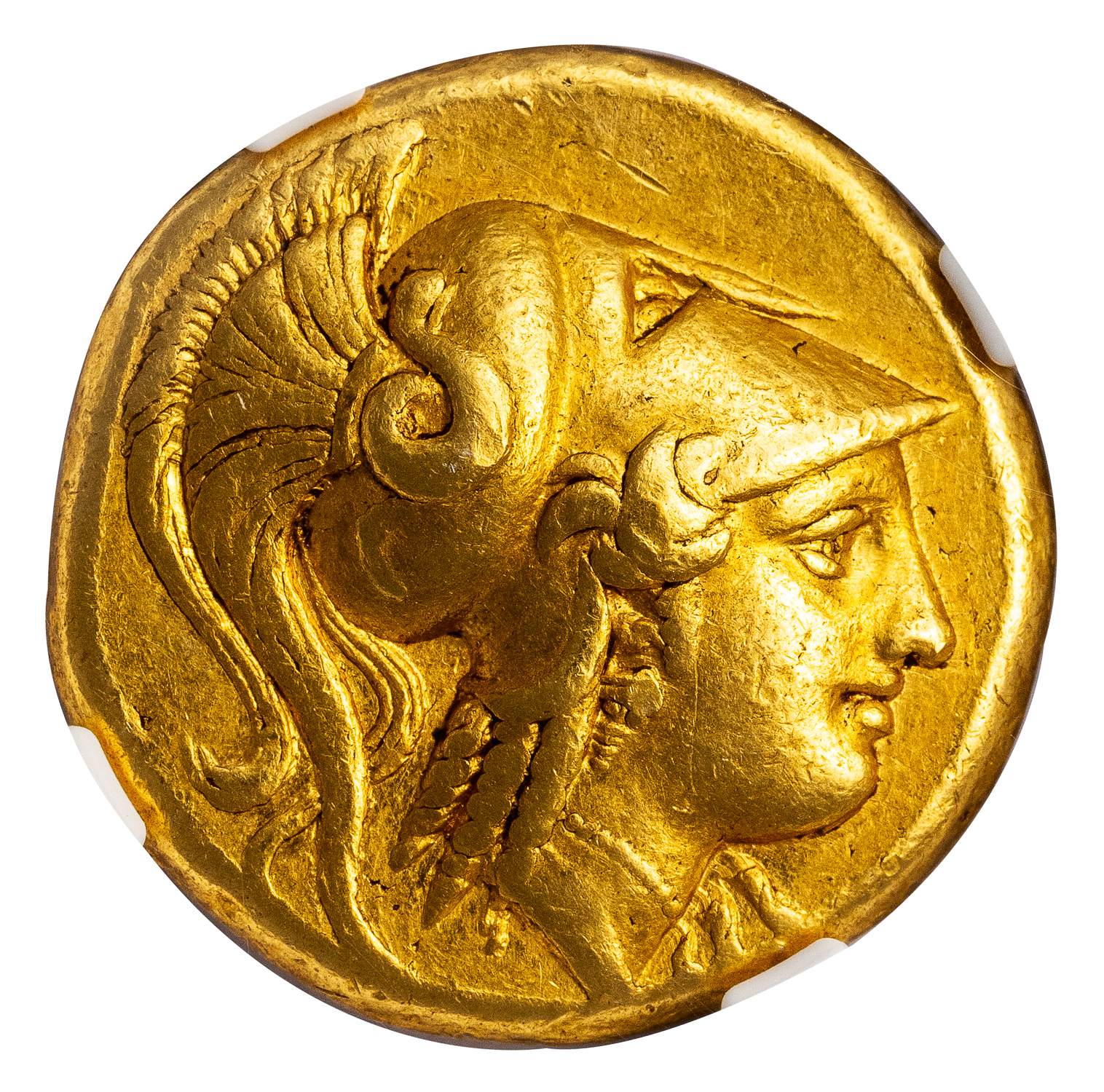
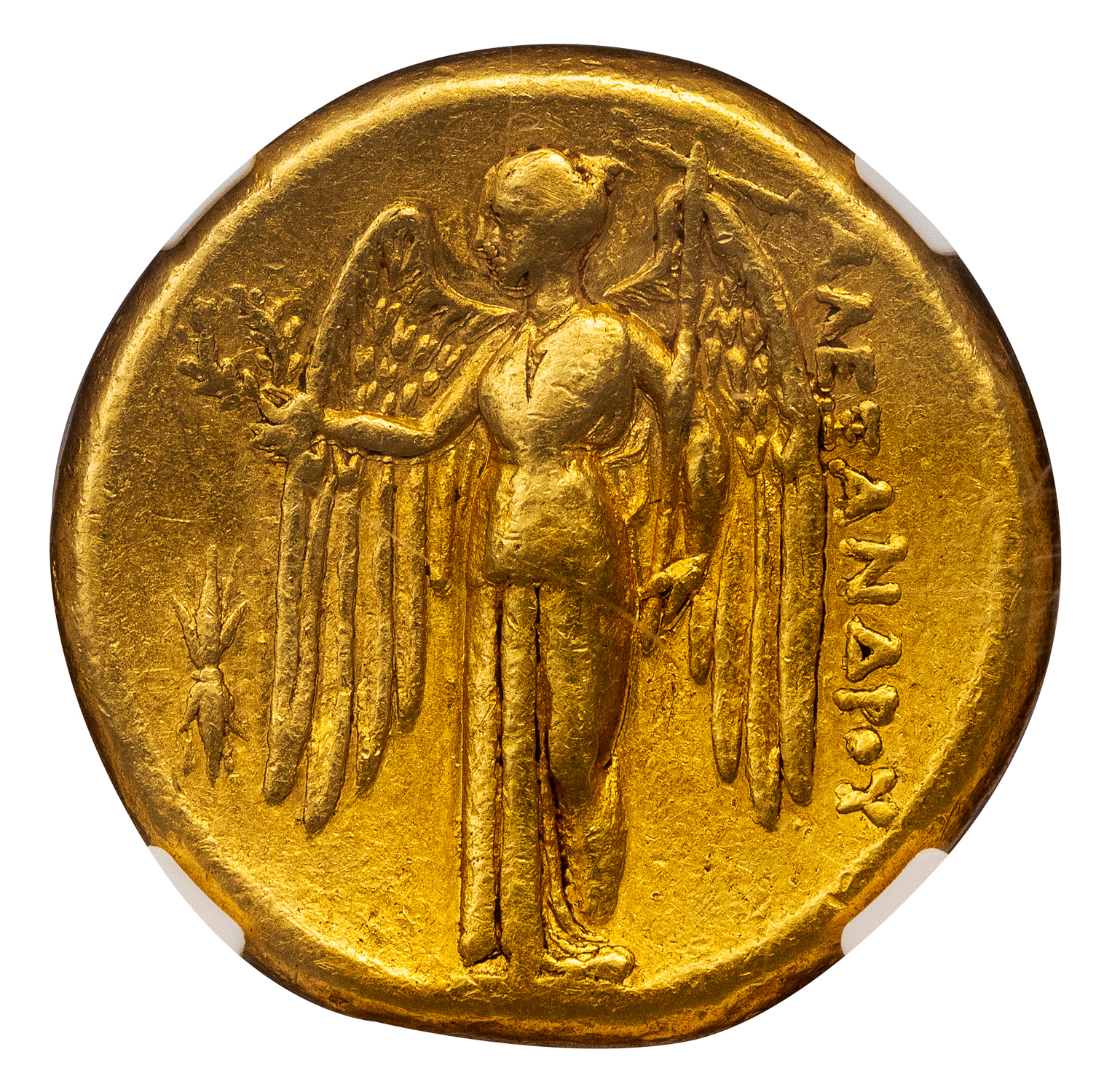
Obv. Head of Athena right, wearing large Corinthian helmet with coiled snake ornament below the plume. Rev. AΛEΞANΔPOY, Nike standing, looking left, holding wreath and stylis, thunderbolt in left field.
Price 163; Troxell, Studies in the Macedonian Coinage of Alexander the Great, Group A and pl. 24, 536.
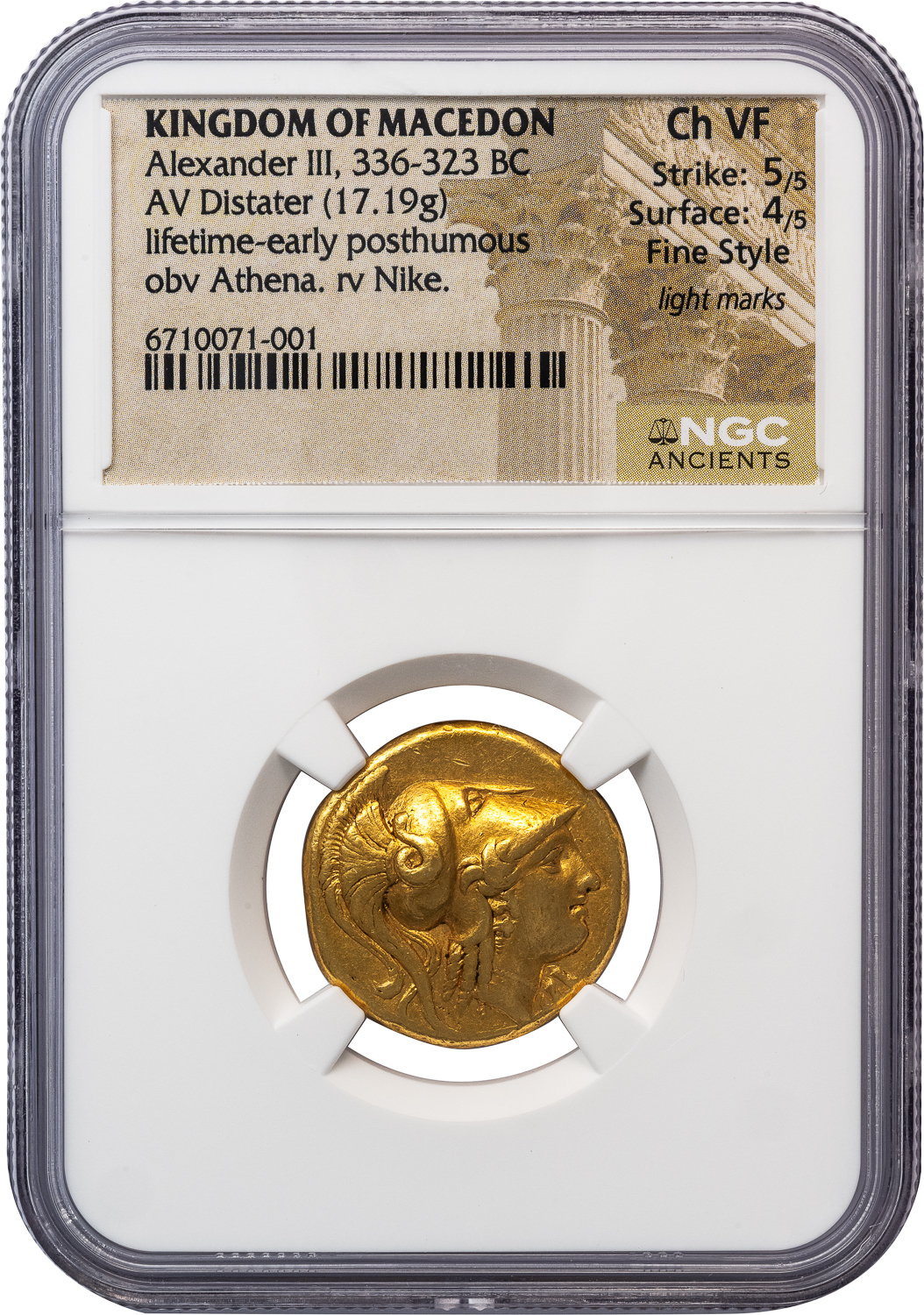
NGC CHOICE VF, Strike 5/5, Surface, 4/5, FINE STYLE, “light marks.” The coin is accompanied by a French export license (“Certificat d’exportion pour un bien culturel”) no. 255924 issued 2025.
The first variety catalogued by Price for the “Amphipolis” mint, this type of distater was certainly struck during Alexander’s lifetime or a few months after his death. Such impressive gold coins of Alexander the Great were struck to pay out soldiers returning to Macedonia at the end of their service in the east. As one distater had the rough value of 20-40 days of wartime service, it was a valuable coin, probably reserved for retiring veterans and for special donatives to the army. Although the Macedonian kingdom had access to the gold ore from the mines of Mount Pangaeum, the gold distaters are very likely to have been struck using the precious metal seized from the Persian treasuries at Persepolis (200,000 talents) and Ecbatana (180,000 talents) in 330 BC and then shipped back to Macedonia. The types of Athena and Nike that served as the standard types of Alexander’s imperial coinage were first introduced following the victory at the Battle of Issus on November 5, 333 BC.