
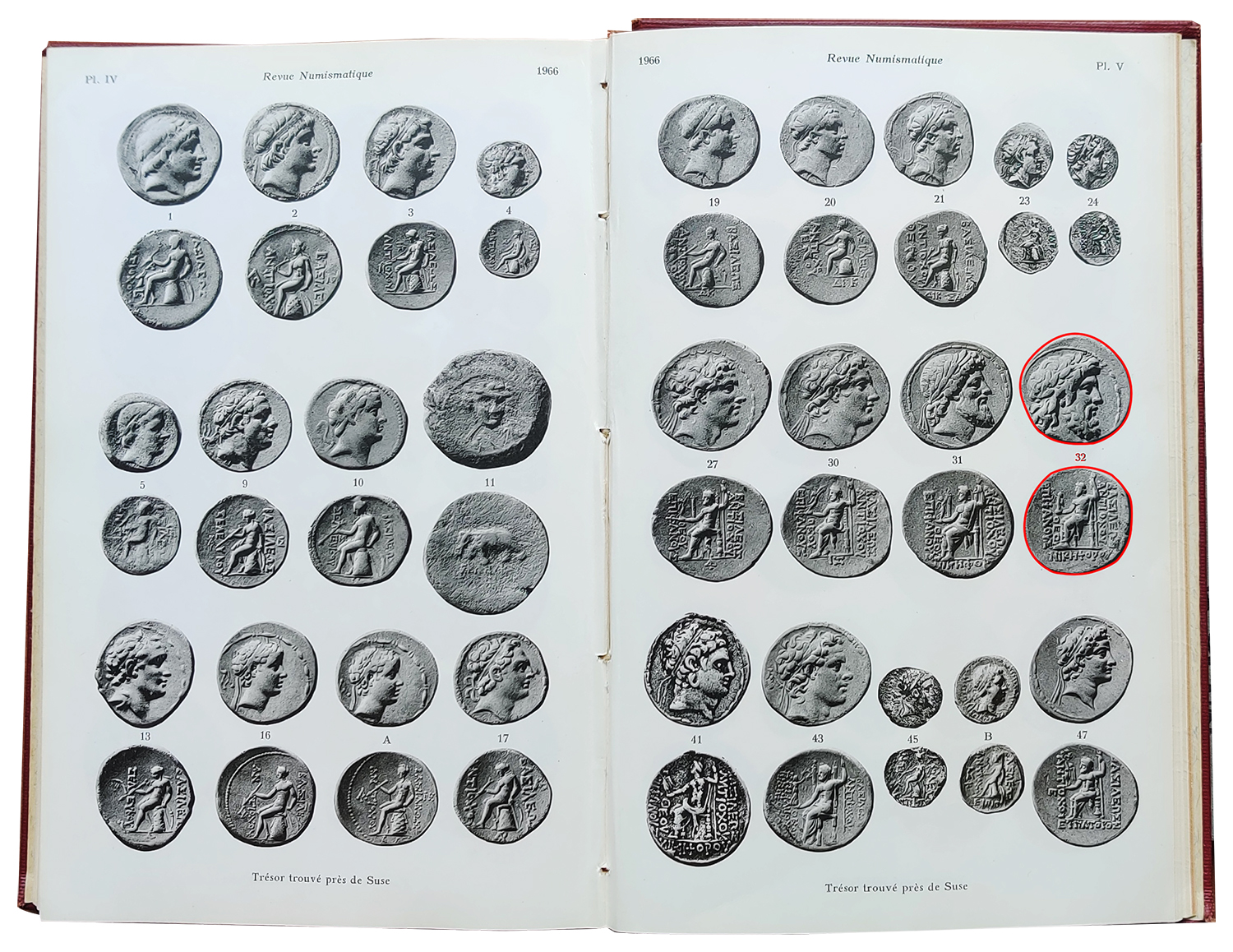
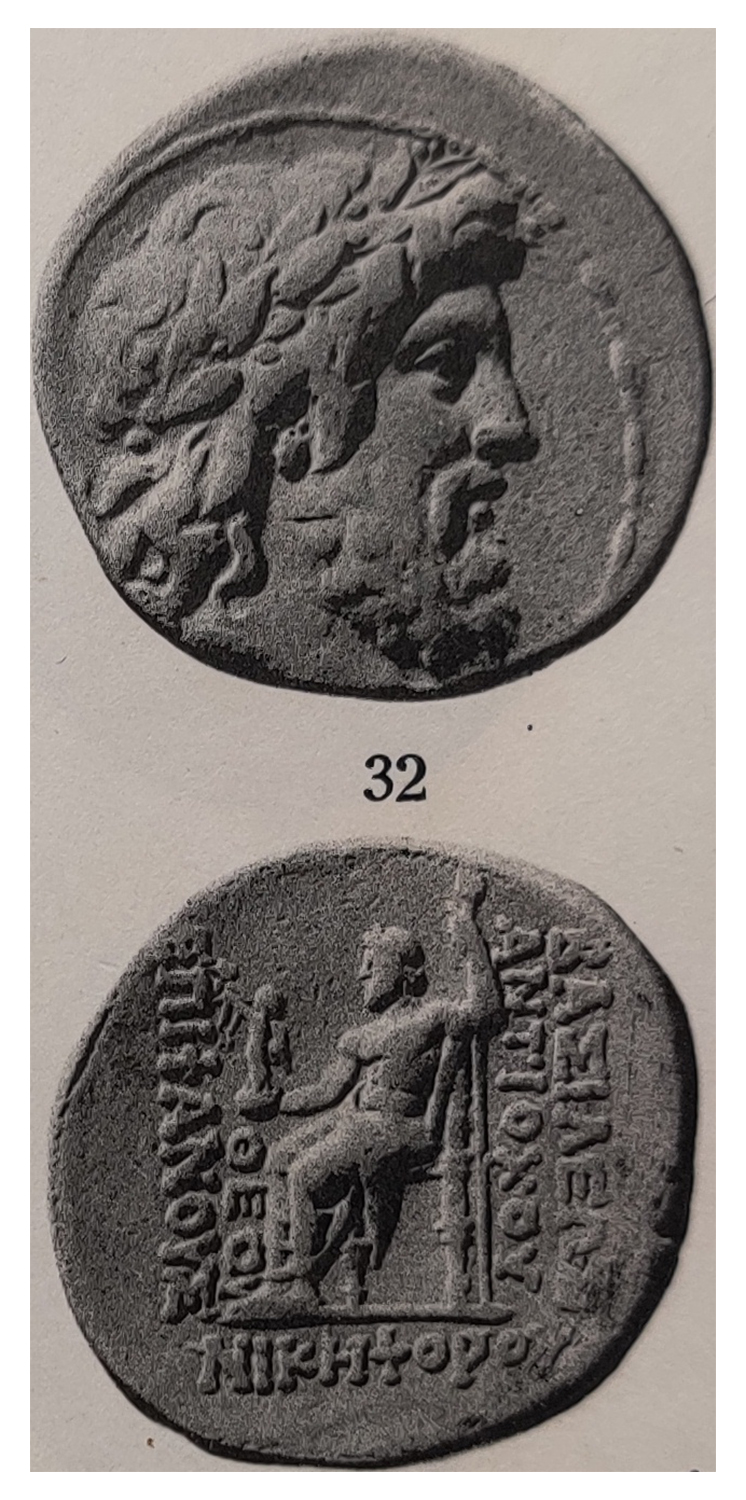
ANTIOCHUS IV SILVER TETRADRACHM – TWICE PUBLISHED SPECIMEN FROM THE SUSA HOARD – CHOICE FINE FINE STYLE NGC GRADED GREEK SELEUCID KINGDOM PUBLISHED COIN (Inv. 21140)
$3,250.00
21140. SELEUCID EMPIRE. ANTIOCHUS IV EPIPHANES. 175–164 BC.
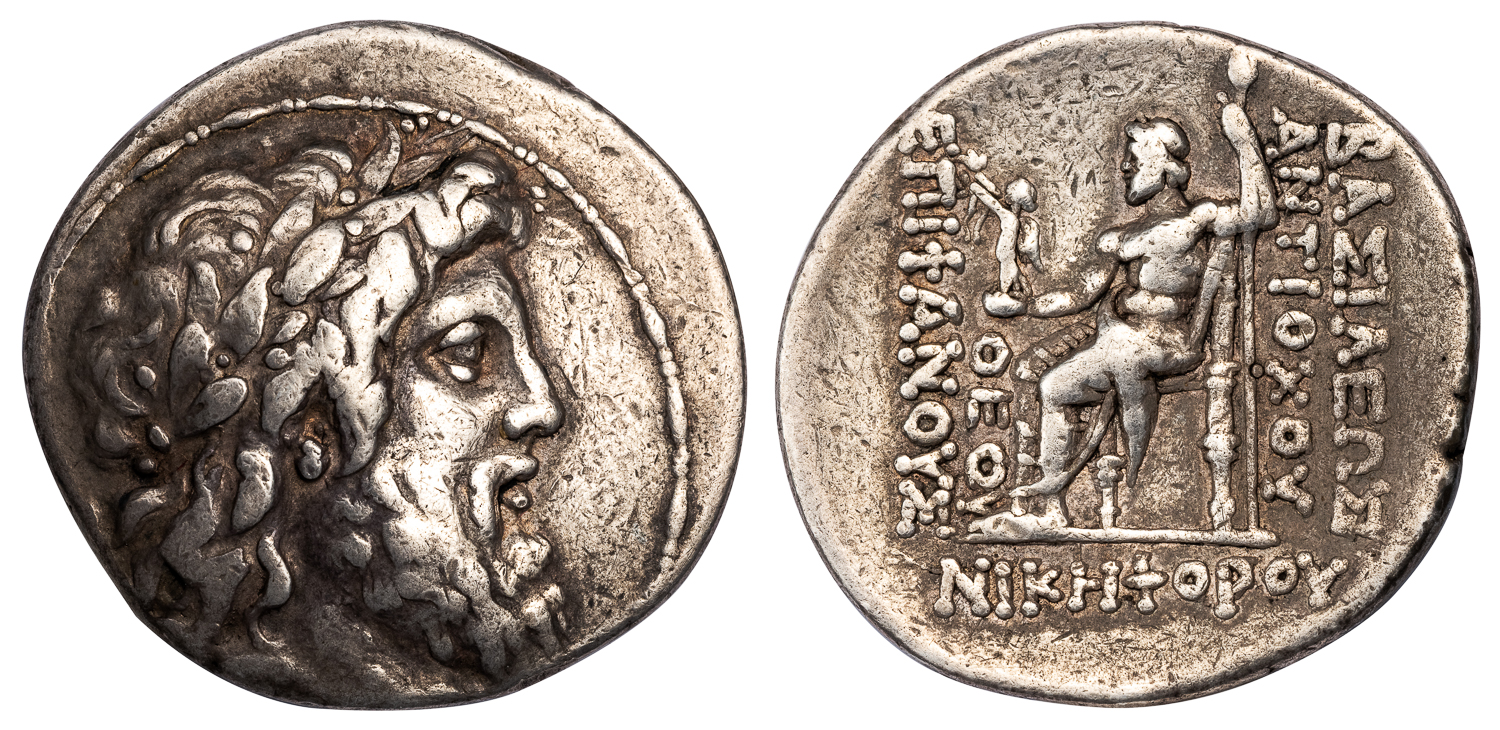
Silver Tetradrachm, 16.61 g, 32 mm. Antioch on the Orontes, Series 3, struck ca. 168–164 BC.
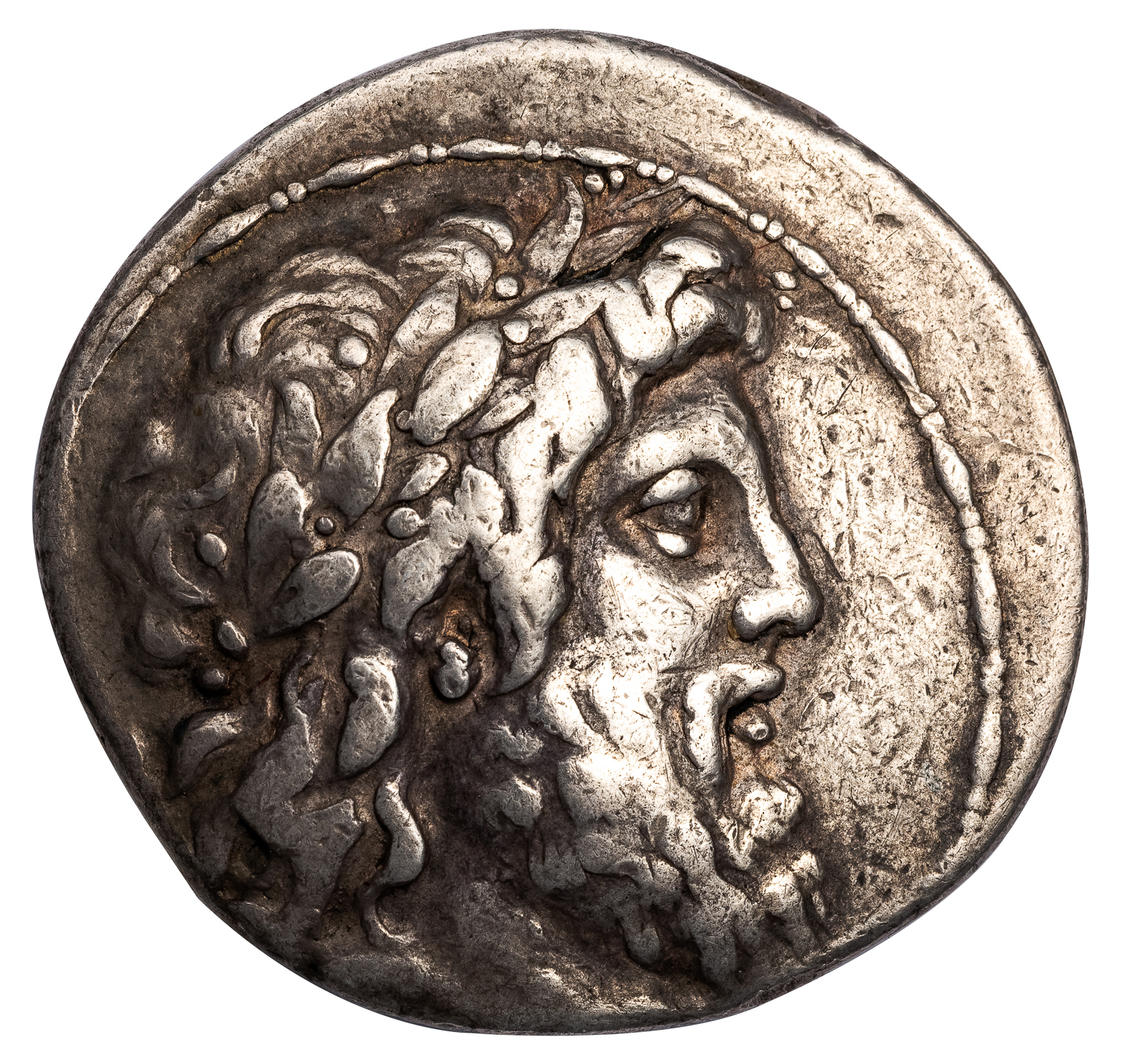
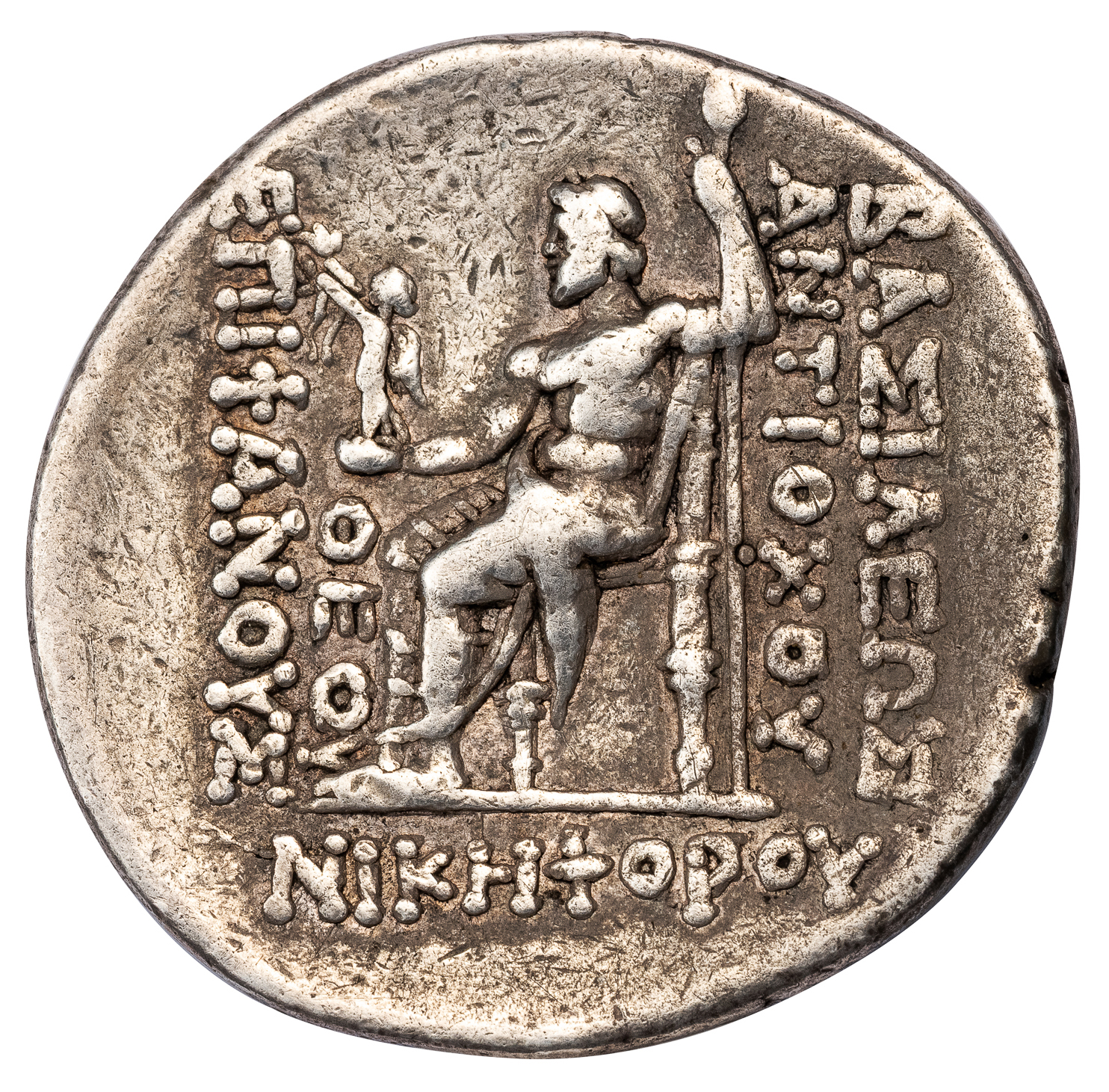
Obv. Laureate head of Zeus right. Rev. BAΣIΛEΩΣ ANTIOXOY / ΘEOY EΠIΦANOYΣ / NIKHΦOPOY, Zeus seated left on throne, holding Nike in his right hand and scepter in his left.
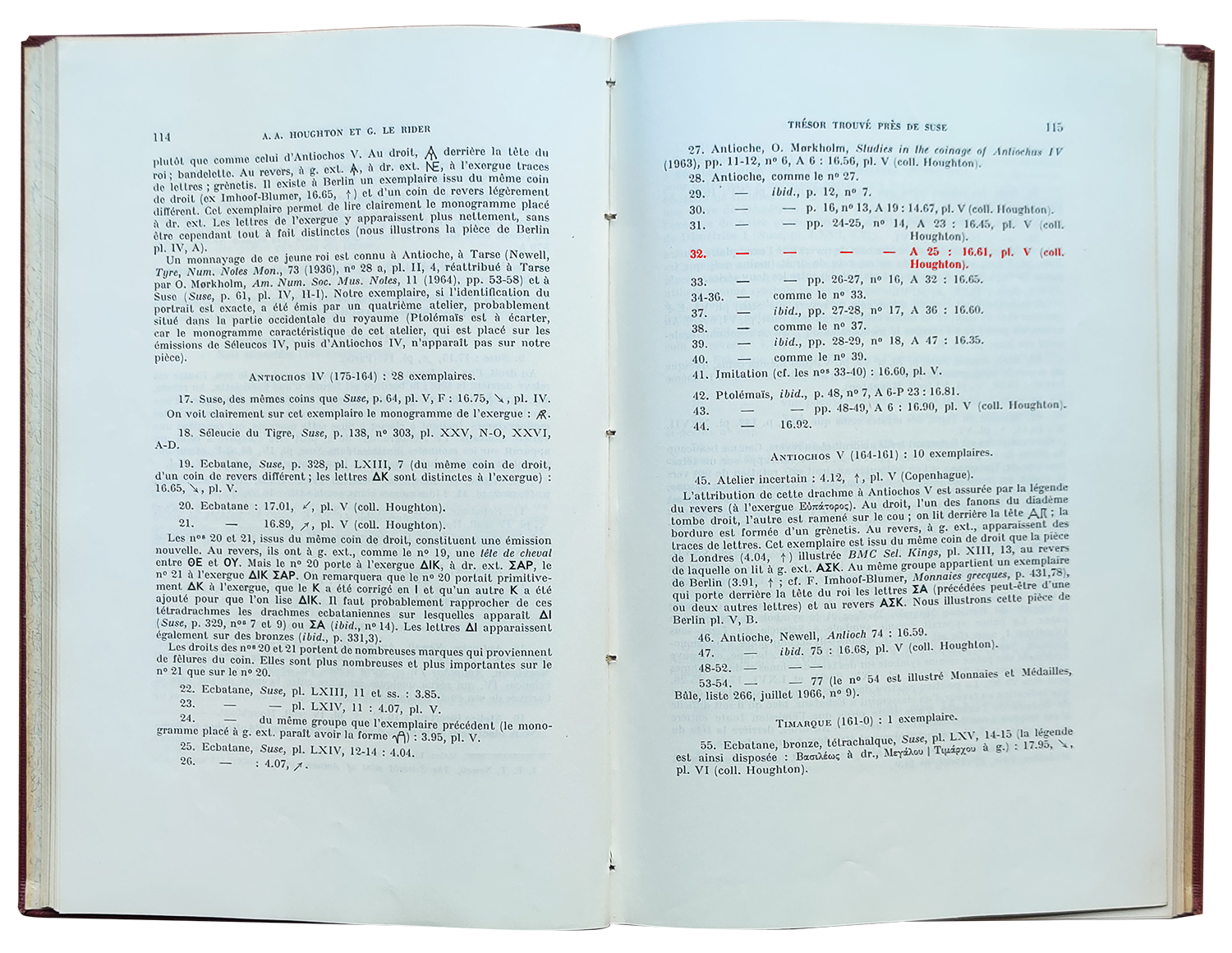
SC 1399; Le Rider, Antioche, Series IIIA, 262 (A27/P181) = Houghton & Le Rider, “Un trésor de monnaies hellénistiques trouvé près de Suse,” RN 1966, 32 (this coin); Mørkholm Series III, 14, dies A25/P– (unlisted rev. die); HGC 9, 620a.
Published: Wright, Colin Pitchfork Collection, no. 69.
Ex Ariadne Galleries, 12/9/1981, lot 281.
NGC graded CHOICE FINE, Strike 5/5, Surface 3/5, FINE STYLE.
Antiochus IV Epiphanes (“the God Manifest”) was the infamous Seleucid king responsible for desecrating the Jewish Temple in Jerusalem in 168 BC and repurposing the sacred space as a sanctuary dedicated to Zeus, his favorite deity. In the same year, a special series of tetradrachms featuring Zeus on both the obverse and reverse was struck in connection with a great parade held in the Antiochene suburb of Daphne to showcase the king’s military power. This special Zeus series continued in production until 164 BC. The present tetradrachm belongs to the late period of production but still serves the apparent purpose of identifying the king with the god and perhaps even implying that he saw himself as an incarnation of Zeus in his kingdom. Indeed, it has been suggested sometimes that the features of Antiochus VI might be detectable behind the beard of Zeus on some dies of the early issues. It is somewhat ironic that a king who seems to have thought of himself as a Zeus on earth died of a wasting disease while on campaign in Persis in 164 BC. His death was thought by many to have been a divine punishment for his acts in life. Jews attributed his death to divine vengeance for his desecration of the Temple, while Persians and other non–Jews believed he was struck down for attempting to plunder the temple of Artemis–Nanaia in Persis.