
TRAJAN BRONZE CONTORNIATE – RARE ISSUE WITH OLYMPIC GAMES ATHLETE FILINUS PUBLISHED IN ALFӦDI – VF ROMAN IMPERIAL COIN (Inv. 21350)
$5,750.00
21350. ROMAN EMPIRE. CONTORNIATE IN THE NAME OF TRAJAN. LATE 4th CENTURY AD.
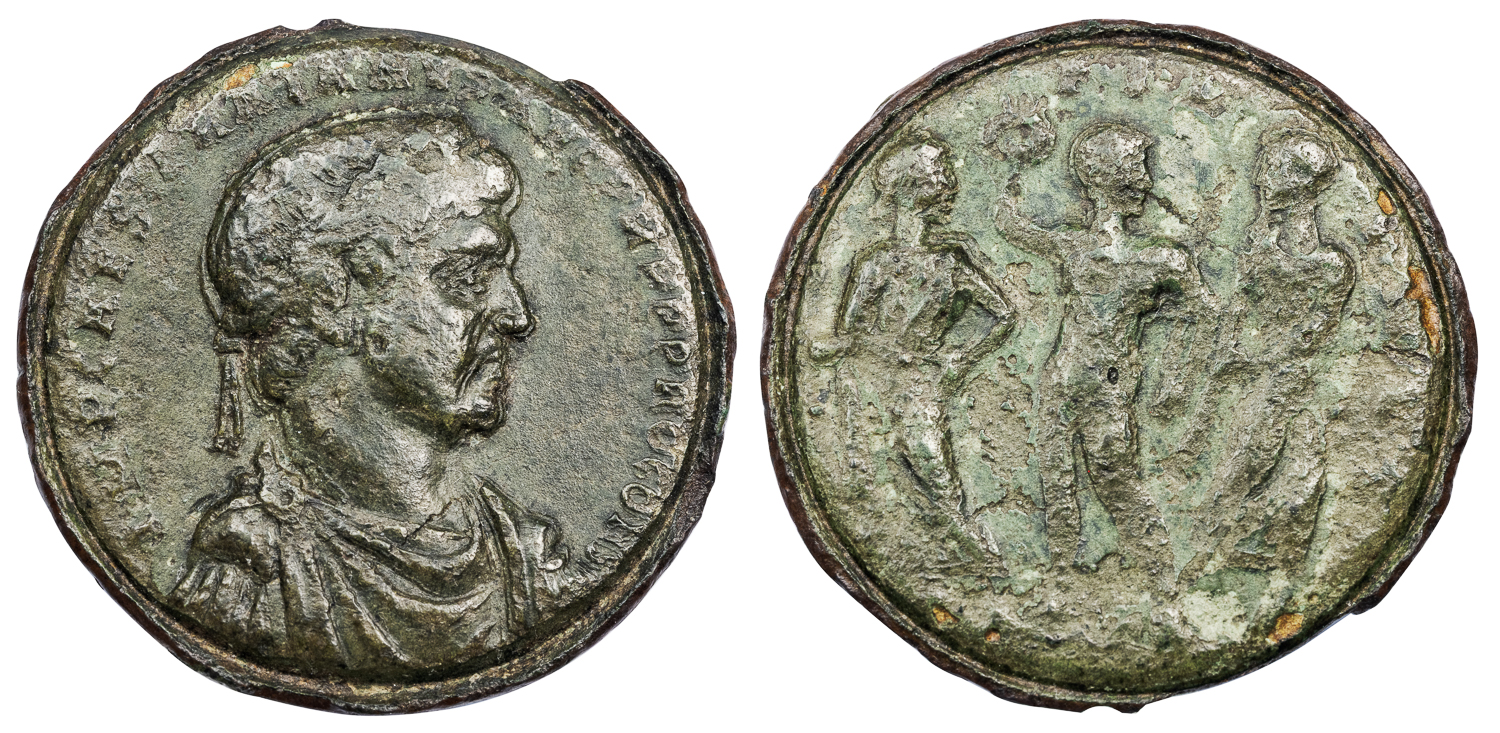
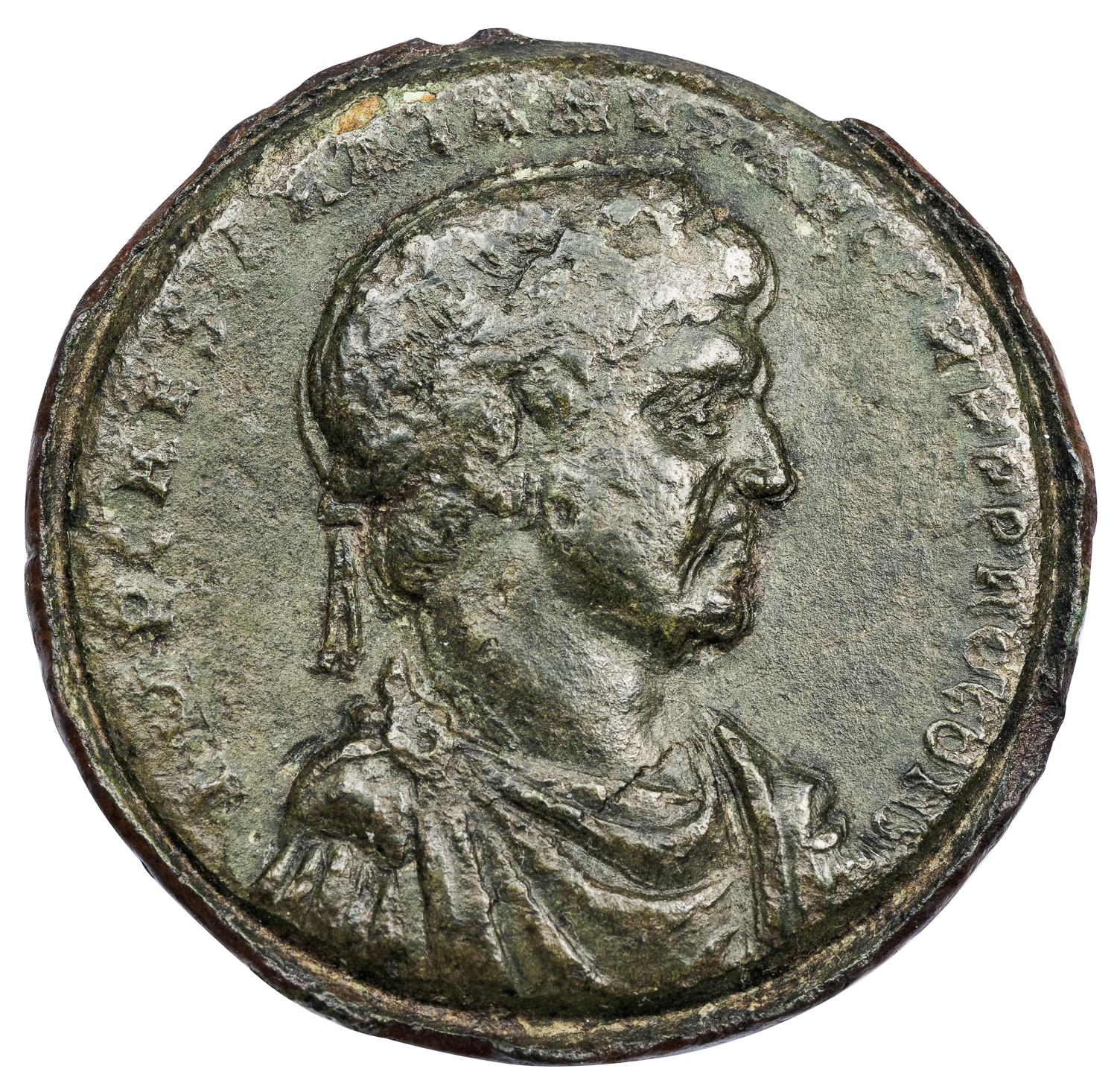
Bronze Contorniate Medallion, 16.82 g, 35 mm.
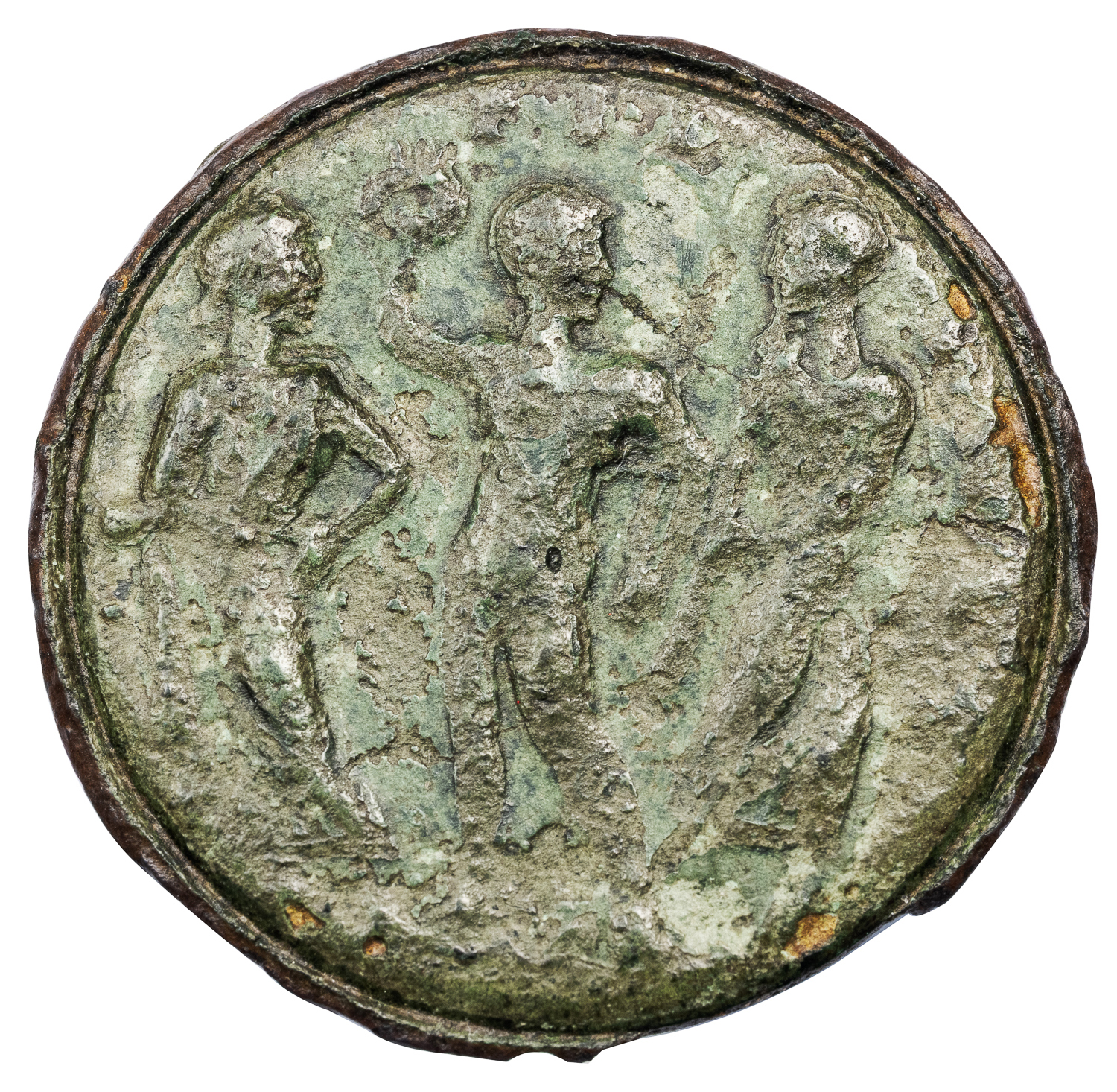
Obv. IMP CAES TRAIANVS AVG P M P P PRO CONS, laureate, draped, and cuirassed bust of Trajan right. Rev. FILINVS, the athlete Filinus (Philinus) standing facing, head right, holding wreath and palm frond; to left, figure (personification of the Olympic games?), standing facing and looking right; to right, musician standing left, playing double pipes (personification of the diaulos games?).
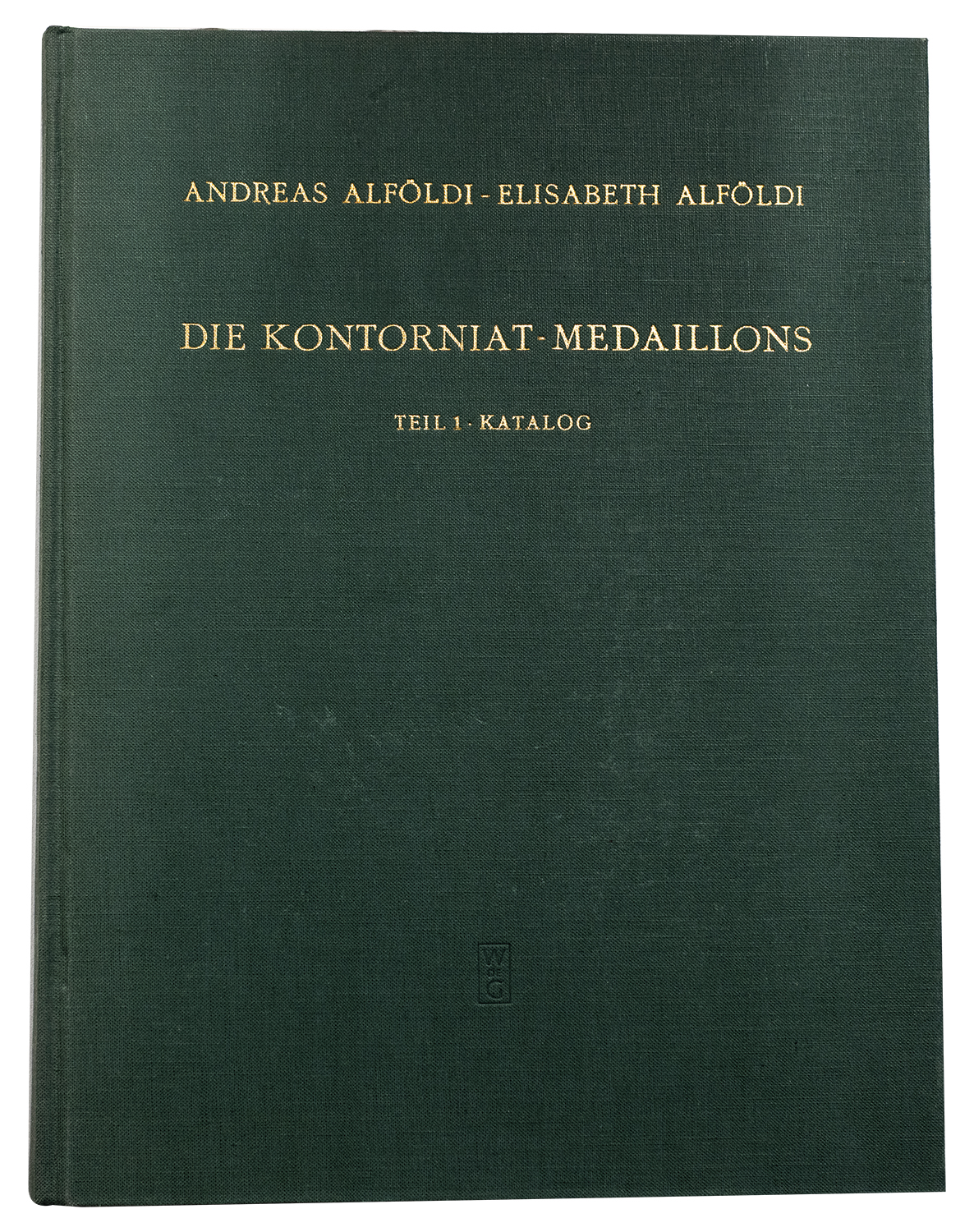
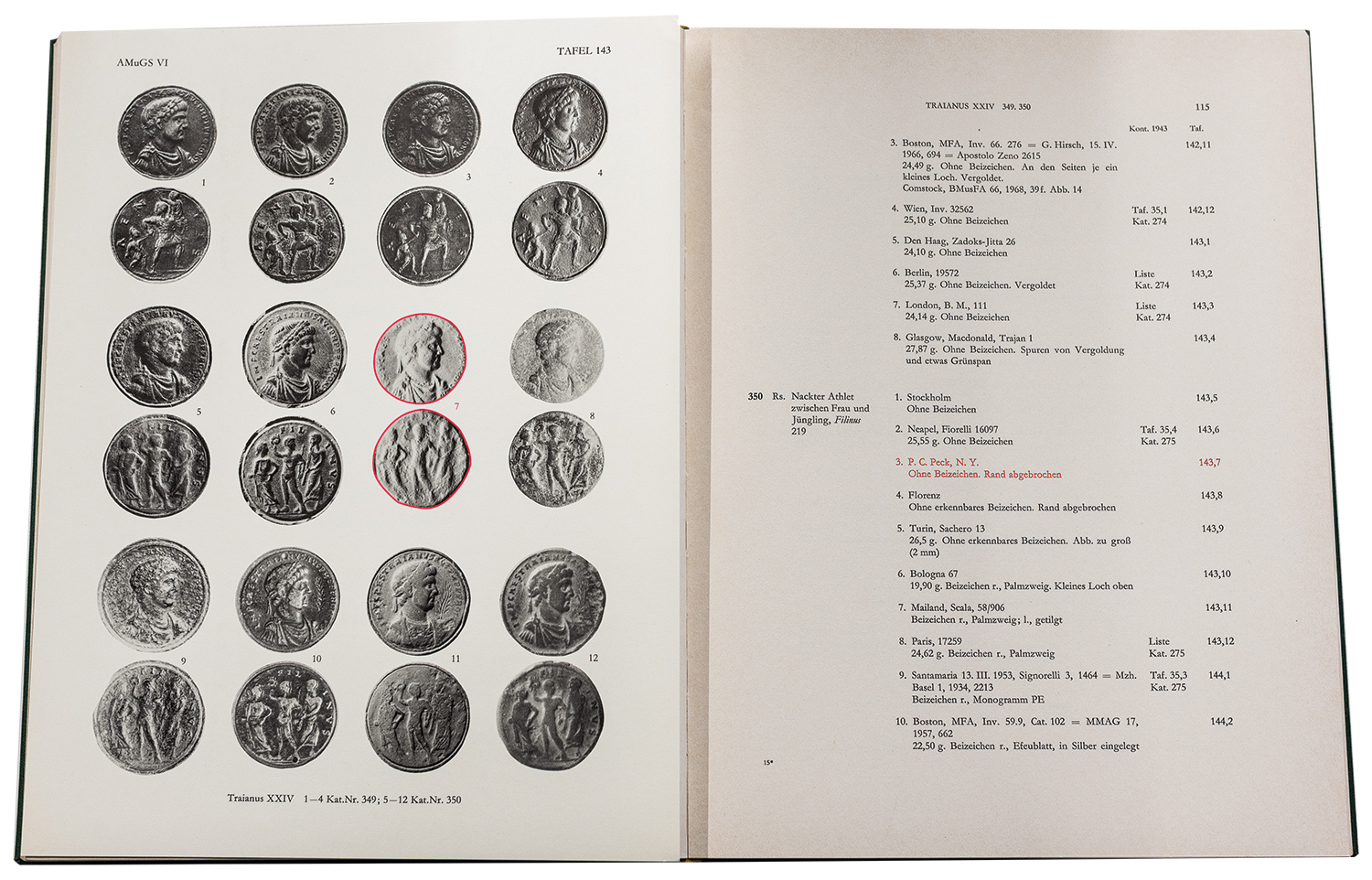
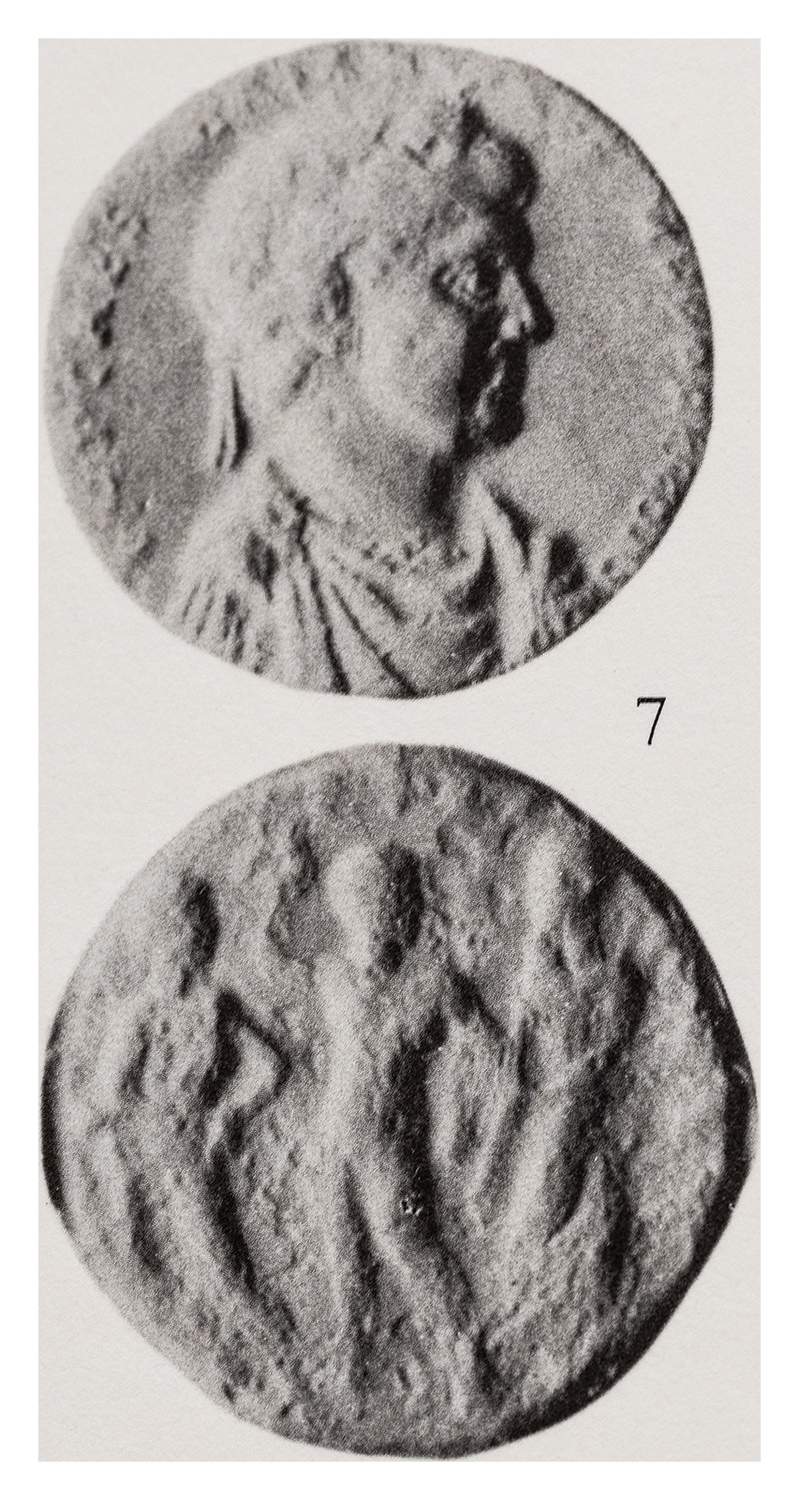
Published: Alföldi & Alföldi, Die Kontorniat–Medallions (1976), 350.3 (noted as belonging to P. Peck) and plate 143,7 (this coin, illustrated with a substandard image).
Ex Southern Collector, acquired from CNG 114, 5/13/2020, lot 1028 = ex Phil Peck (“Morris”) Collection, Heritage 3071, 1/6/2019, lot 32094, ex Paul Tinchant Collection (Part II, as Richard J. Graham), Schulman 243, 6/8/1966, lot 2535.
VF, with gray green patination, a rare type with only ten specimens noted by Alföldi.
As part of the general contorniate program of glorifying figures of the pagan past amid the increasing domination of Christianity, this piece honors the great athlete of the third century BC, Philinus (here spelled Filinus) of Cos. He was famous as a five–time winner in the Olympic stadium and diaulos footraces between 264 and 256 BC, including eleven victories at the Isthmian games, four at the Pythian games, and four at the Nemean games. For his incredible athletic triumphs, Philinus’ fellow Coans honored him with a statue at Olympia. The figures flanking Philinus on this contorniate may perhaps be personifications of the Olympic races in which he was frequently victorious. The piper on the right may represent the diaulos (literally “double–pipe”) race, while the figure doubtfully described as Securitas may represent the stadium race. One wonders whether Philinus is invoked on this contorniate due to the ultimately successful efforts of the Christian emperors Theodosius I and Theodosius II to repress the Olympic games and other festivals related to pagan religion at the end of the fourth and the beginning of the fifth century AD.