
ELAGABALUS SILVER DENARIUS – FAMOUS TYPE SHOWING THE STONE OF EMESA BLACK METEORITE – CHOICE XF NGC GRADED ROMAN IMPERIAL COIN (Inv. 21390)
SOLD
21390. ROMAN EMPIRE. ELAGABALUS, AD 218–222.
Silver Denarius, 3.20 g, 18 mm. Issue of Antioch, AD 218.
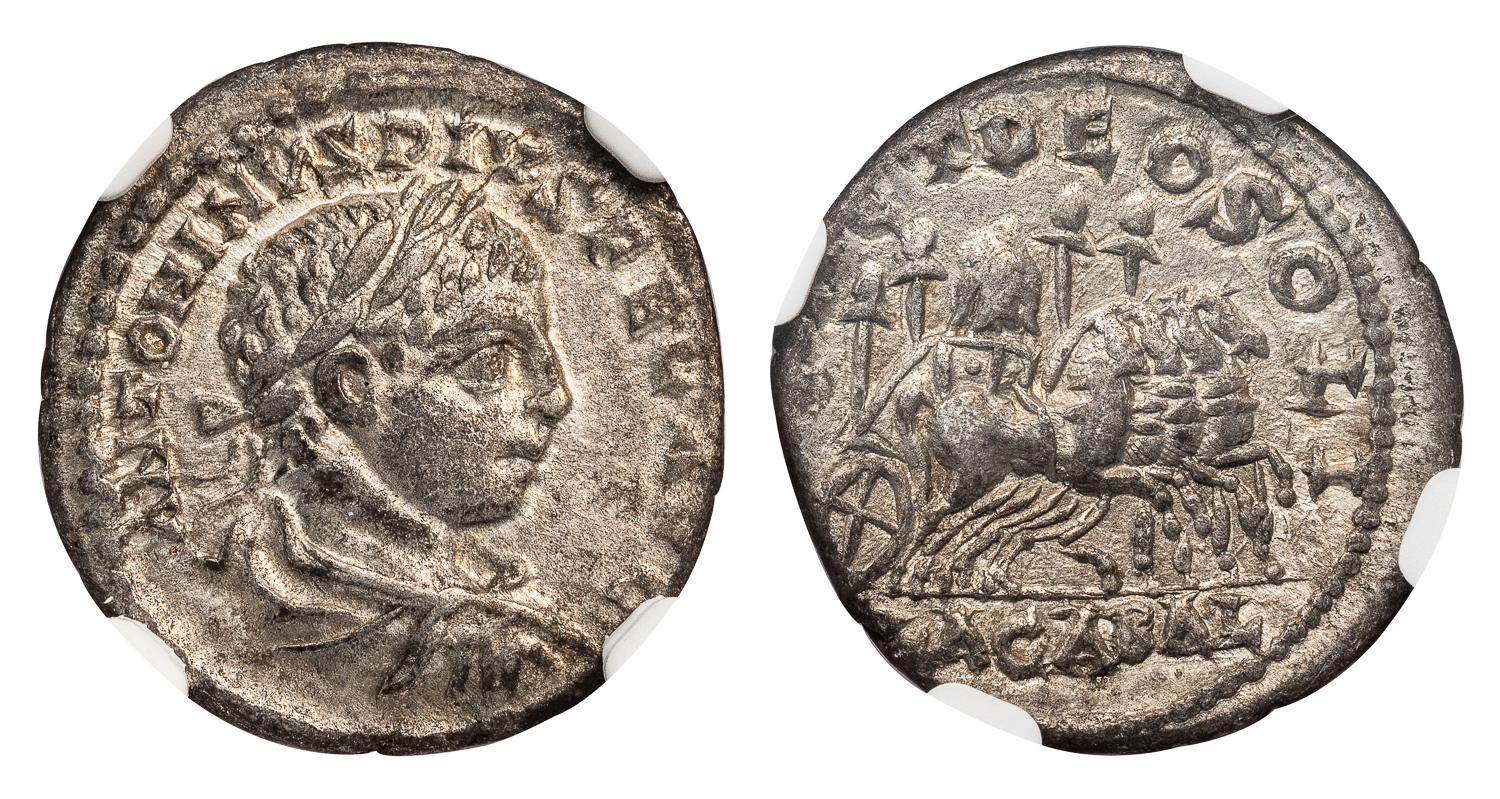
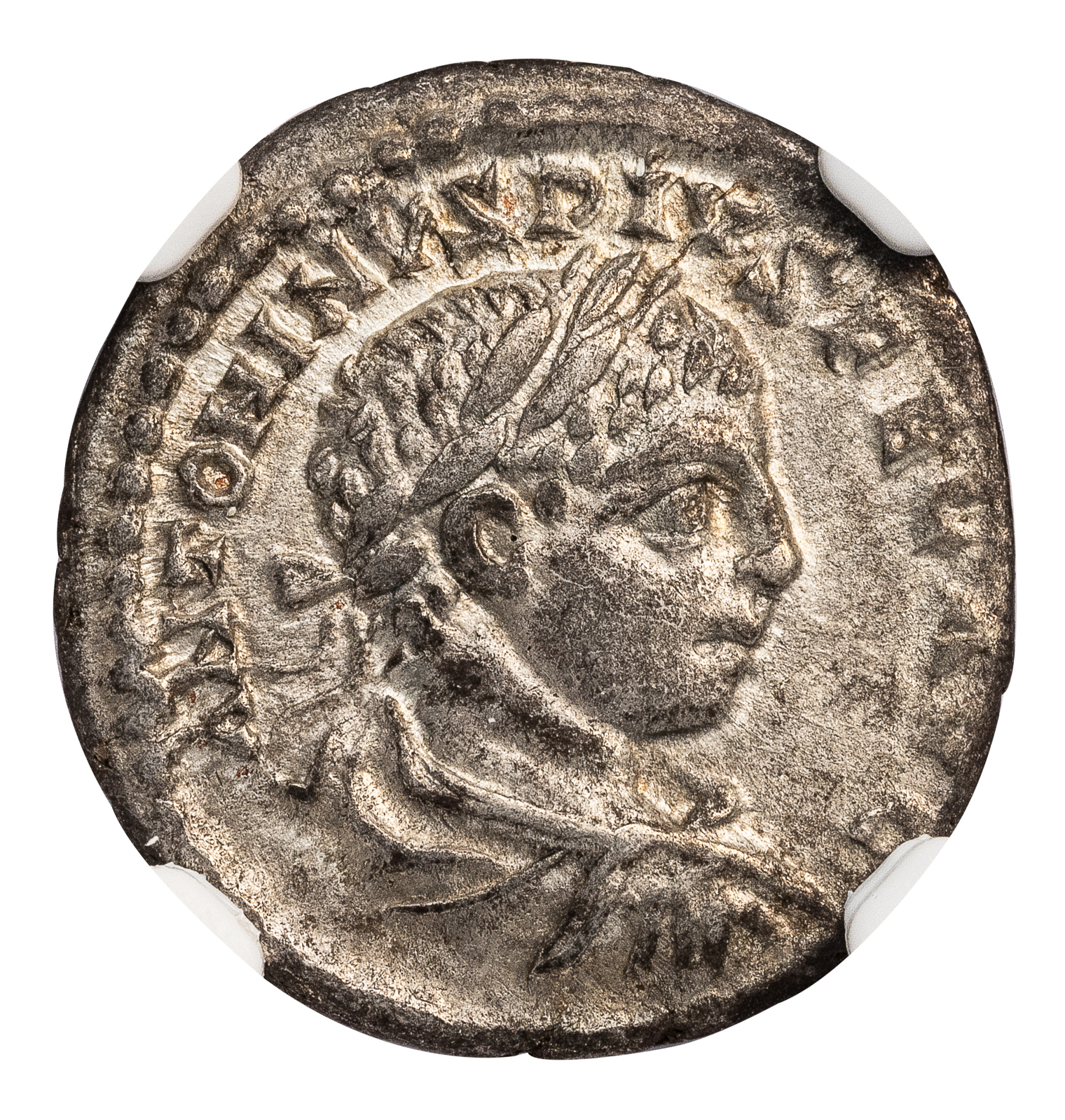
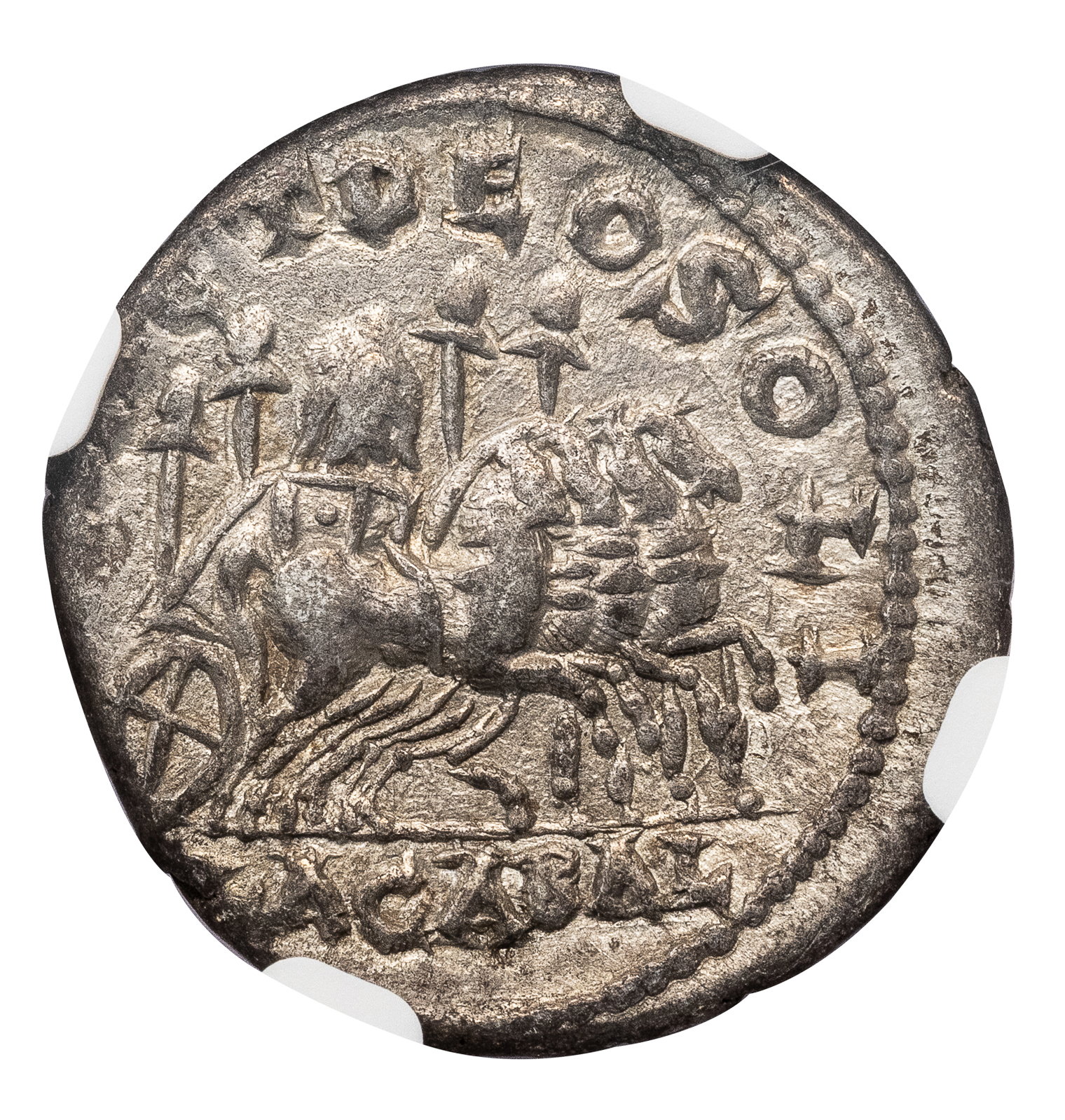
Obv. ANTONINVS PIVS FEL AVG, laureate, draped, cuirassed and draped bust of Elagabalus right. Rev. SANCT DEO SOLI, quadriga moving right carrying conical stone of Emesa surrounded by parasols, ELAGABAL in exergue.
RIC IV 195.
Ex Spink 4018, 10/6/2004, lot 244.
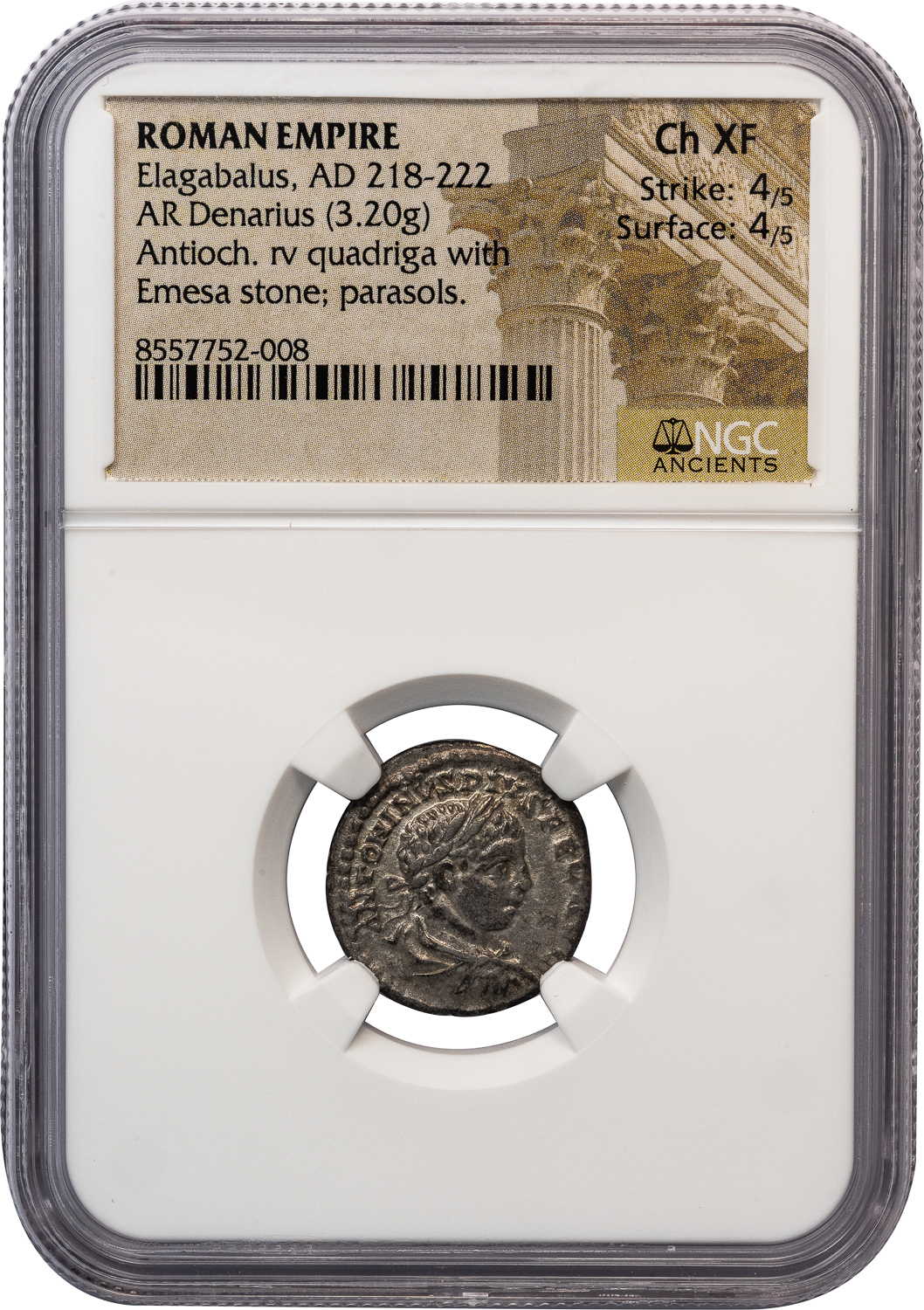
NGC CHOICE XF, Strike 5/5 Surface 3/5, traces of encrustation.
Among the most fascinating of all Roman types, this coin depicts the ritual transport of the “stone of Emesa,” likely a black meteorite, associated with the cult of the god El–Gabal (Elagabalus). Varius Avitus Bassianus, the emperor commonly known today by his religious name, was a priest of the Emesan sun god and had the holy relic brought to Rome once he became emperor. Special temples were built to accommodate the stone in its location and the ancient author Herodian (V.6.7) describes the yearly transfer of the stone from its new Palatine temple to one nearby the city where it resided in the summer: “A six–horse chariot bore the sun god, the horses huge and flawlessly white, with expensive gold fittings and rich ornaments. No one held the reins, and no one rode in the chariot; the vehicle was escorted as if the sun god himself were the charioteer. Heliogabalus ran backward in front of the chariot, facing the god and holding the horses’ reins. He made the whole journey in this reverse fashion, looking up into the face of his god.” After Elagabalus’ assassination, the stone was returned to its home city of Emesa, where it continued to be shown on coins.