
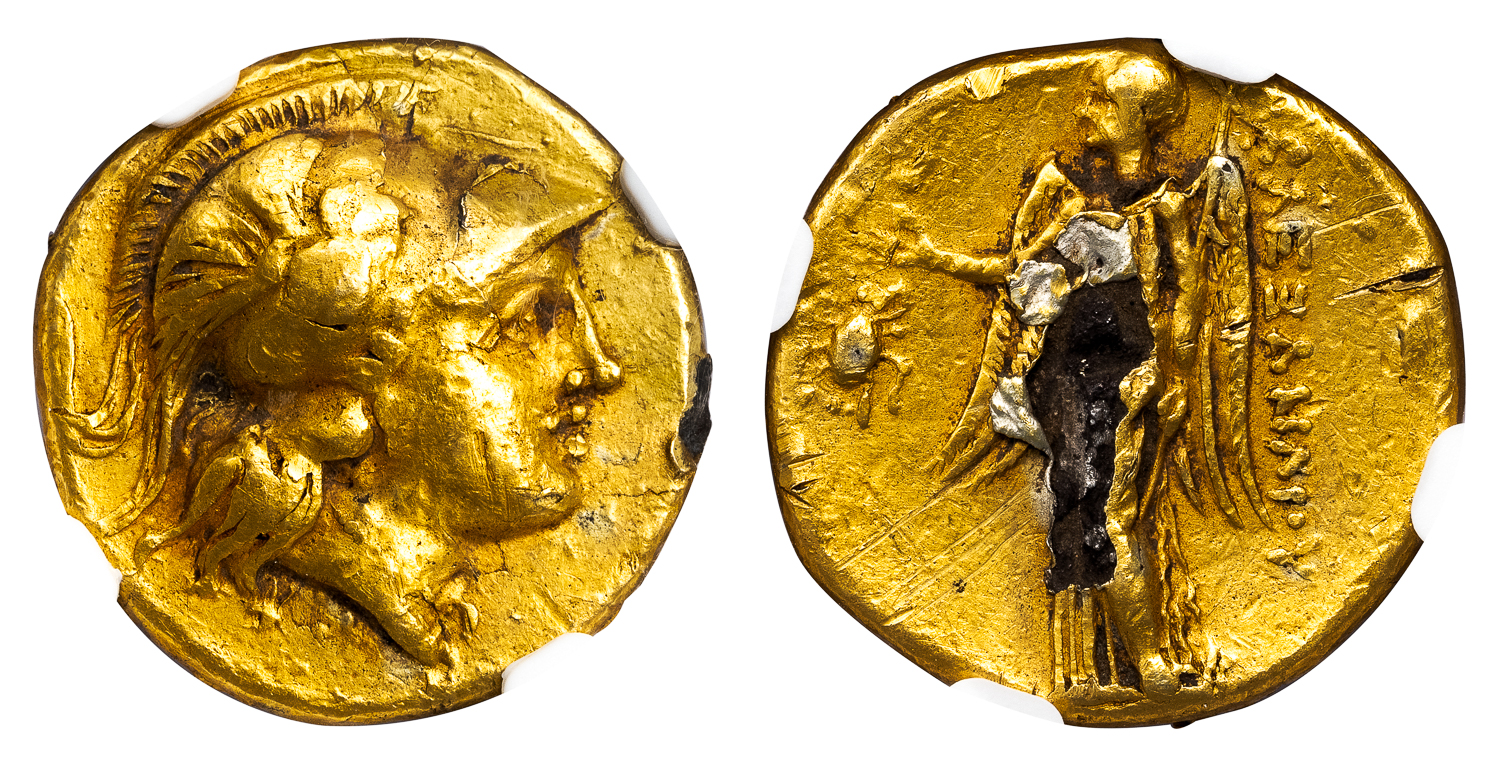
ALEXANDER THE GREAT FOURREE STATER – ANCIENT GOLD OVER SILVER FORGERY WITH INSECT SYMBOL – NGC CH AU GREEK MACEDONIAN COIN (INV. 21477)
$2,250.00
21593. MACEDONIAN KINGDOM. ALEXANDER III, THE GREAT, 336–323 BC.
Fourrée Stater (seemingly gold cladding over a silver core), 19 mm.
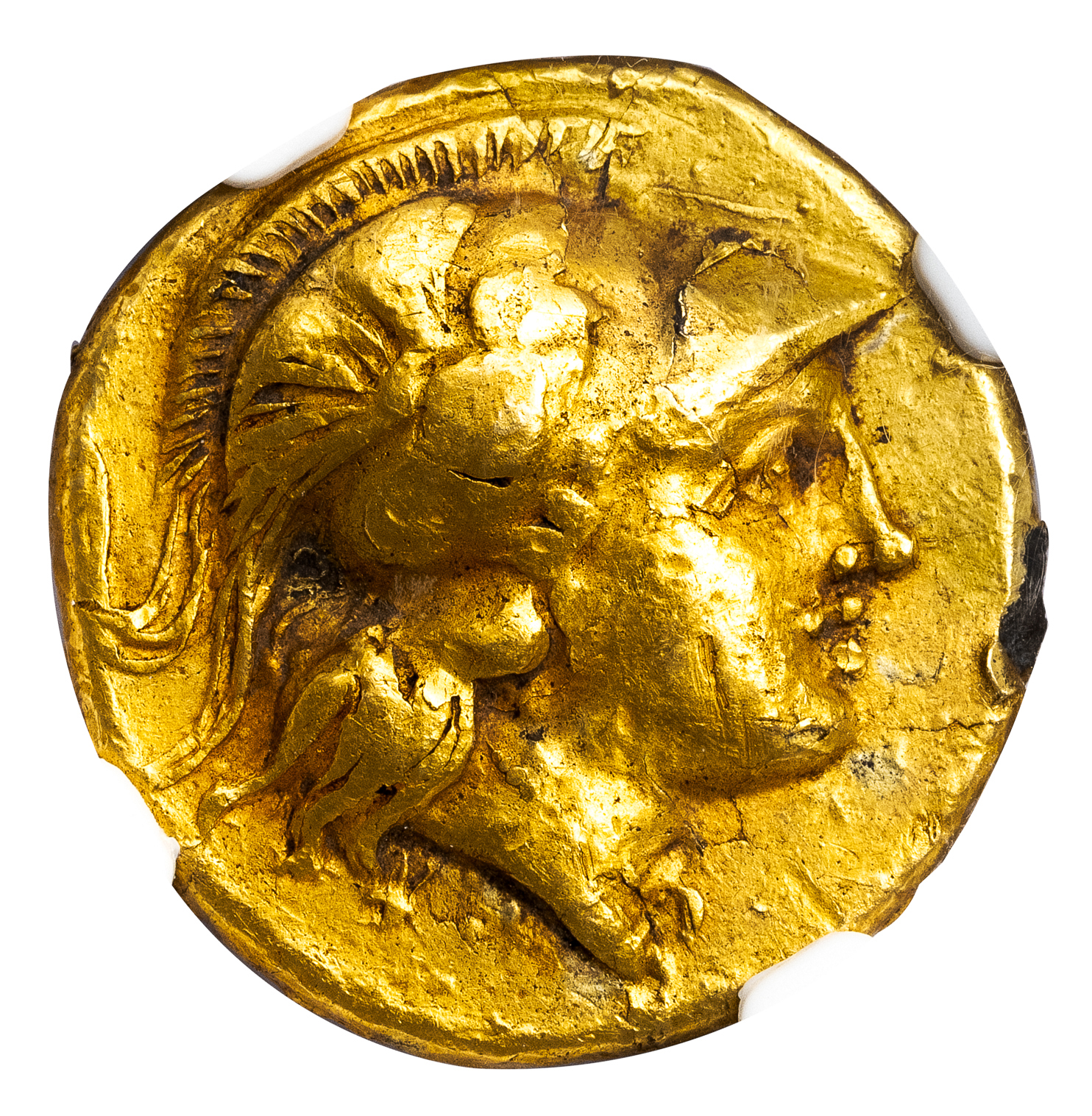
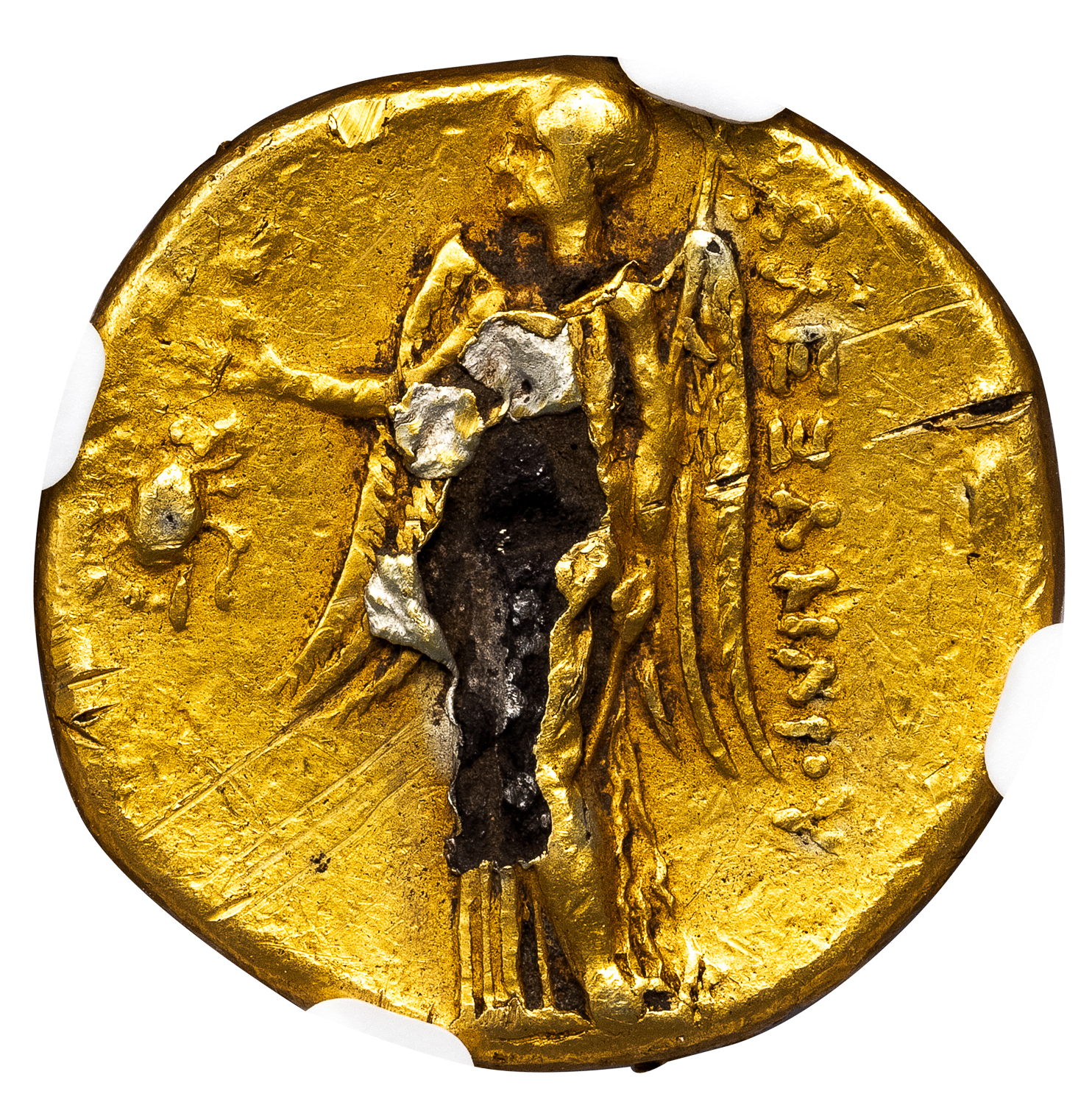
Obv. Head of Athena right, wearing large Corinthian helmet. Rev. AΛEΞANΔPOY, Nike standing, looking left, holding wreath and stylis, insect (ant or spider?) in left field.
Cf Price 202 (Pella, bee symbol) for prototype; similar pieces include Naumann 55, 7/2/2017, lot 98 (same obverse die); Heritage 9/6/2012, lot 24914 (different dies); Rauch 9/11/2007, lot 152 (same reverse die).
Ex John P. Burnham Collection.
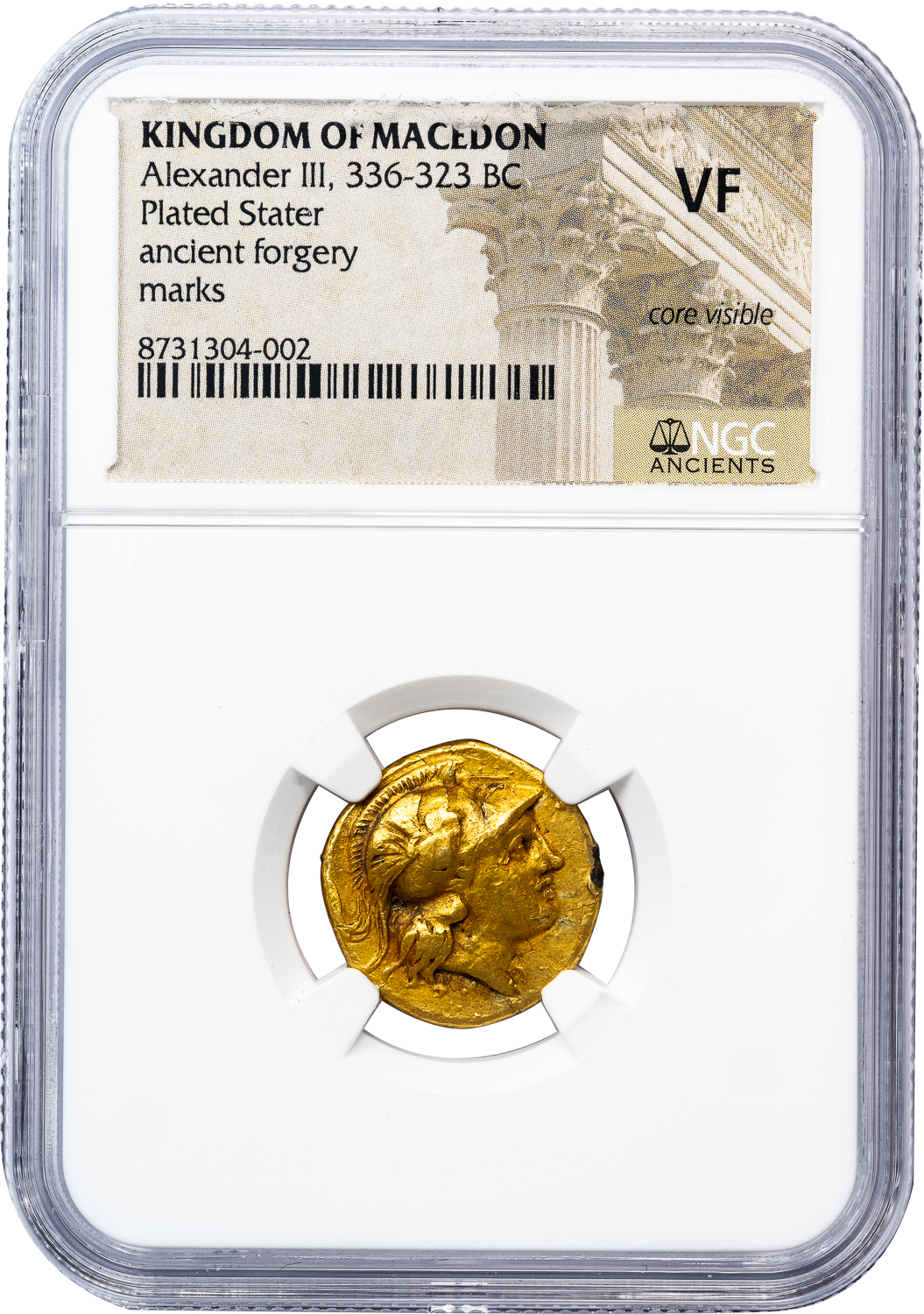
NGC VF, “core visible,” “marks,” extremely interesting and very rare.
This remarkable imitative fourrée gold stater appears to have been struck not as a one-off forgery, but as part of much larger fourrée minting operation involving at least three different obverse dies and two different reverse dies. The insect control symbol in the left field is usually assumed to be a poorly executed version of the bee symbol that appears on a stater emission of Pella (Price 202). If this is correct, then the imitative series must have been struck sometime in or after the period ca. 325–315 BC, when the Pella prototype was struck. The apparent use of a Pella prototype might suggest that the fourrée mint was established somewhere in Macedonia, neighboring Thrace, or perhaps even the Celtic lands, but the wide circulation of Alexander’s staters makes almost anywhere possible. Setting aside the motivating force of simple greed, any number of crises in the late third or early second centuries (e.g., the Lamian War, the wars of the Diadochi, and the Celtic invasions) might have inspired the opening of an imitative fourrée mint to supplement the supply of circulating solid gold coinage.