
ALEXANDER THE GREAT GOLD DISTATER – LIFETIME ISSUE OF AEGAE ? PUBLISHED IN WESTMORELAND COLLECTION VOLUME – VF NGC GRADED GREEK MACEDONIAN KINGDOM COIN (Inv. 20985)
$38,500.00
15 20985. MACEDONIAN KINGDOM. ALEXANDER III, THE GREAT, 336–323 BC.
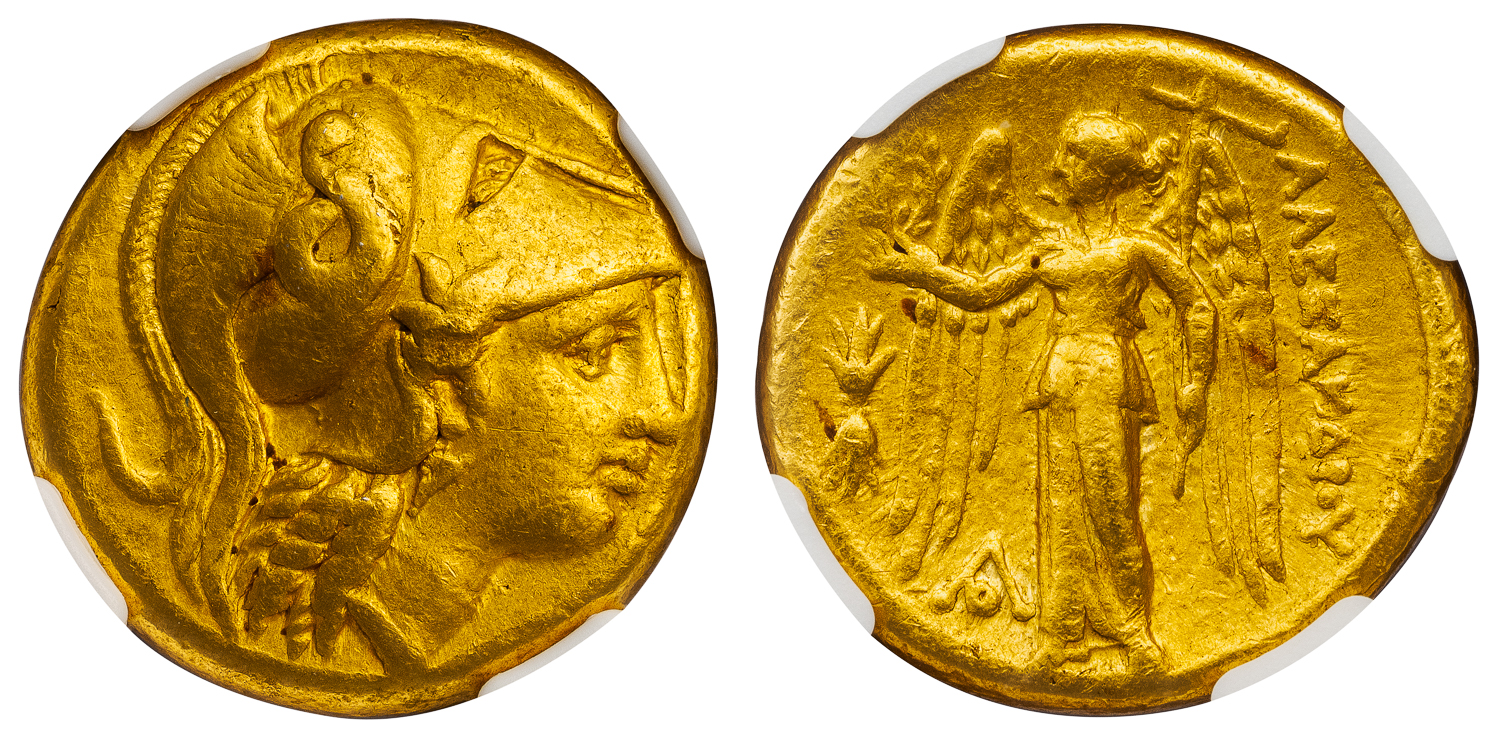
Gold Distater (Two Staters), 17.15 g, 21 mm. Lifetime emission of Aegae (?), ca. 325–323 BC.
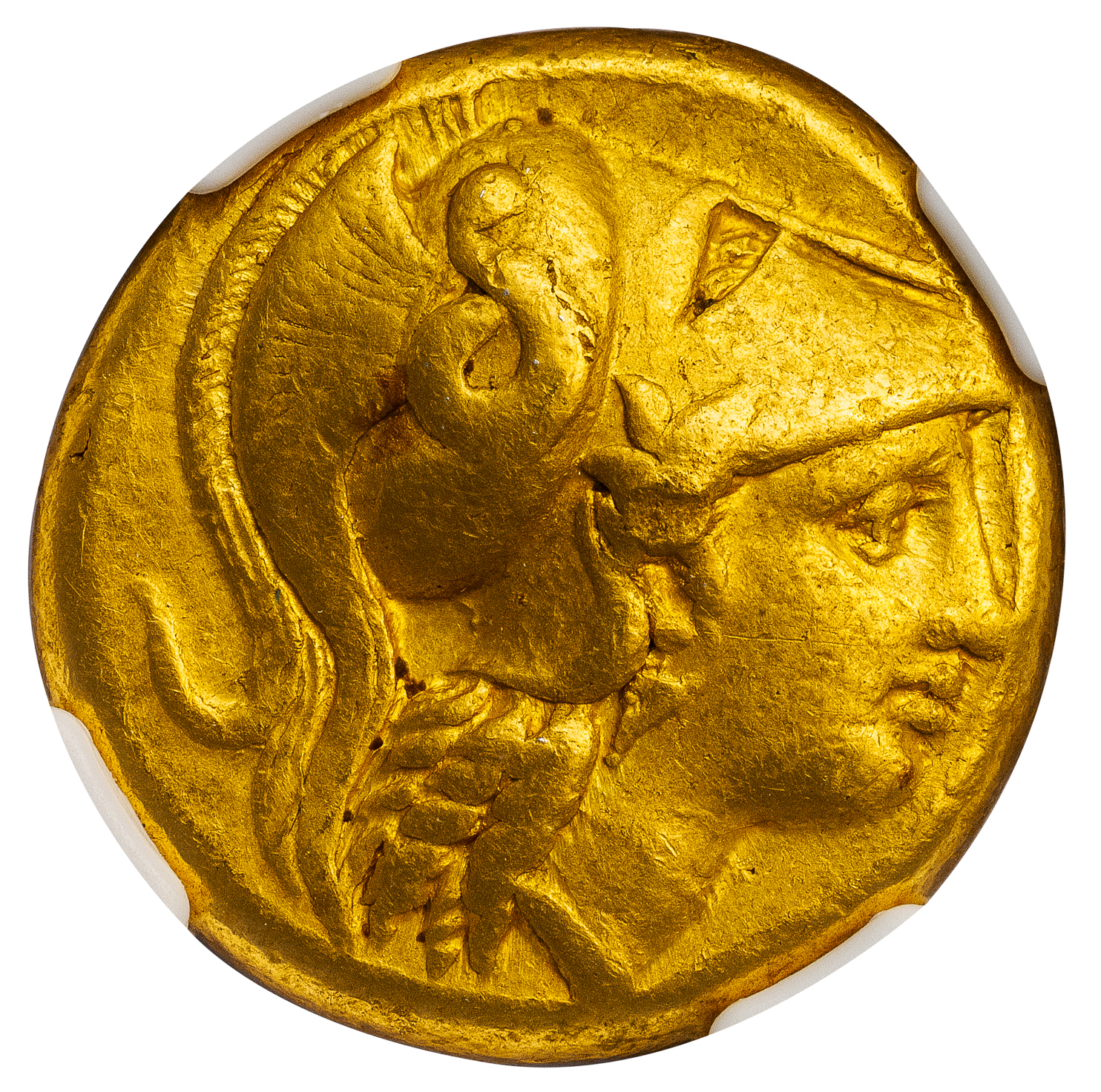
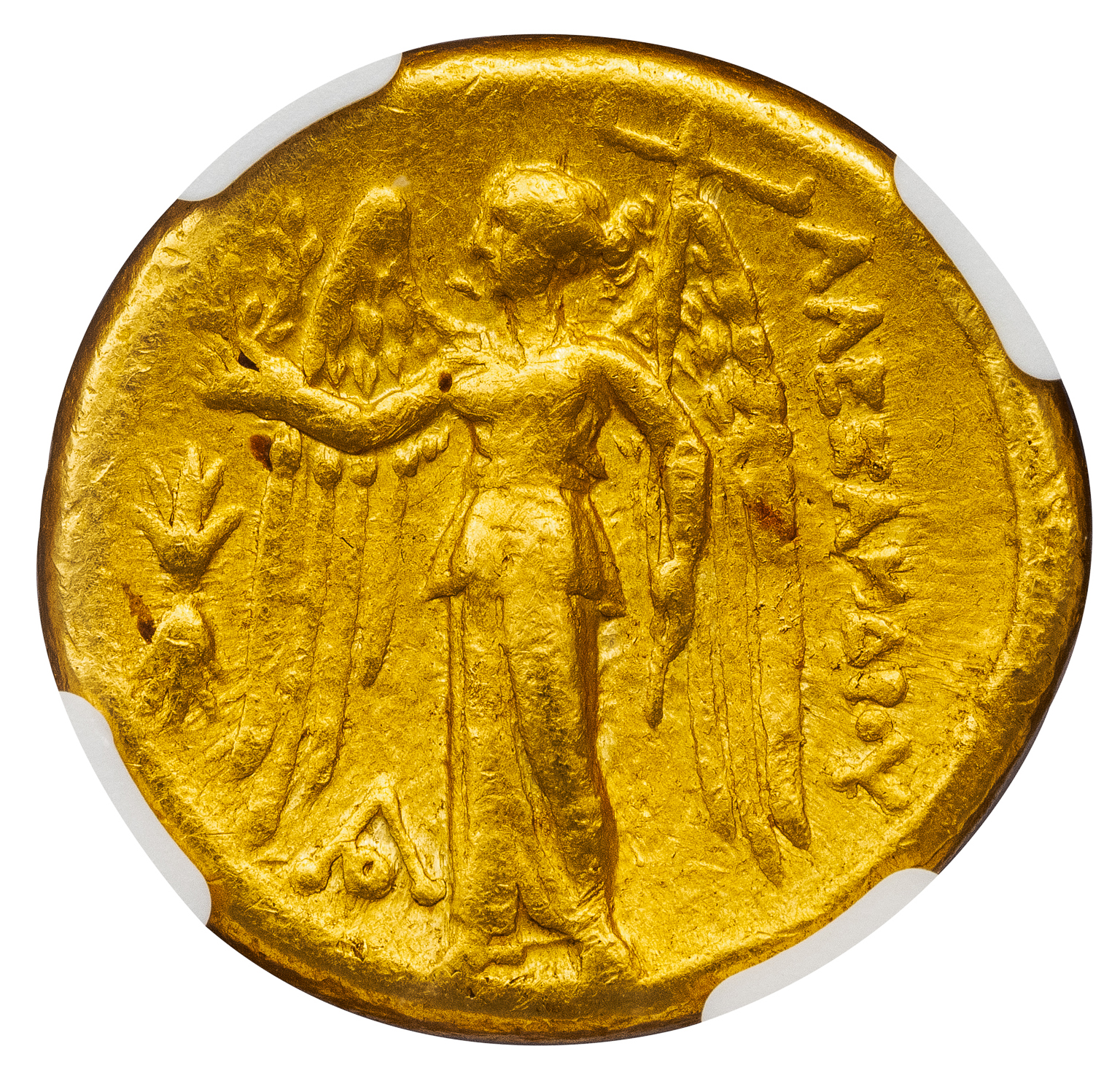
Obv. Head of Athena right, wearing large Corinthian helmet with snake ornament below the plume. Rev. AΛEΞANΔPOY, Nike standing, her hair gathered in a topknot, looking left, holding wreath in right hand and stylis over left shoulder, thunderbolt in left field, ΛO monogram below left wing.
Price 191; SNG Copenhagen 623, Noe, Sicyon, 7; Troxell, Studies in the Macedonian Coinage of Alexander the Great, Group B and pl. 24, 537–9.
Published: Westmoreland Collection, no. 7 (this coin listed and illustrated).
Ex Noble Numismatics 76, 7/27/2004, lot 3075.
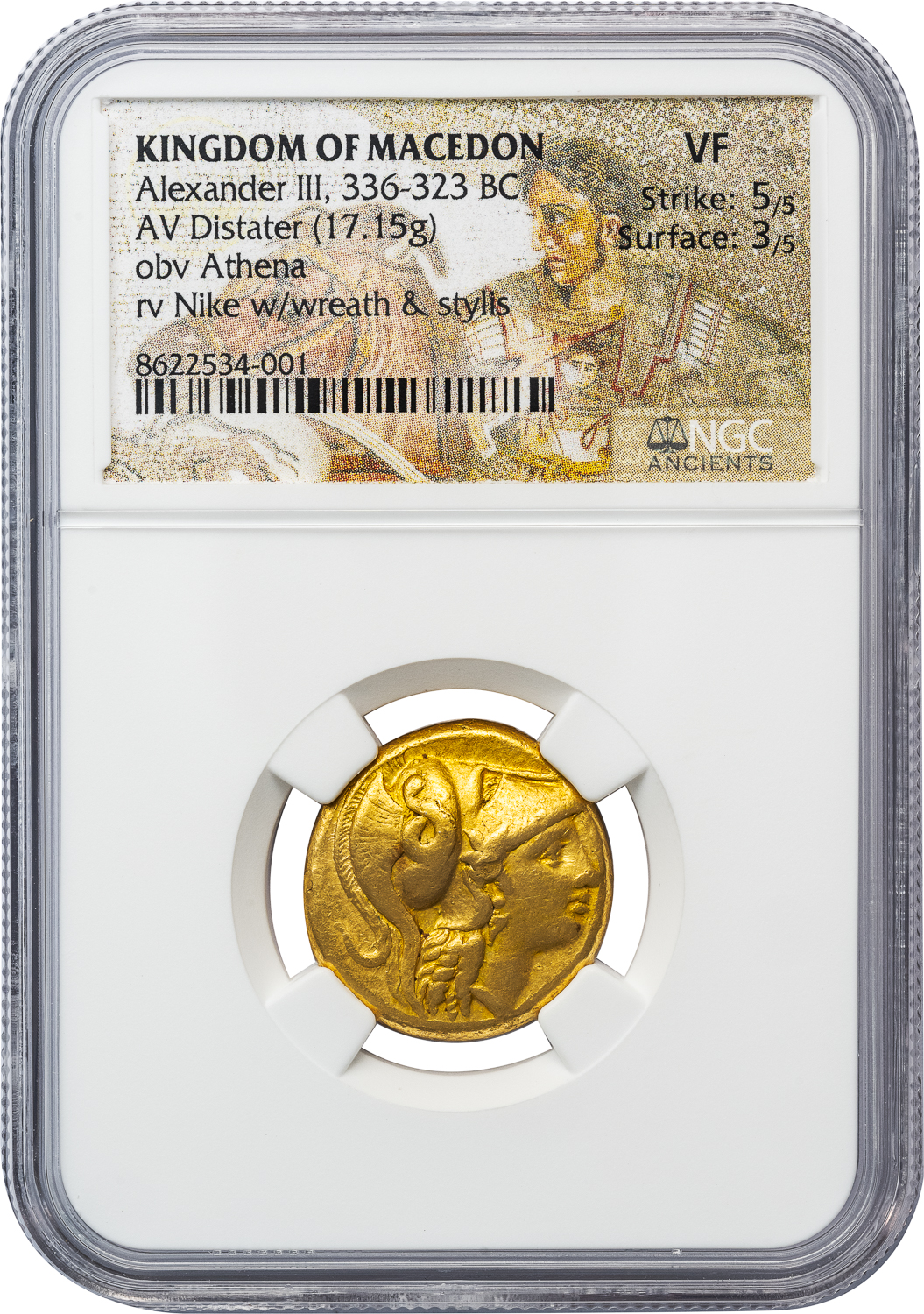
NGC graded VF, Strike 5/5, Surface, 3/5.
Edward T. Newell and Sydney P. Noe originally believed this distater issue and others bearing the same monogram to have been struck at Sicyon under Antipater as Macedonian regent (325–318 BC), due to a supposed similarity between the figure of an athlete used as a symbol on one issue and the boy with taenia symbol frequently used at Sicyon. Martin Price showed that the connection to Sicyon was mistaken and instead considered coins like this attractive gold stater multiple to have been struck during the lifetime of Alexander the Great, possibly at Aegae, the old royal capital of the Argead Macedonian dynasty, largely on the basis of style. More recently, Hyla Troxell confirmed the probable Macedonian origin of this coinage and proposed a late lifetime date of ca. 325–323 BC based on hoard evidence, but suggested that issues with the thunderbolt symbol, like the present piece, may have been struck at a different mint than the one responsible for the other emissions marked with the ΛO monogram.