ALEXANDER THE GREAT GOLD STATER – RARE LIFETIME ISSUE AMONG THE EARLIEST STRUCK AT TARSUS – NGC AU GREEK MACEDONIAN COIN (Inv. 21565)
$12,000.00
21565. MACEDONIAN KINGDOM. ALEXANDER III, THE GREAT, 336–323 BC.
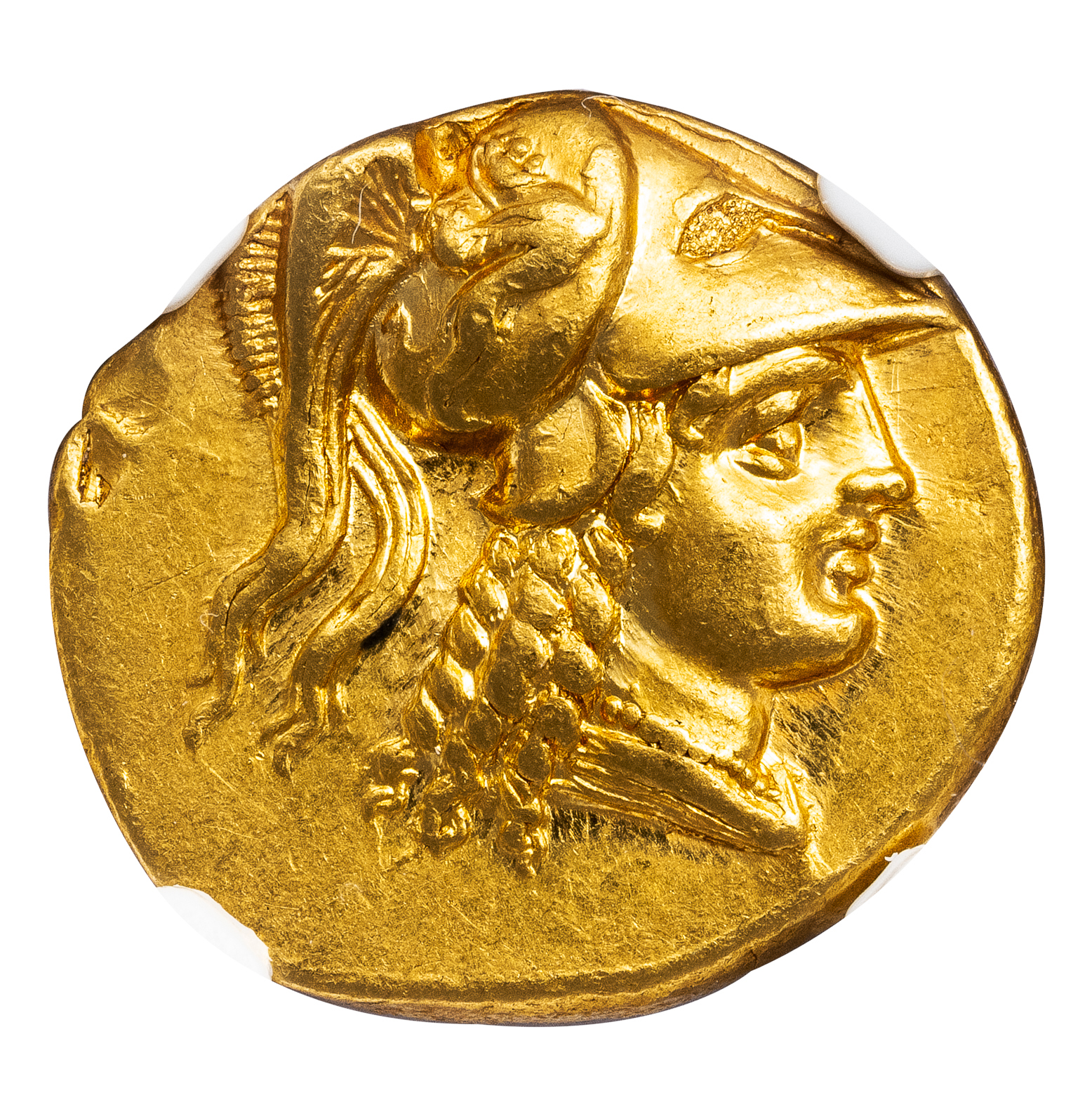
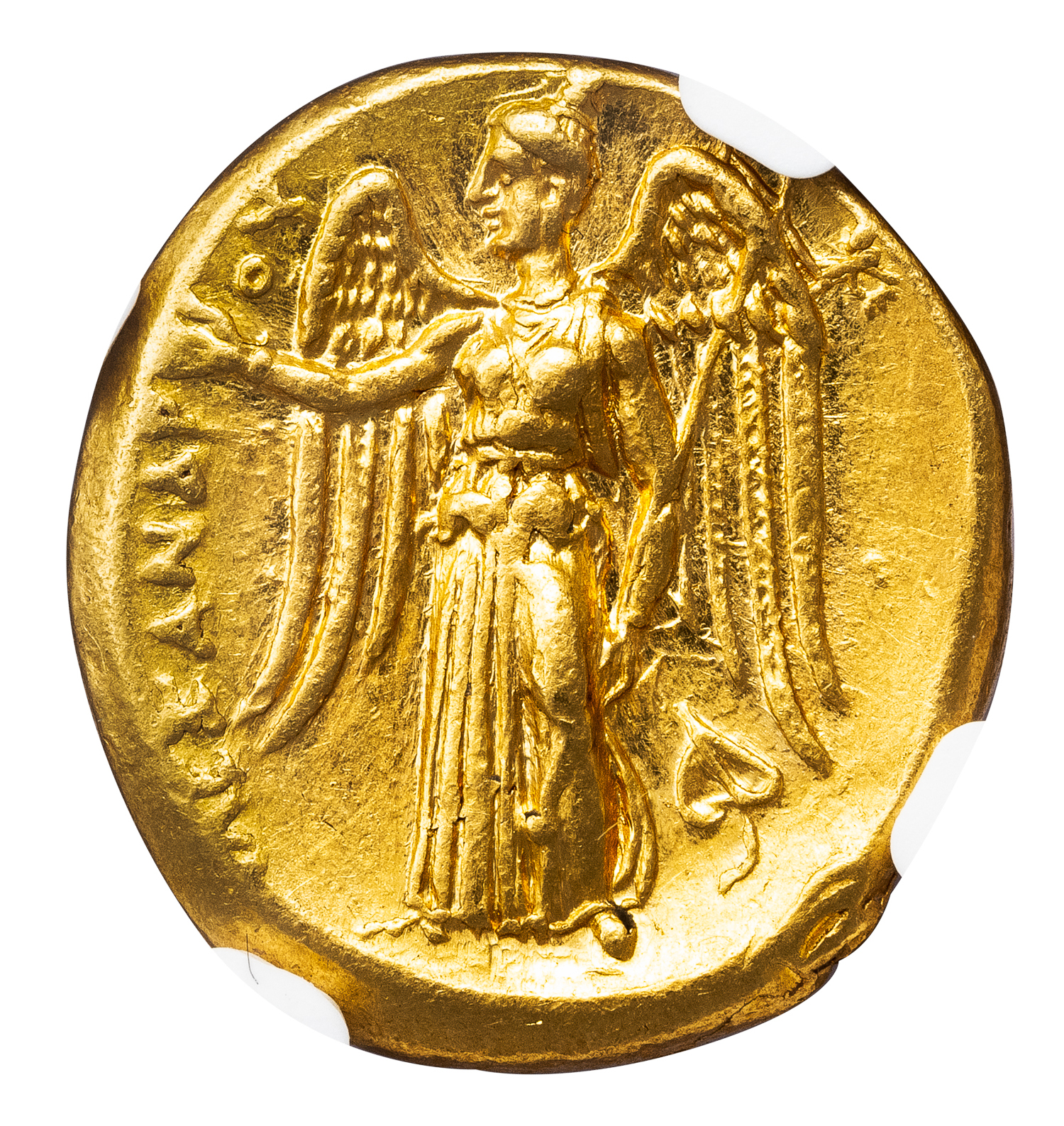
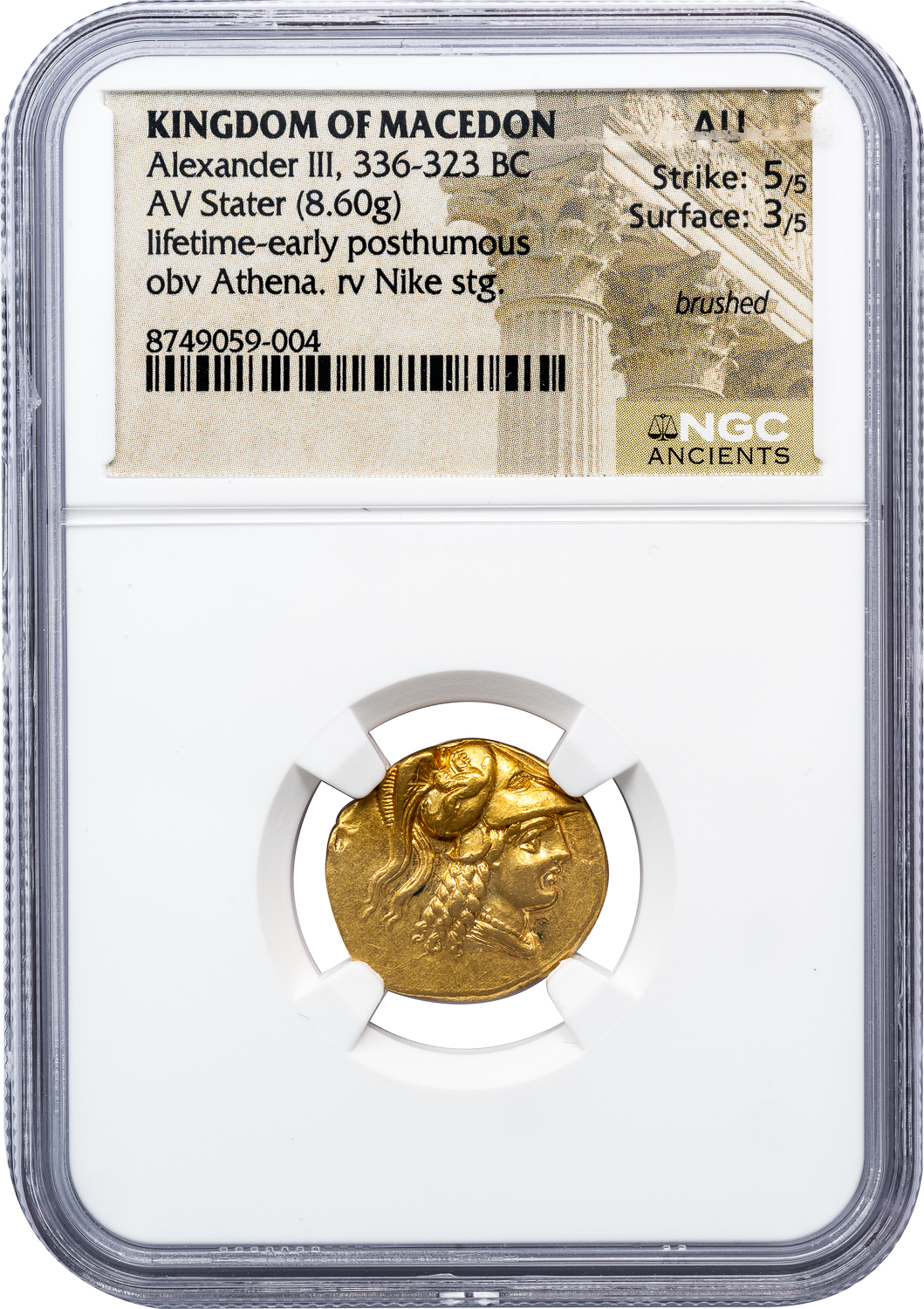
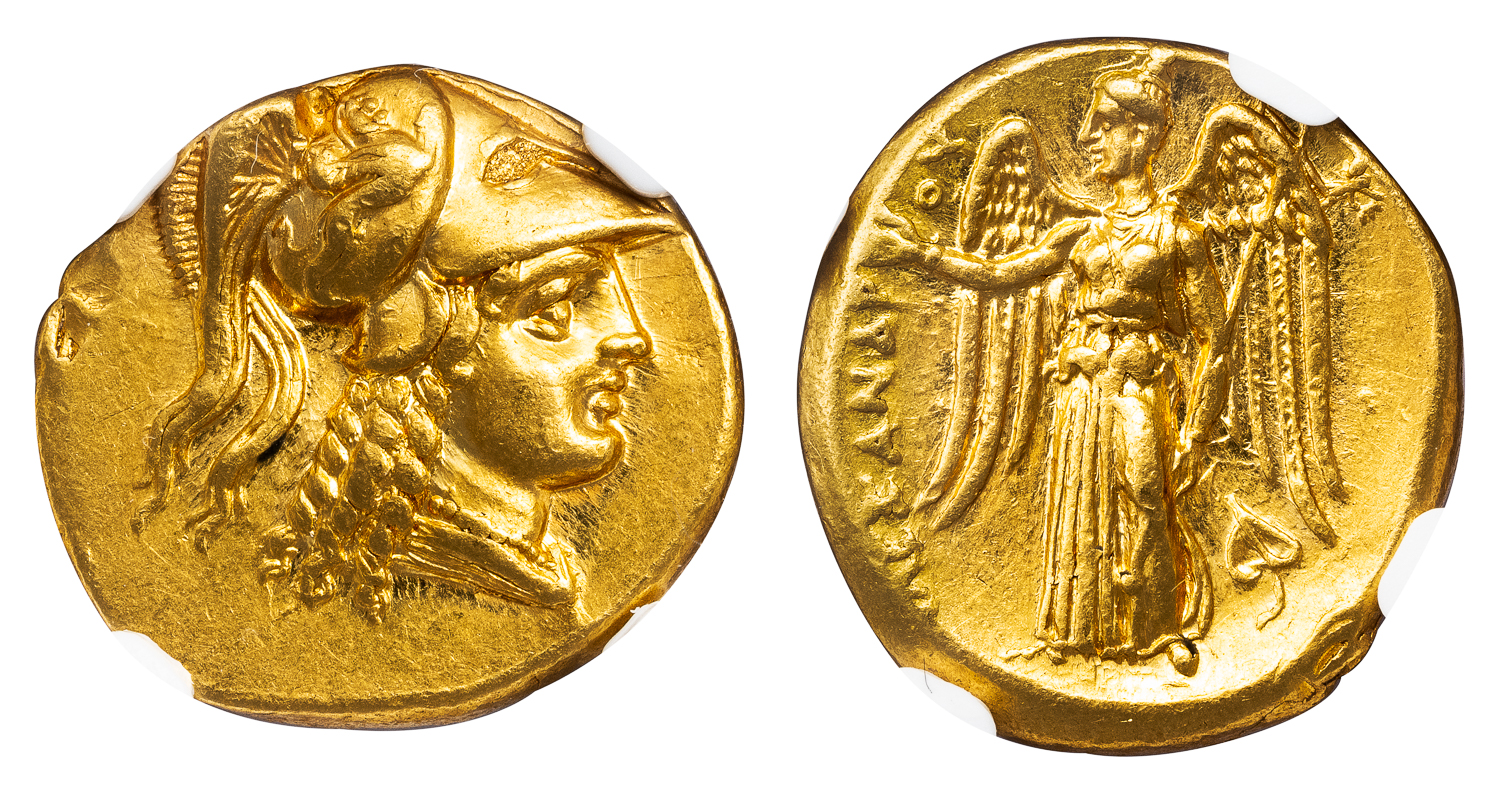
Gold Stater, 8.60 g, 18 mm. Lifetime issue of Tarsus, ca. 332/1–328 BC, among the first eight issues struck at Tarsus after Alexander conquered the city.
Obv. Head of Athena right, wearing large Corinthian helmet with rampant lion-headed griffin ornament below the plume. Rev. AΛEΞANΔPOY, Nike standing, her hair gathered in a topknot, looking left, holding wreath in right hand and stylis with Nike finials over left shoulder, ivy leaf below right wing.
Price 3465 (as Sidon); ANS 1944.100.35129 (same obverse die).
NGC AU, Strike 5/5, Surface 3/5, “brushed,” among the very first Alexander gold staters ever struck. The imagery of the reverse may well echo Alexander’s victory over Tarsus in 333 BC, as Nike, the goddess of victory, extends the wreath to Alexander’s name, and at the same time she carries her stylis decorated with small figures of Victories on each arm. The ivy-leaf variant is extremely rare, with only the ANS specimen recorded on Pella and three other specimens in market records.
It is generally accepted that Alexander the Great introduced his famous imperial silver coinage featuring Heracles and Zeus shortly after his capture of Tarsus in late summer 333 BC. This new coinage resulted from the sudden availability of Persian silver in the city, which was also an established satrapal mint, and from Alexander’s need to pay his army following the great victory at the Battle of Issus on November 5, 333 BC.
Georges Le Rider argued that a group of Alexander’s gold staters and distaters given to Sidon by E. T. Newell and Martin Price, to which the present stater belongs, were really minted at Tarsus alongside the early imperial silver. This reattribution is based on stylistic grounds such as the lion–griffin on Athena’s helmet and the small Nikai adorning the top of Nike’s stylis – both features known from subsequent Alexander stater issues at Tarsus. This highly convincing reattribution now makes Tarsus the epicenter for the development of Alexander’s influential imperial coinage in both silver and gold.