

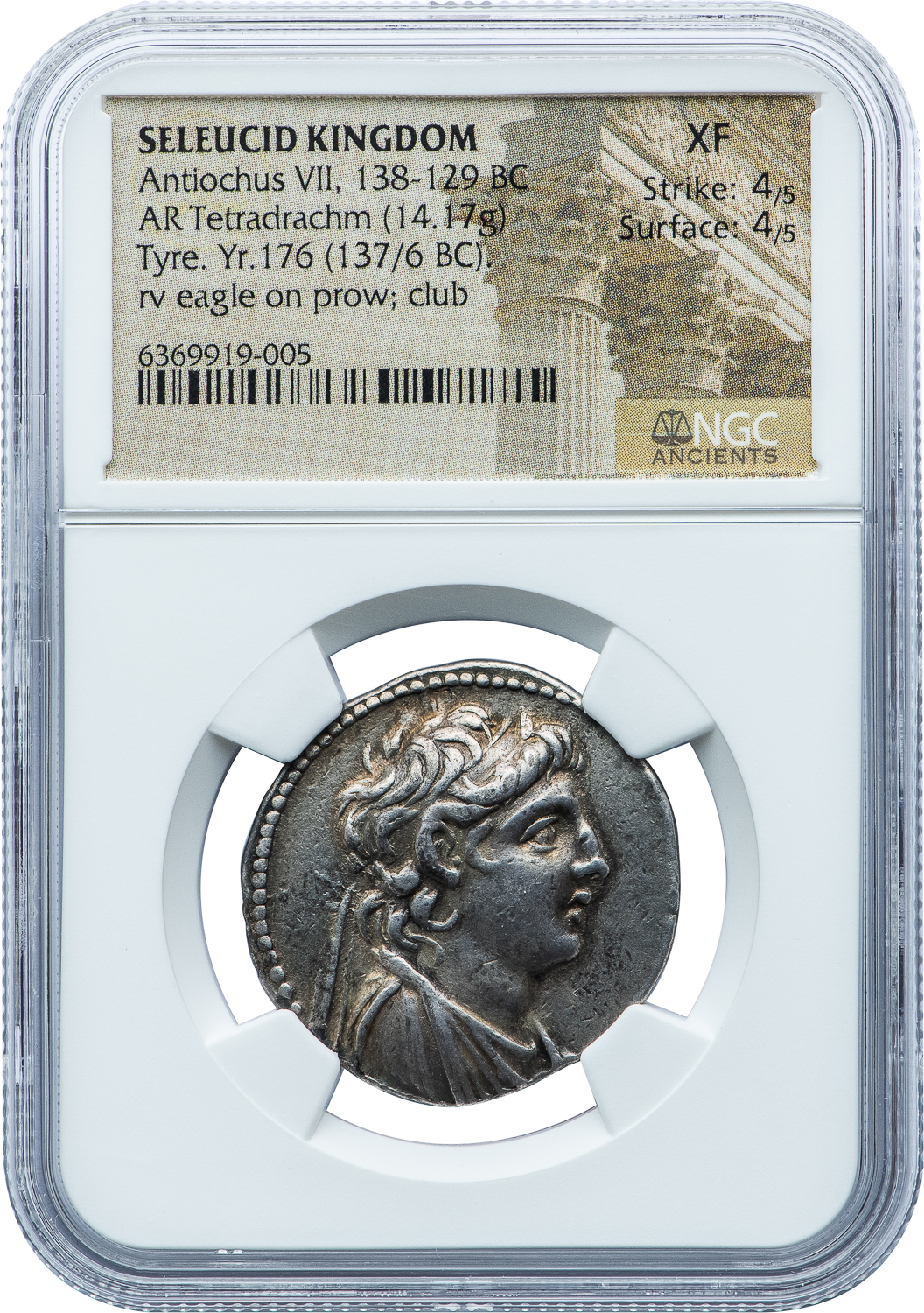
ANTIOCHUS VII SILVER TETRADRACHM – TYRE ISSUE OF YEAR 176 EX SALTON COLLECTION – XF NGC GRADED GREEK SELEUCID KINGDOM COIN (Inv. 18534)
$1,350.00
18534. SYRIA. SELEUKID KINGDOM. ANTIOCHUS VII, 138-129 BC.
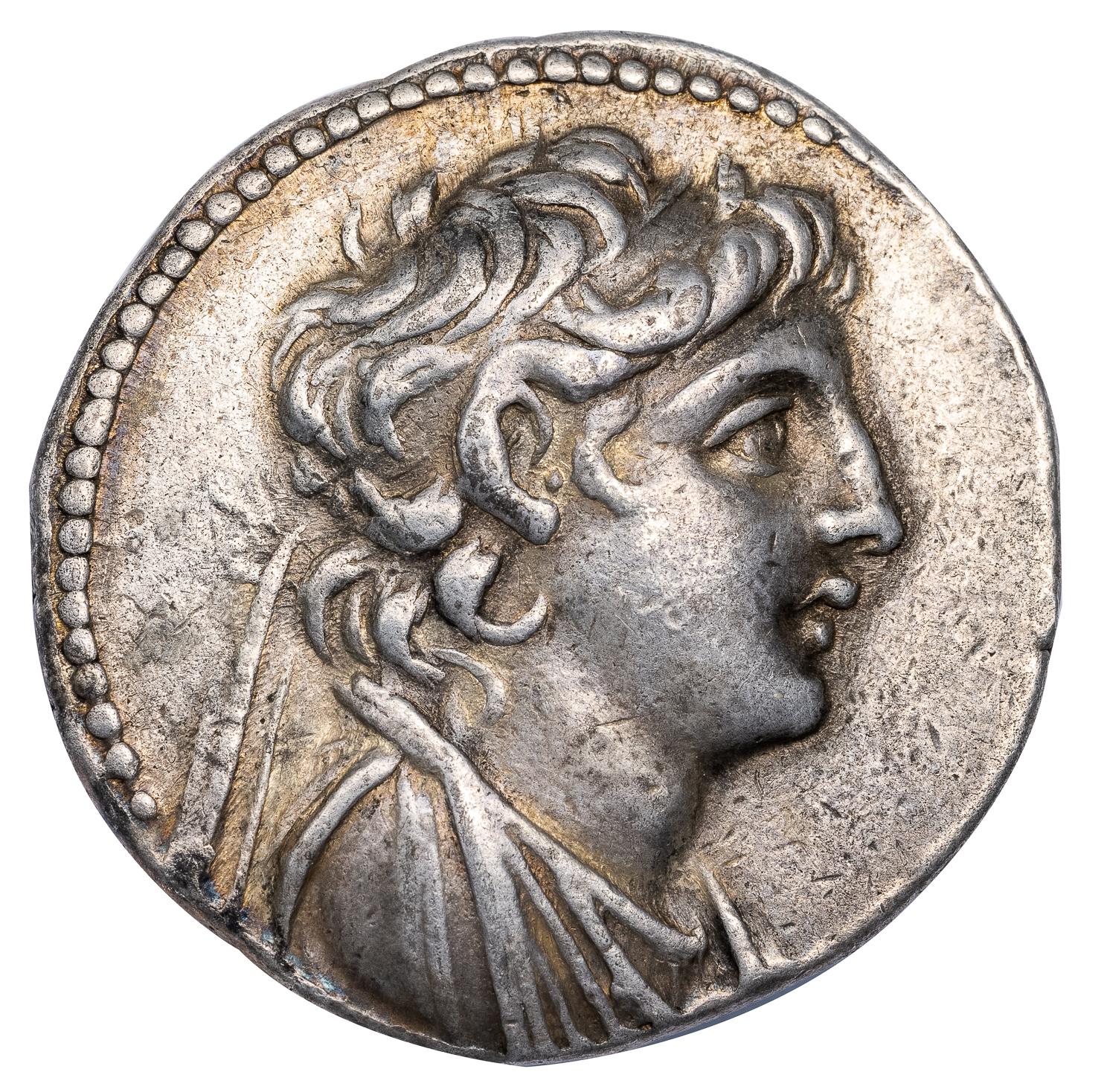
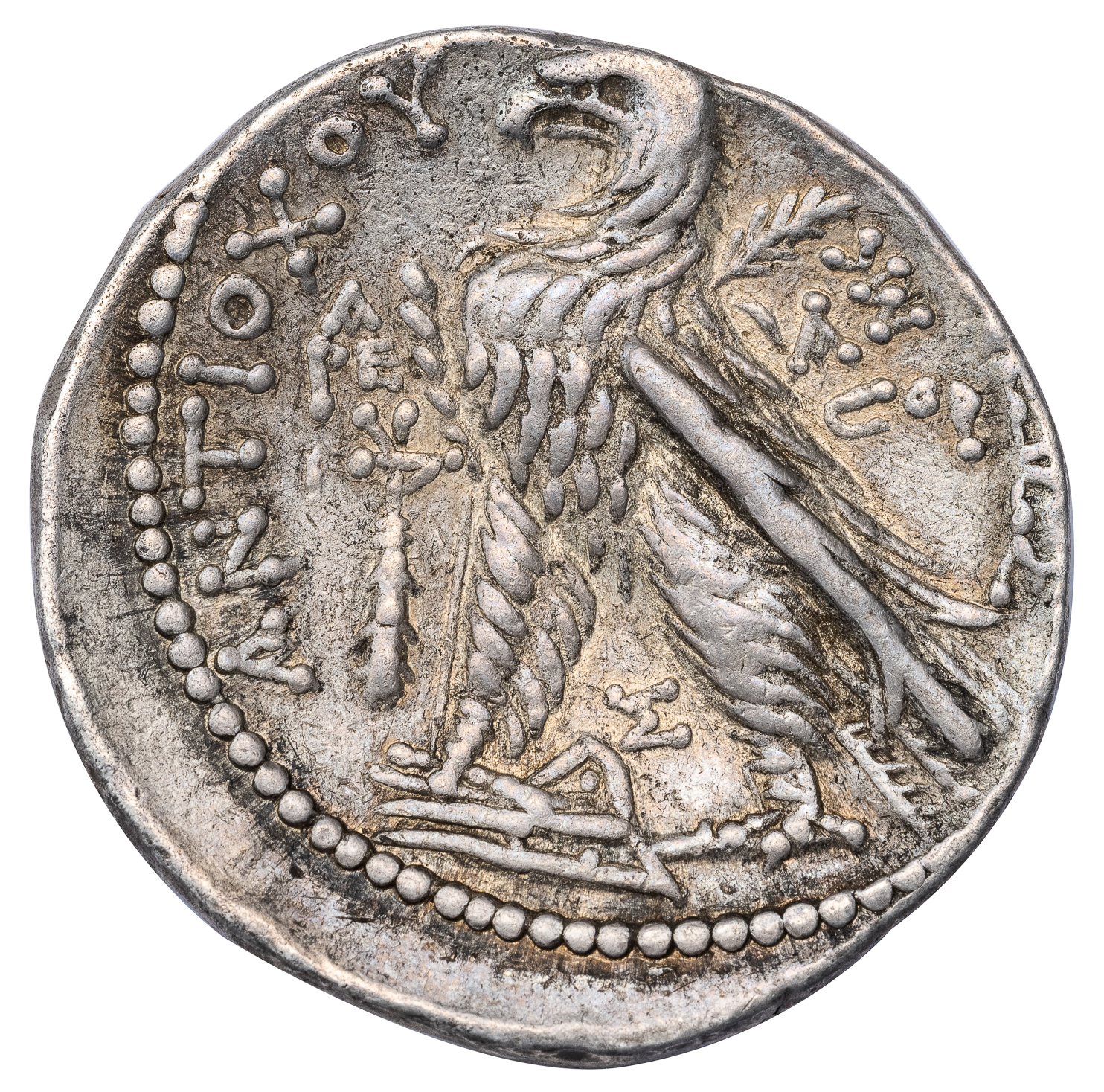
Silver Tetradrachm, 14.17 g, 29 mm. Issue of Tyre, dated SE 176 (137/6 BC).
Obv. BAΣIΛEΩΣ ANTIOΧOY, diademed and draped bust of Antiochus VII right. Rev. Eagle standing left on prow, AΣY monogram above ςΟΡ (date) in right field, Σ between legs.
SC 2109.4b; HGC 9, 1074.
Ex Salton Collection, likely acquired in the 1950s-1960s when Mr. Salton owned a numismatic firm in New York.
NGC graded XF, Strike 4/5 Surface 4/5, highlights of golden toning.
This tetradrachm was struck in the immediate aftermath of the struggle between Antiochus VII and the usurper Tryphon for control of cities in Phoenicia and Coele Syria. Tyre had recognized Antiochus VII early on and was already striking coins for the king in late 138 or early 137, when he cornered Tryphon at Dora. Under a close siege, Tryphon fled this Phoenician city, only to be captured and executed at Apamea in Syria, thereby leaving Antiochus VII as the sole ruler of the Seleucid kingdom. In addition to financing Seleucid military operations in Phoenicia, the Tyrian tetradrachms of Antiochus VII (and those of his brother, Demetrius II) provided the model for the autonomous shekels of Tyre introduced in 126/5 BC. Prior to the introduction of autonomous issues, the Seleucid coinage struck at Tyre served as the only silver coins accepted at the Jewish Temple in Jerusalem.