
CHALCEDON OR CALLATIS GOLD ALEXANDER TYPE STATER – RARE EMISSION STRUCK ON BROAD PLANCHET – NGC MS GREEK BITHYNIA COIN (inv. 21576)
$16,000.00
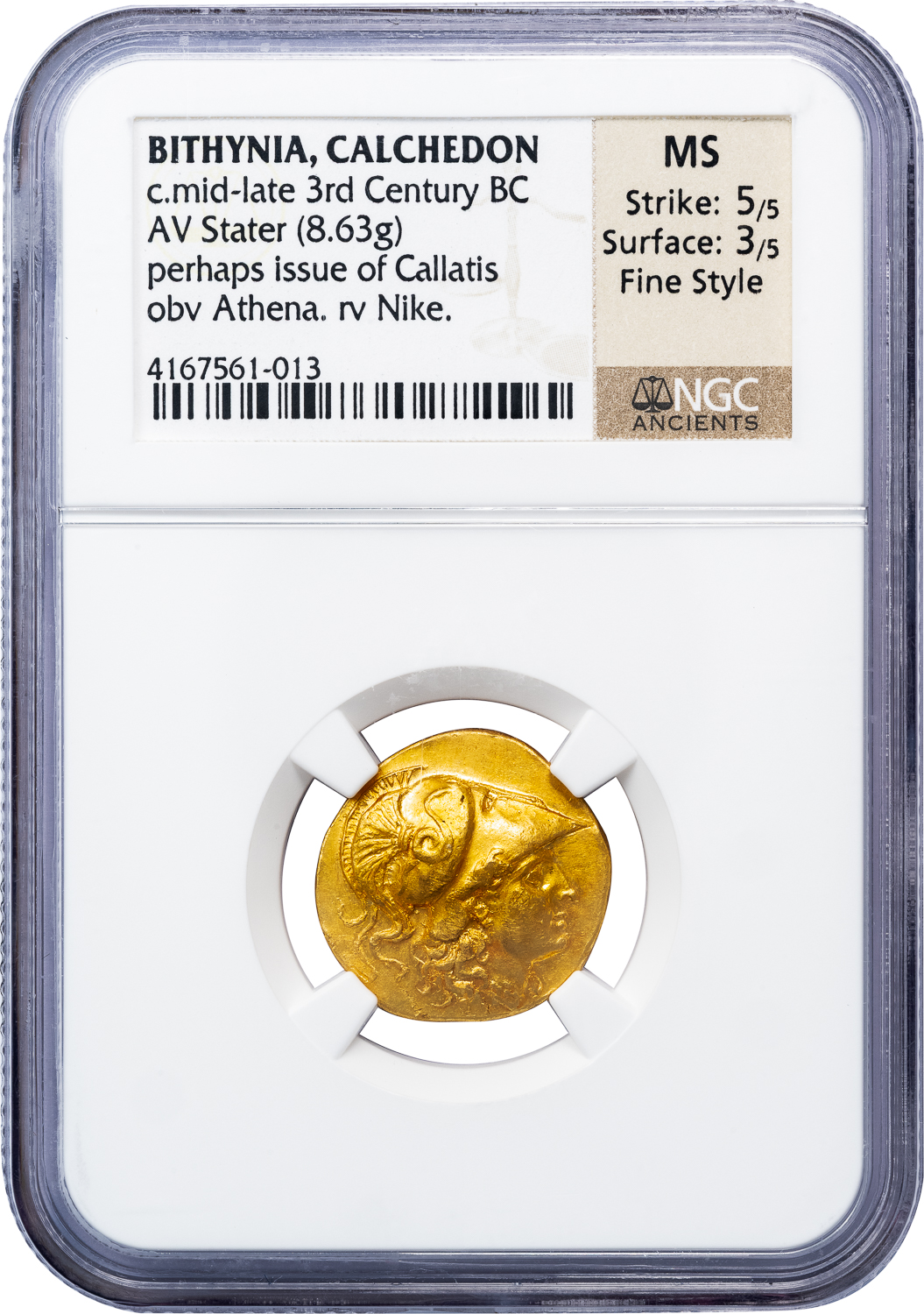
21576. BITHYNIA. CHALCEDON OR CALLATIS. CIVIC ISSUE IN THE NAMES AND TYPES OF ALEXANDER THE GREAT. 250–225 BC.
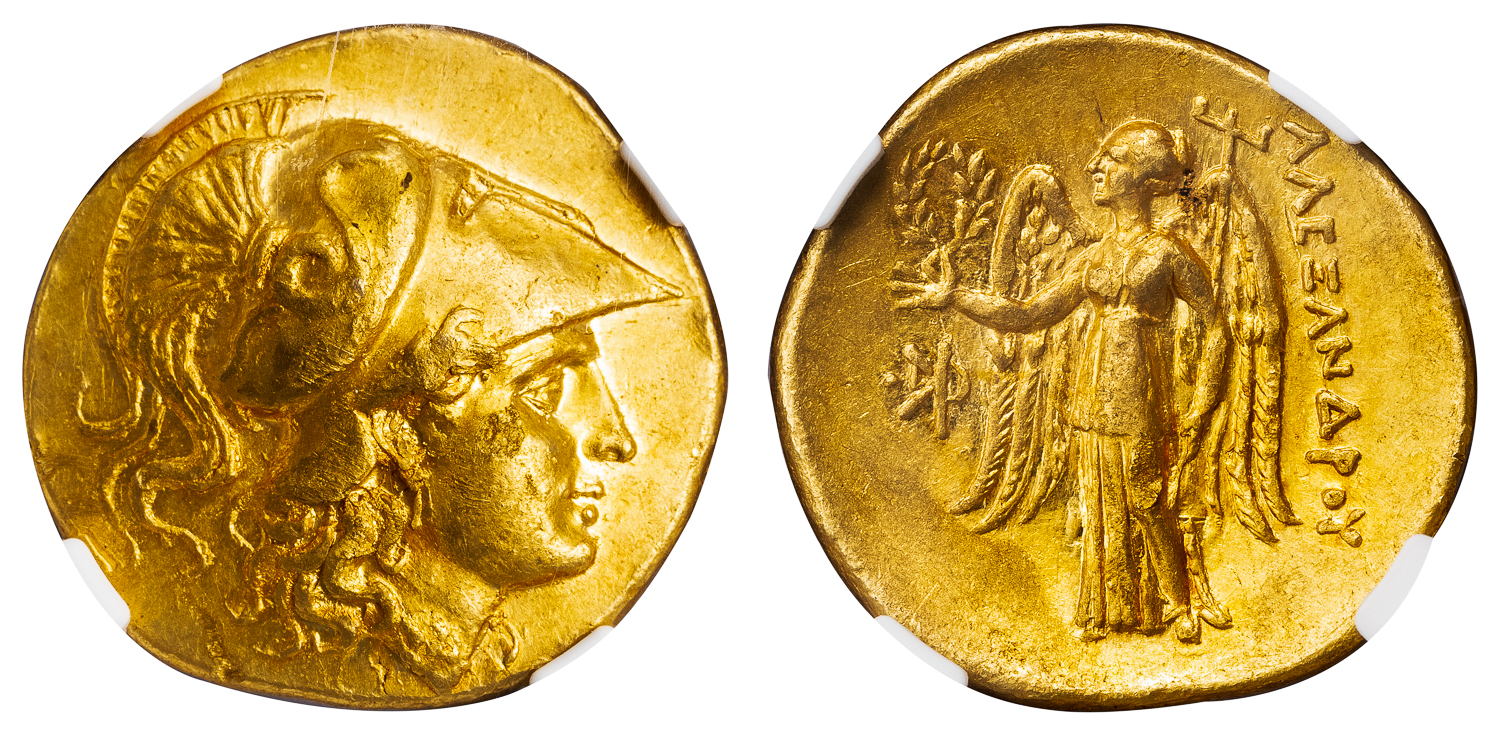
Gold Stater of Alexander type, 8.63 g, 19 mm. Issue of Chalcedon (or perhaps Callatis), ca. 250-225 BC.
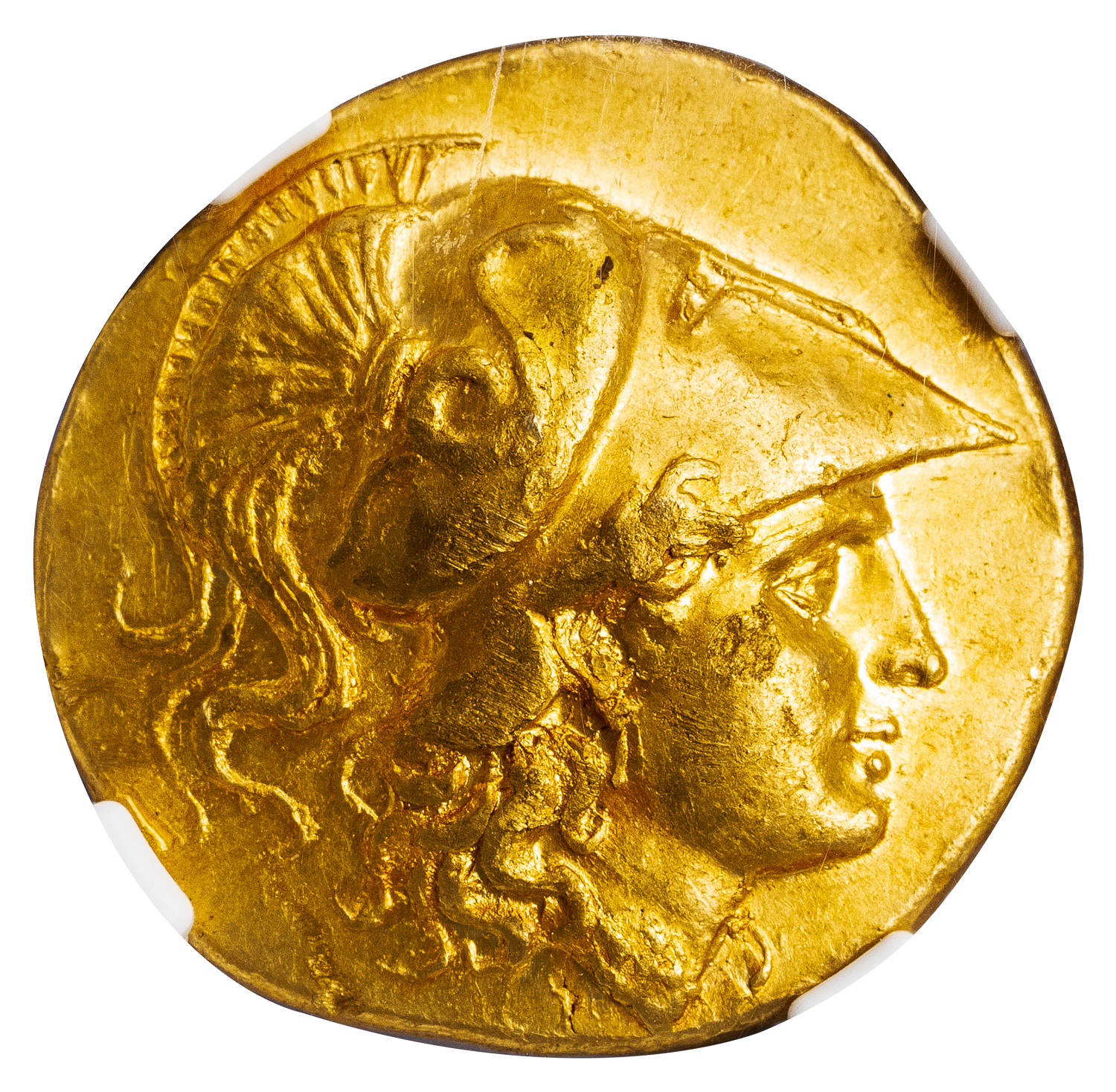
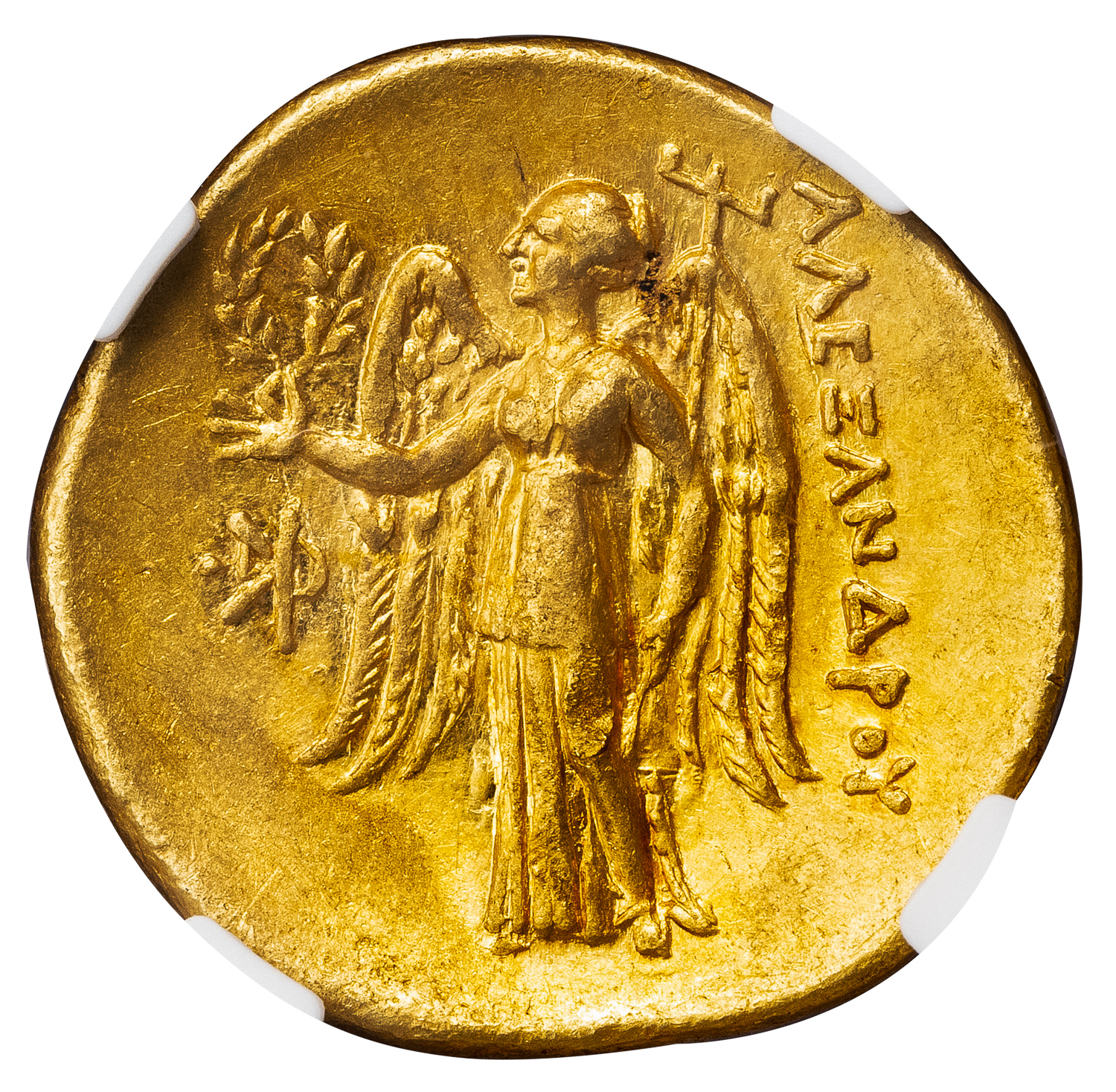
Obv. Head of Athena right, wearing large Corinthian helmet with snake ornament below the plume. Rev. ΑΛΕΞΑΝΔΡΟΥ, Nike standing, looking left, holding wreath and stylis, OΚAΛ monogram (retrograde) in left field.
Price 899; ANS inv. 1944.100.35910; inv. 1944.100.35910.35911.
Ex Vilmar Numismatics, inv. 9584 (2015); ex Jonathan Rosen collection = ex Fritz Rudolf Künker 174, 9/27/2010, lot 155.
NGC MS, Strike 5/5, Surface 3/5, FINE STYLE, perfectly centered on a medallic planchet and exceedingly rare, Pella cites the two ANS pieces referenced above, while Price mentions one of the ANS specimens and two from the great Anadol Hoard; Coin Archives cites only one other specimen in inferior condition, while the ANS Photofile that covers nearly 80 years of market records until the 1980s, shows another single piece of this elusive variety.
Although traditionally attributed to the Pontic city of Callatis, there is increasing evidence that many of these gold staters are issues of Chalcedon, a city on the Bosporus straits that along with Byzantium controlled maritime traffic with the Black Sea. These were the most important gold Alexanders of the Propontic and Black Sea area in the third century BC, and they were likely used as payment to the many local peoples employed as mercenaries of Hellenistic armies in the continual warfare of the time. Their politically neutral types (that only mentioned Alexander the Great) made them acceptable to different kingdoms that were often in conflict among each other.