
CITIUM SILVER STATER – ISSUE OVERSTRUCK OVER AEGINA STATER – VF GREEK CYPRUS COIN (Inv. 21535)
$750.00
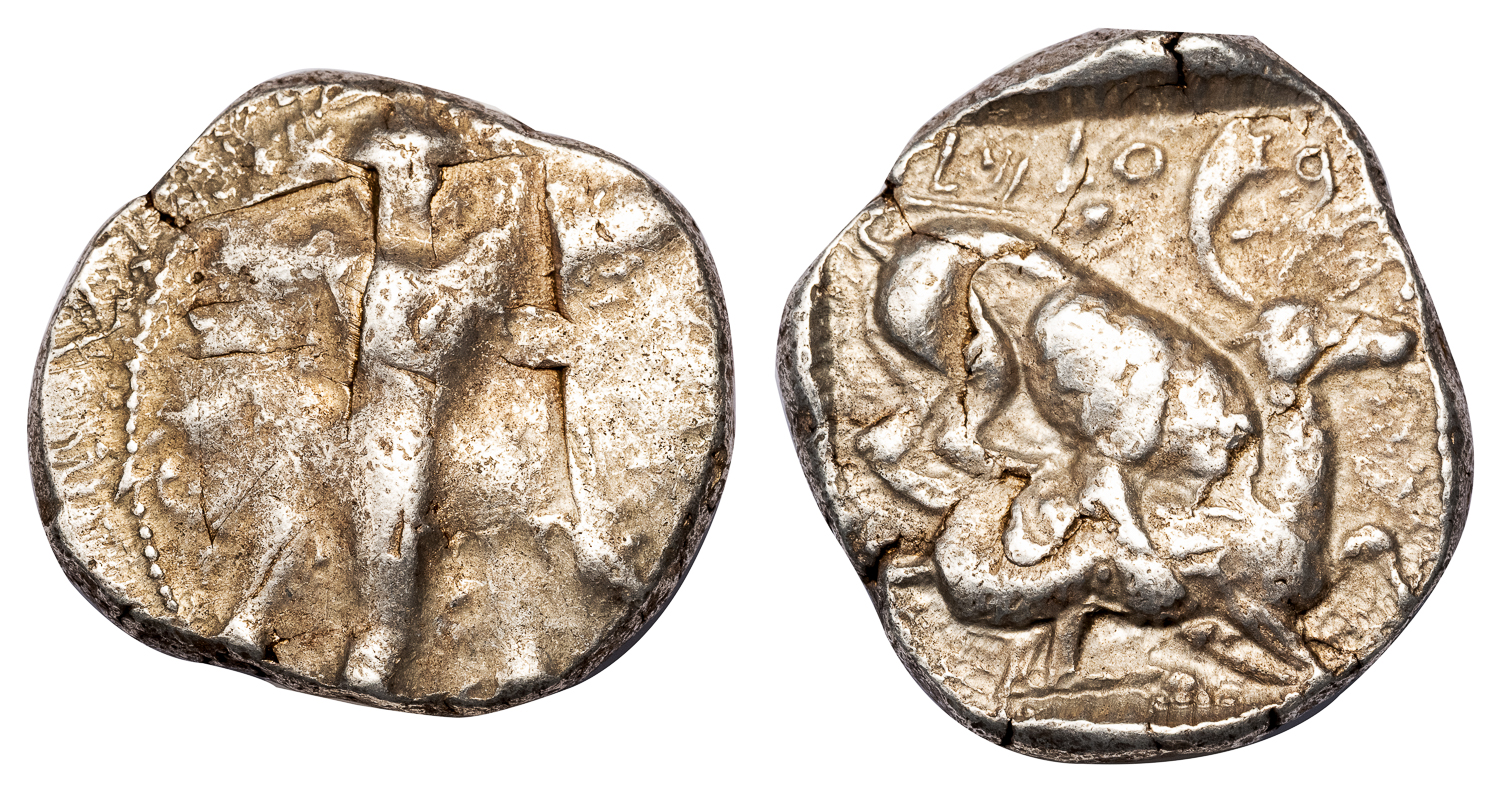
21535. CYPRUS. CITIUM. BAALMELEK II, ca. 425–400 BC.
Silver Stater, 10.98 g, 24 mm.
Obv. Heracles right, wearing lion skin, raising club to strike, [ankh to lower right]. Rev. (Aramaic legend), lion attacking stag crouching right.
Tziambazis 19; Zapiti & Michaelidou 12; cf. Vilmar FPL XII, p. 41, inv 21442 for a similar overstrike.
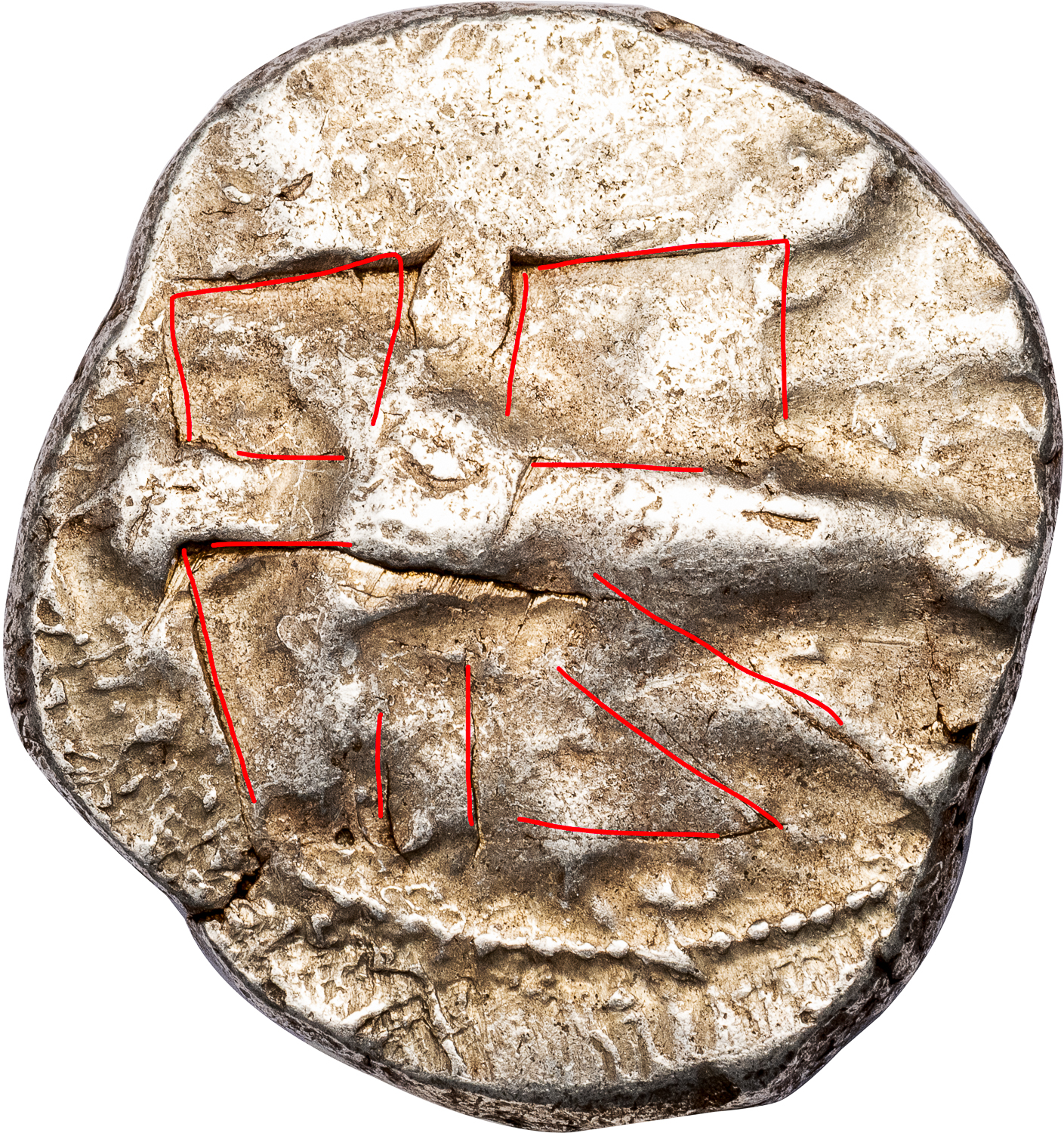
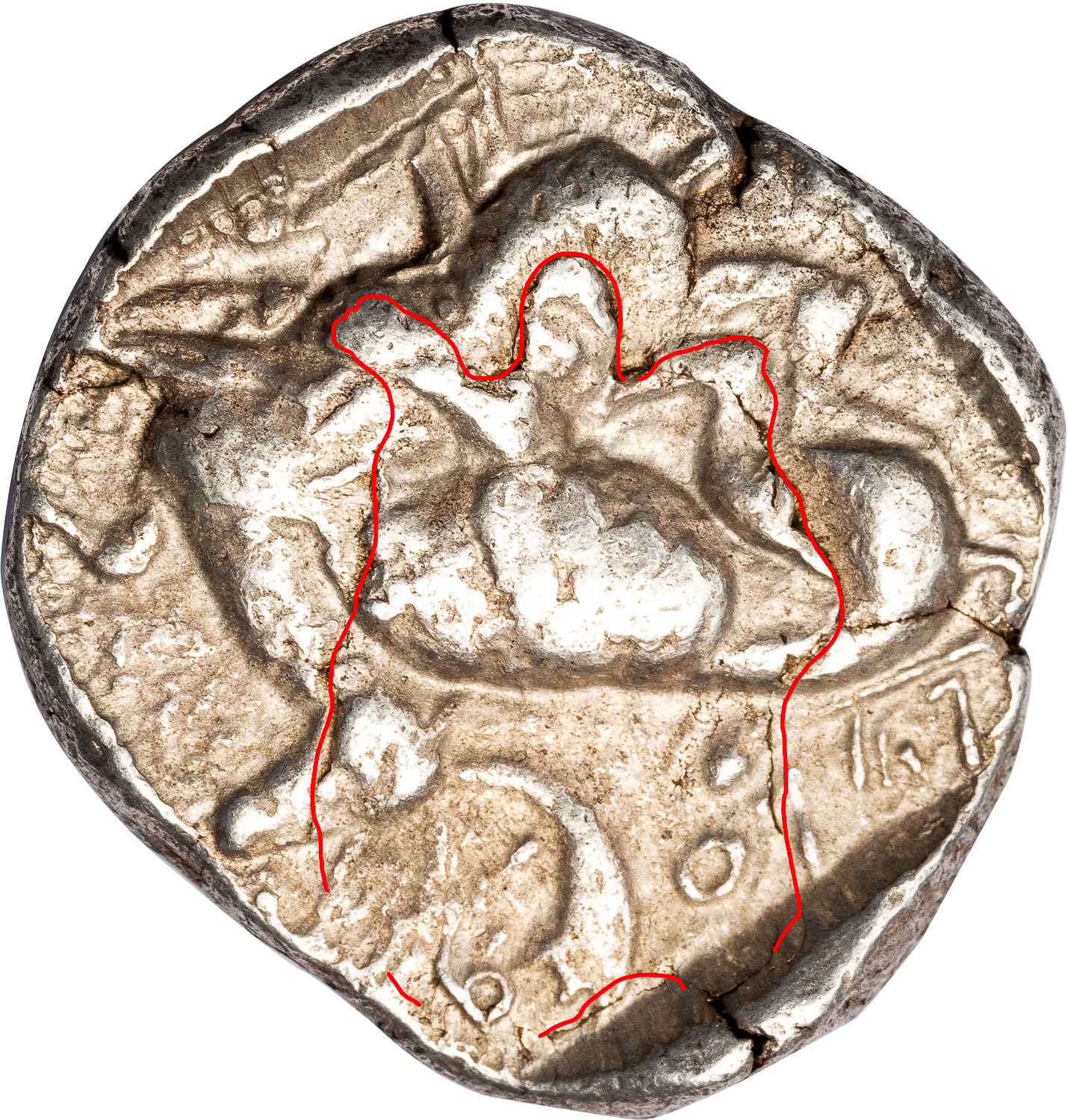
VF, overstruck on an Aegina stater with a worn obverse die typical for these issues. Substantial traces of the undertype’s skew pattern are visible on the obverse while the head of the turtle and part of its shell appear on the reverse.
In the sixth and early fifth centuries BC, silver staters of Aegina—the famous “turtles”—flowed south to Egypt and the Levant as part of the Mediterranean grain trade, which was dominated by Aegina’s powerful merchant fleet. As Cyprus was an important stopping point on the way to and from grain-rich Egypt, Aeginetan turtles frequently found their way to the island’s various city-kingdoms and regularly appear in Cypriot coin hoards. In 457 BC, Aegina was defeated by its commercial rival, Athens, and the movement of “turtles” gradually ceased, being replaced by Athenian “owl” tetradrachms. Having lost their added value as widely recognized trade coinage but retaining a weight standard compatible with the Persian siglos standard used in Cyprus, Aeginetan “turtles” were often overstruck with the royal types of Cypriot kings who ruled in the second half of the fifth century BC. The kings of Citium, Azbaal and Baalmelek II, are especially well-known for their overstriking, but “turtles” are also known to have been overstruck by Stasandros of Paphos.