
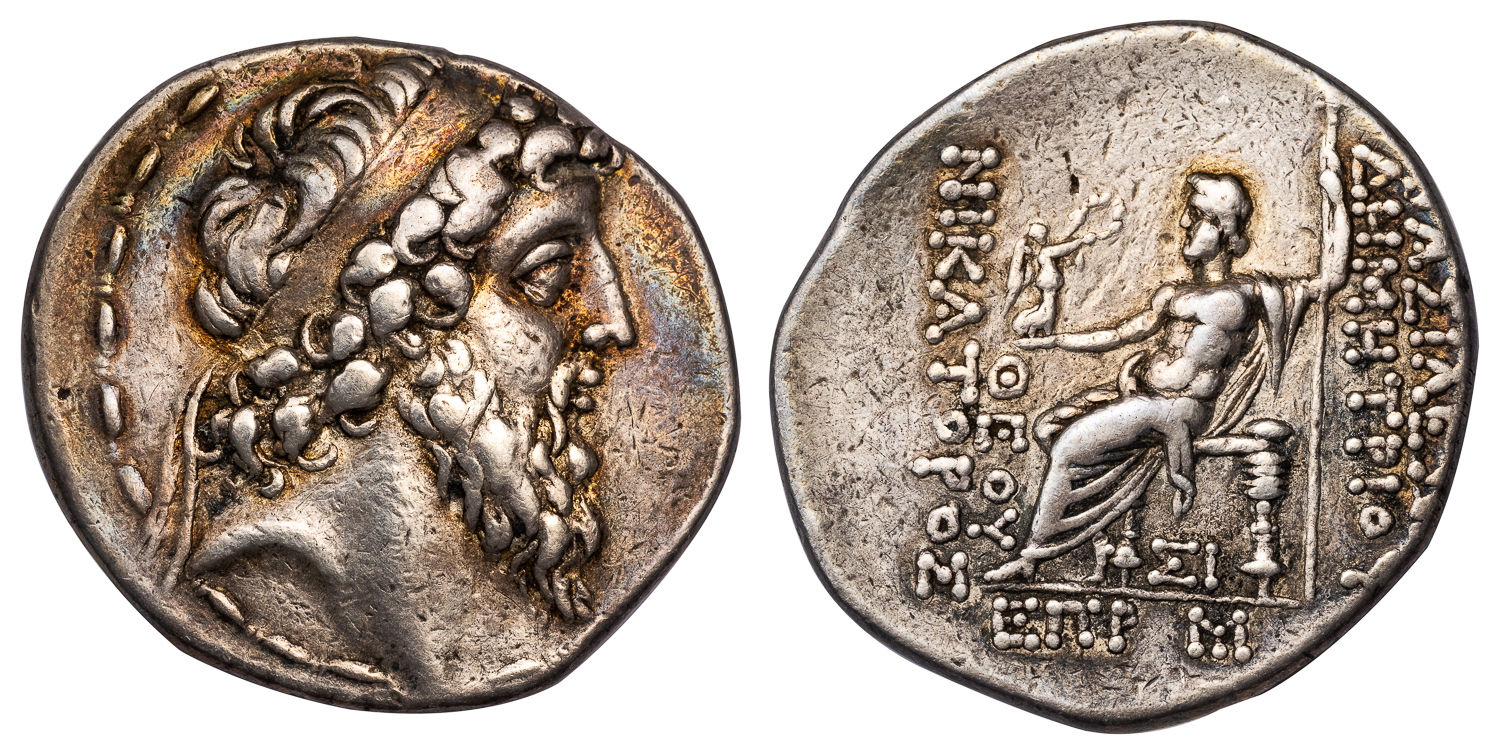
DEMETRIUS II SILVER TETRADRACHM – SECOND REIGN DATED ISSUE OF TYRE – VF NGC GRADED GREEK SELEUCID COIN (Inv. 21270)
$1,500.00
21270. SELEUCID KINGDOM. DEMETRIUS II, SECOND REIGN, 129–125 BC.
Silver Tetradrachm, 16.44 g, 31 mm. Issue of Sidon, dated civic year 185 (128/7 BC).
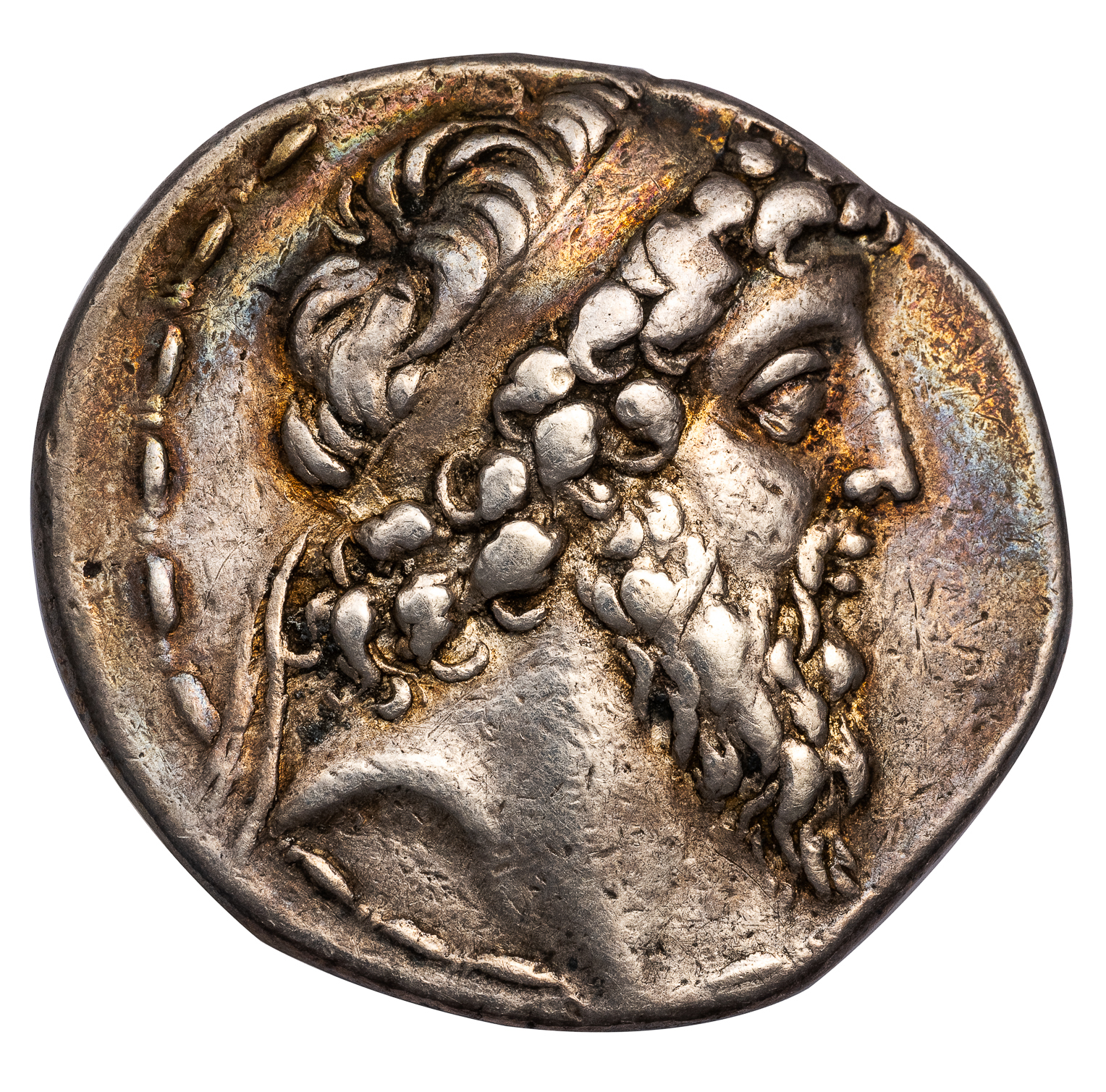
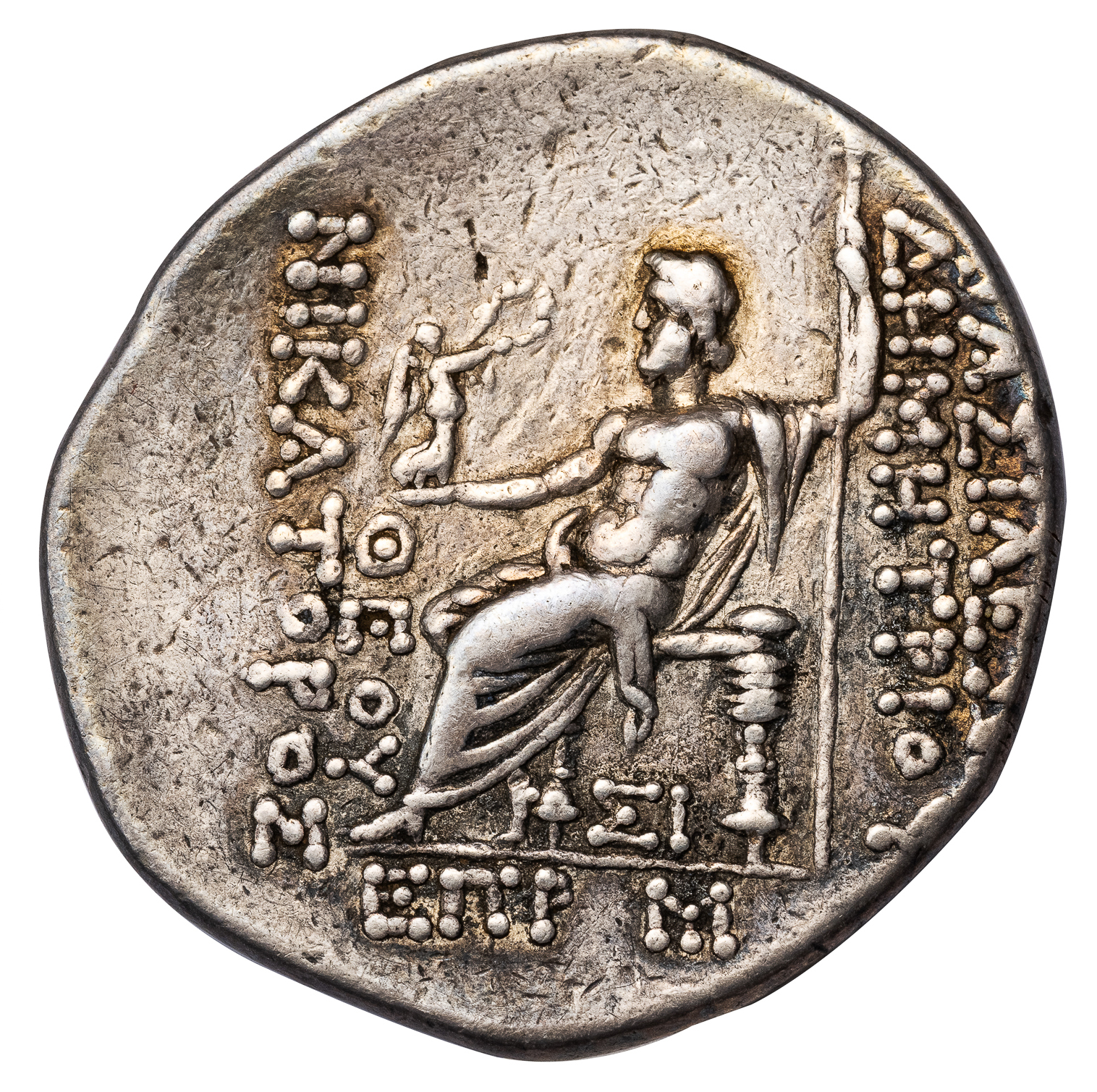
Obverse: Diademed and bearded head of Demetrius II. Reverse: BAΣΙΛΕΩΣ ΔHMHTPIOY ΘEOY NIKATOPOΣ, Zeus enthroned left, holding Nike, in outer left field, ΣI below throne, year ΕΠP and M in exergue.
SC 2187a; HGC 9, 1117e.
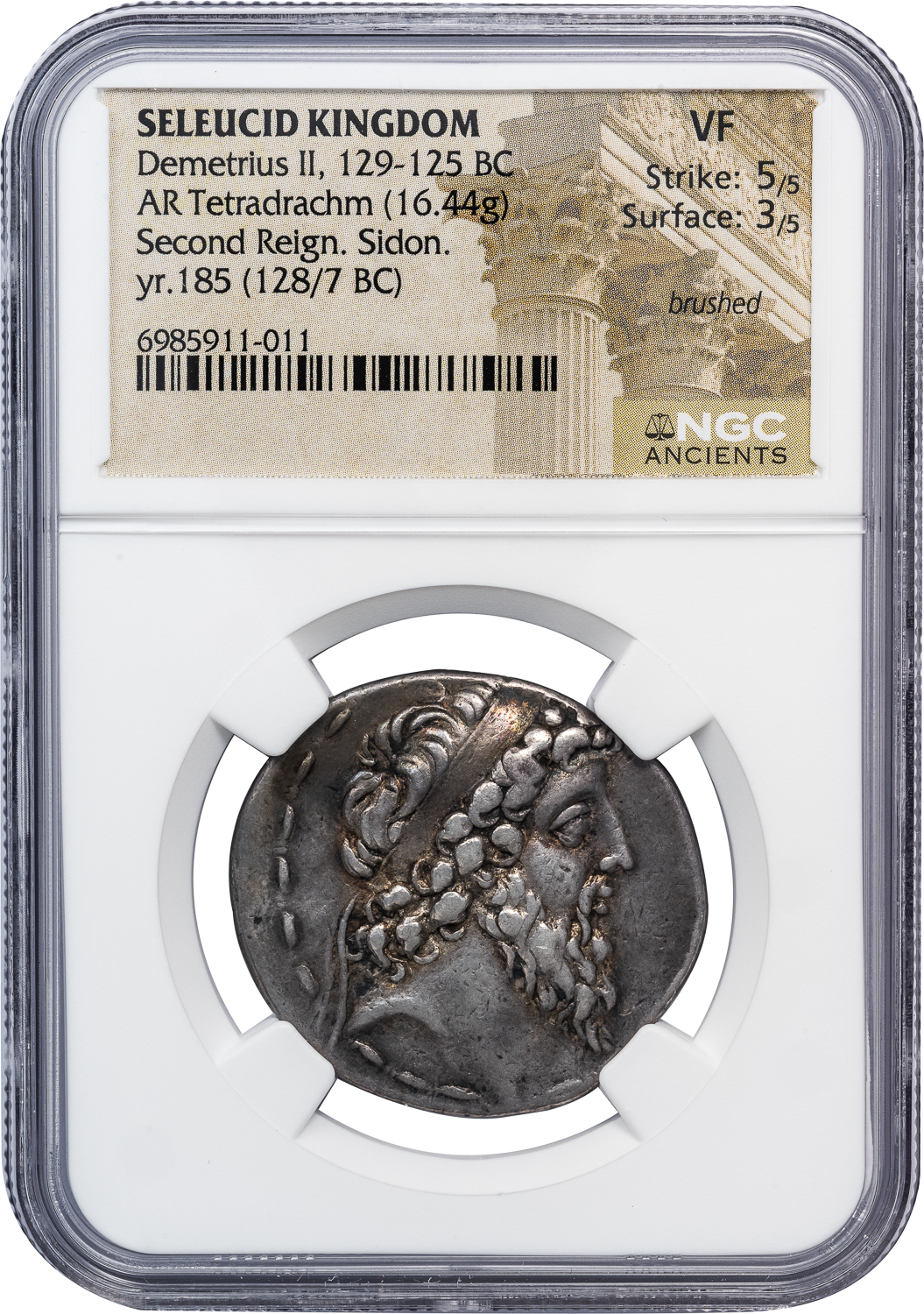
NGC graded VF, Strike 5/5, Surface 3/5, “brushed.”
In 139 BC, Demetrius II mounted a disastrous military campaign to reconquer the regions of Susa, Elymais, and Mesopotamia, which had fallen to the advance of the Parthian king, Mithradates I. During the fighting, he was captured and held as an honored hostage in distant Hyrcania for a decade. When Demetrius’ brother, Antiochus VII Sidetes, embarked on a new and ultimately doomed campaign against the Parthians in 129 BC, Phraates II, the new Parthian king, released Demetrius to create chaos in Antiochus’ rear. Demetrius II briefly reclaimed the Syrian capital, but his coins struck there and at other cities reveal that his captivity had changed him. His hairstyle and beard may reveal the influence of Parthian culture on the restored king, while the stubby horn depicted at his temple hints at megalomania and deification. After all, his personal epithet declared him to be Theos Nikator (“the Victorious God”). As it turned out, the second reign of Demetrius II was more unpopular than his first, and by 126 BC, he found himself defeated by the Egyptian-backed pretender Alexander II Zabinas. When he tried to seek safety with his wife in Ptolemais, she shut the gate against him. He was killed during an attempt to flee from Tyre by sea.