
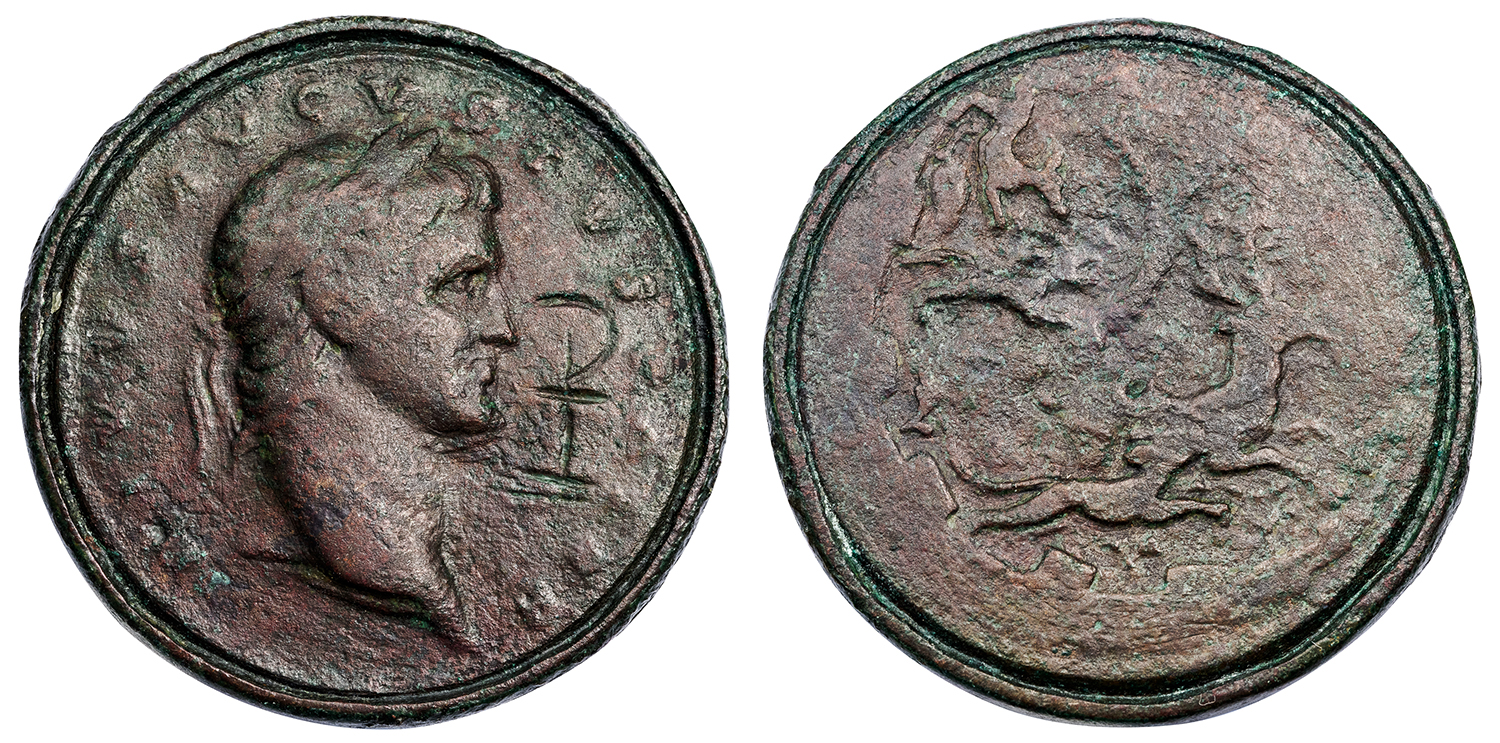


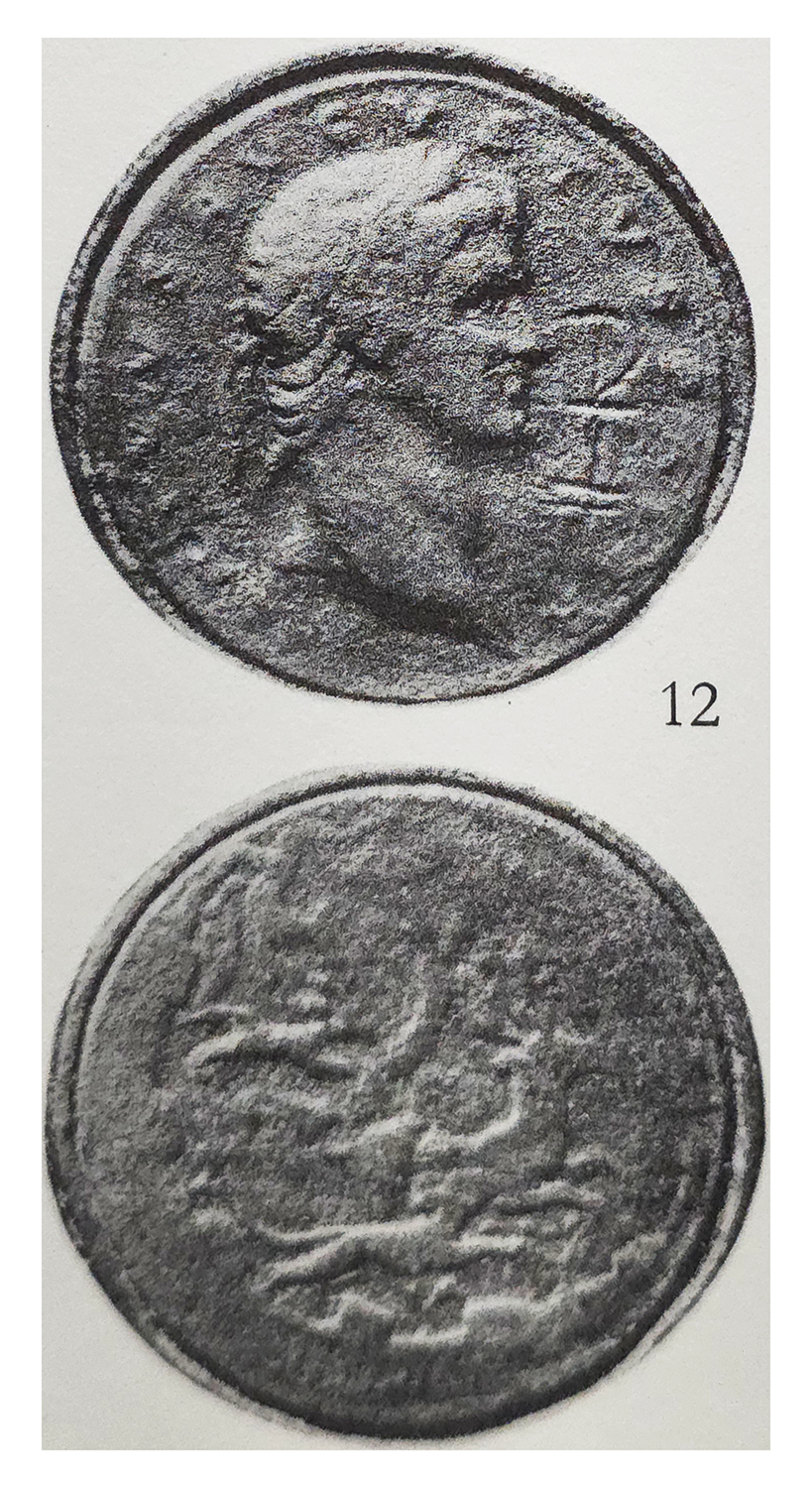
DIVUS AUGUSTUS BRONZE CONTORNIATE – ISSUE DEPICTING A VENATIO HUNT EX MARTINETTI SALE OF 1907 AND PUBLISHED IN ALFOELDI – VF ROMAN IMPERIAL COIN (Inv. 21349)
$6,800.00
21349. CONTORNIATE IN THE NAME OF DIVUS AUGUSTUS. LATE 4th CENTURY AD.
Bronze Contorniate Medallion, 26.98 g., 38 mm.
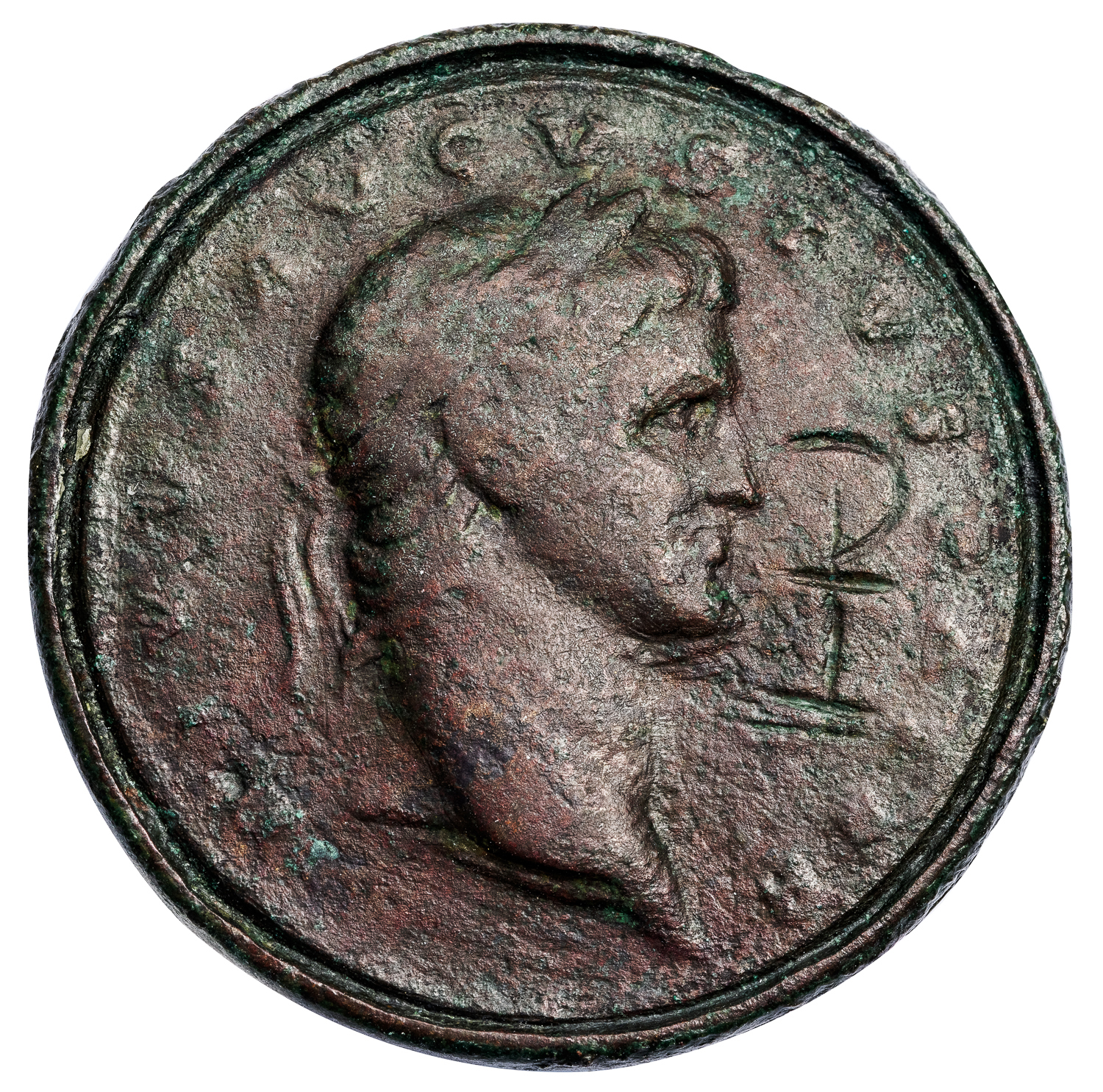
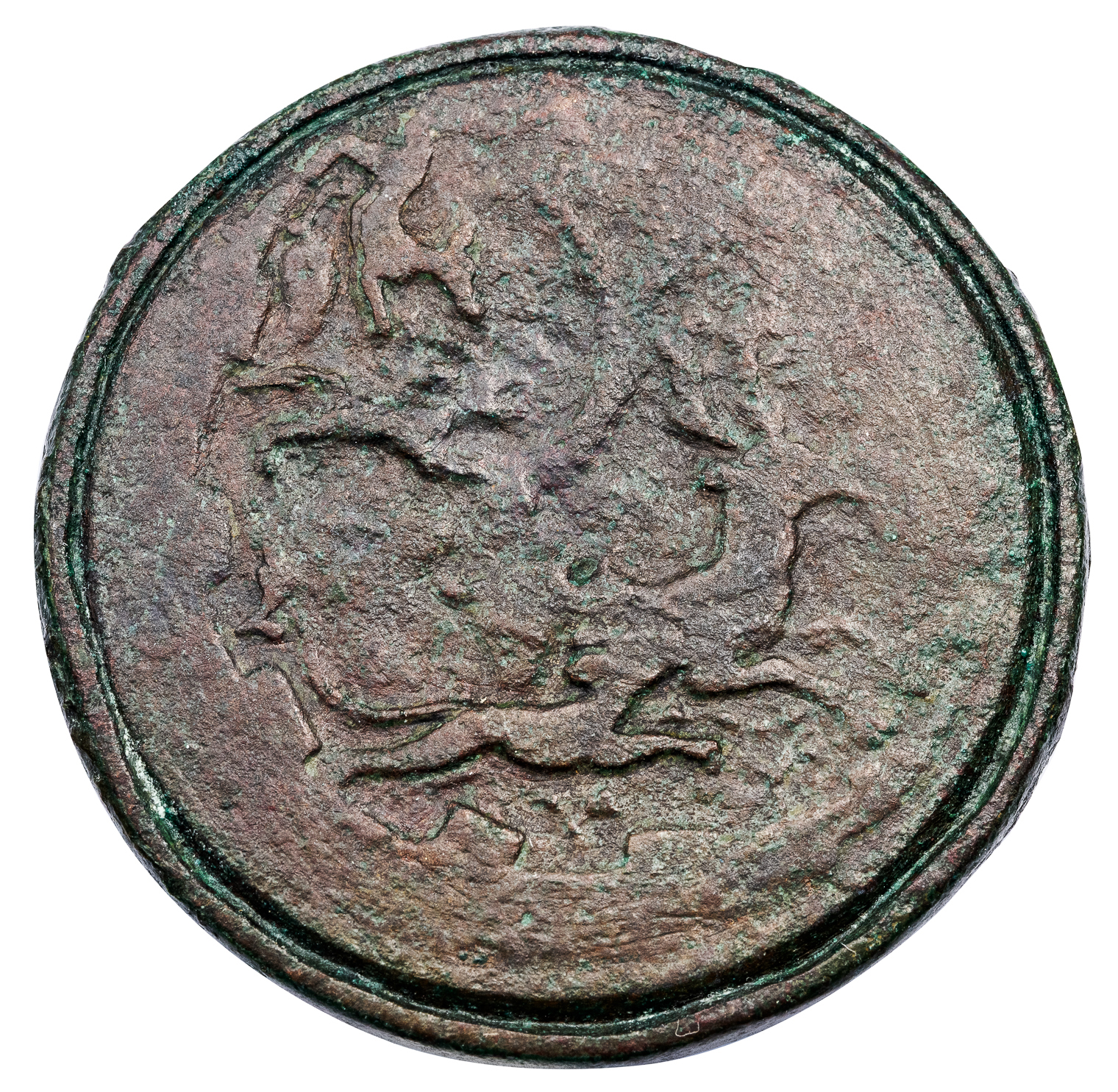
Obv. DIVVS AVGVSTVS PATER, laureate head of Divus Augustus right; PE monogram engraved in right field. Rev. Hunting scene either within or beyond a crenellated wall, where hunting dogs pursue a deer and a hare in a forest.
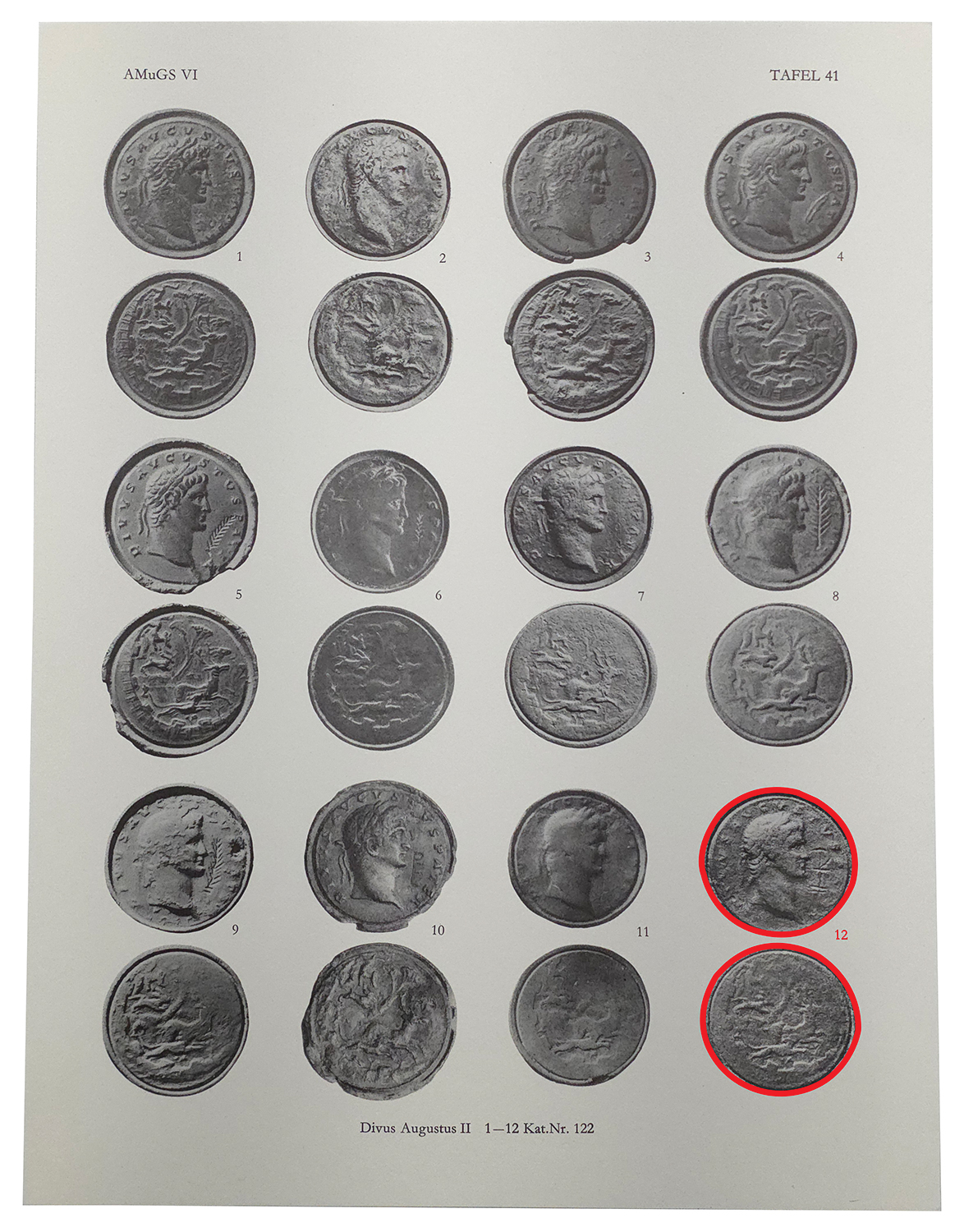
Published: Alföldi & Alföldi, Die Kontorniat–Medallions (1976), 122.12 (this coin, noted as belonging to P. Peck), plate 41.12, part of the type described as “Venatio im Circus.”
Ex Southern Collector, ex Phil Peck (“Morris” Collection) = ex Harding Collection, Hans M. F. Schulman, 10/10/1972, lot 882 = ex Thomas Olive Mabbott Collection (Part Two), Hans M. F. Schulman, 10/27/1969, lot 4848 = ex Francesco Martinetti Collection, Sambon & Canessa, 11/18/1907, lot 3142.
VF, with pleasing reddish-brown patina.
The reverse of this contorniate depicts a venatio, or animal hunt—a popular entertainment in Rome and in the provinces. Two major types of venatio are known: one in which animals (often exotic and dangerous) were let loose in the arena, and killed by trained huntsmen, and another in which animals were killed by other animals. When venationes were held at the Colosseum, they were considered light morning entertainment, to be followed at noon by executions, and then by gladiator fights in the afternoon. Here we see a pack of hounds hunting down a stag, probably intended to dramatize the myth of the huntsman Actaeon, who offended Diana. She punished Actaeon by transforming him into a stag and condemning him to be torn apart by his own hunting dogs. Although the crenelated wall below the action on the reverse type has been taken to indicate that the venatio takes place in the Circus Maximus, it could just as easily be an amphitheater or even the Colosseum. In one famous incident, Domitian, an emperor especially fond of venationes, was present for the hunt of a stag by Molossian hounds (a famous breed of ancient hunting dog) when the stag ran to the emperor’s feet as a suppliant. Upon seeing this, the pursuing hounds suddenly stopped the chase, supposedly out of deference to the divine authority of Domitian. The tree and plants visible inside the crenelated enclosure on this contorniate represent the extensive stage props used to present venationes (and gladiator fights), setting up a mythological or historical scene for the bloodletting.