
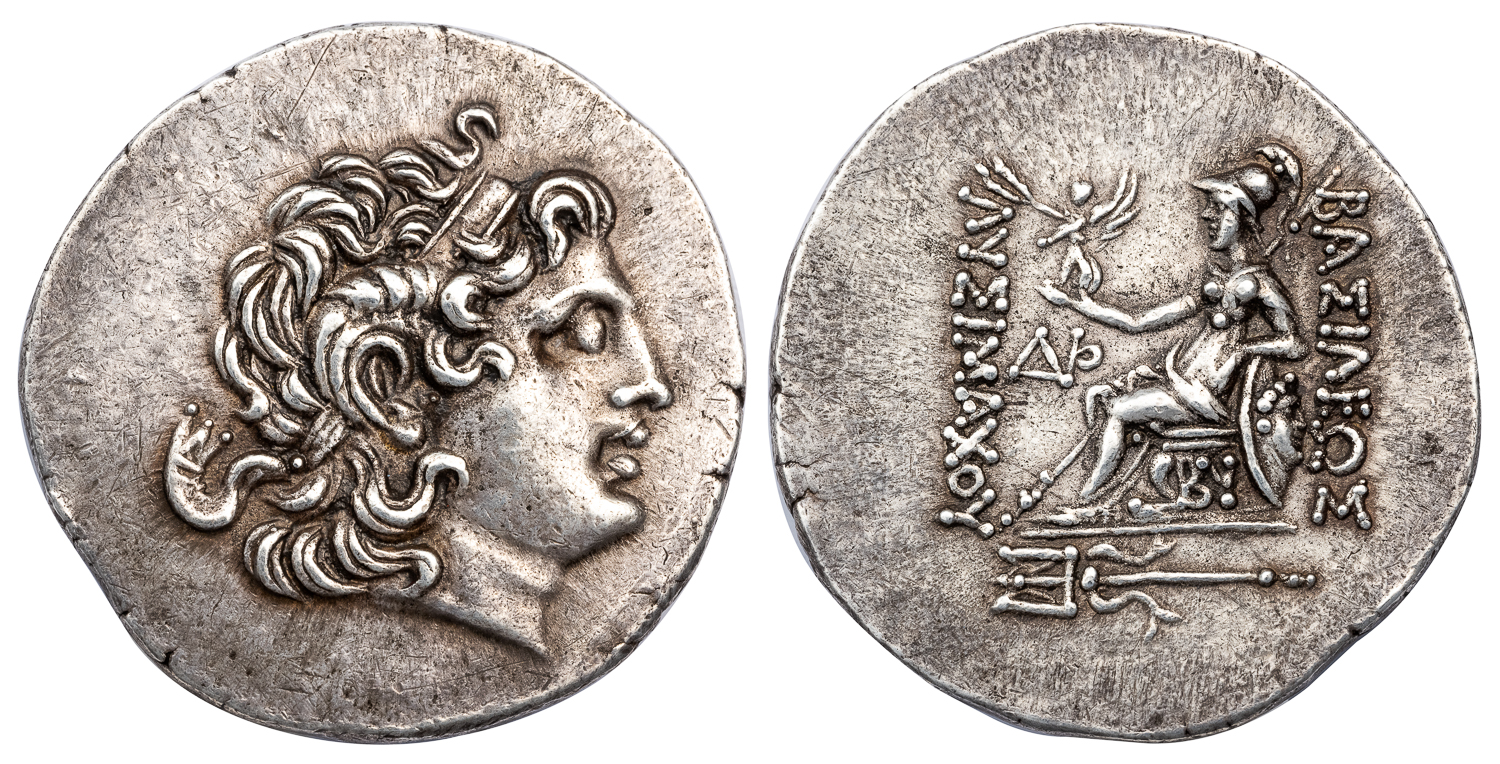

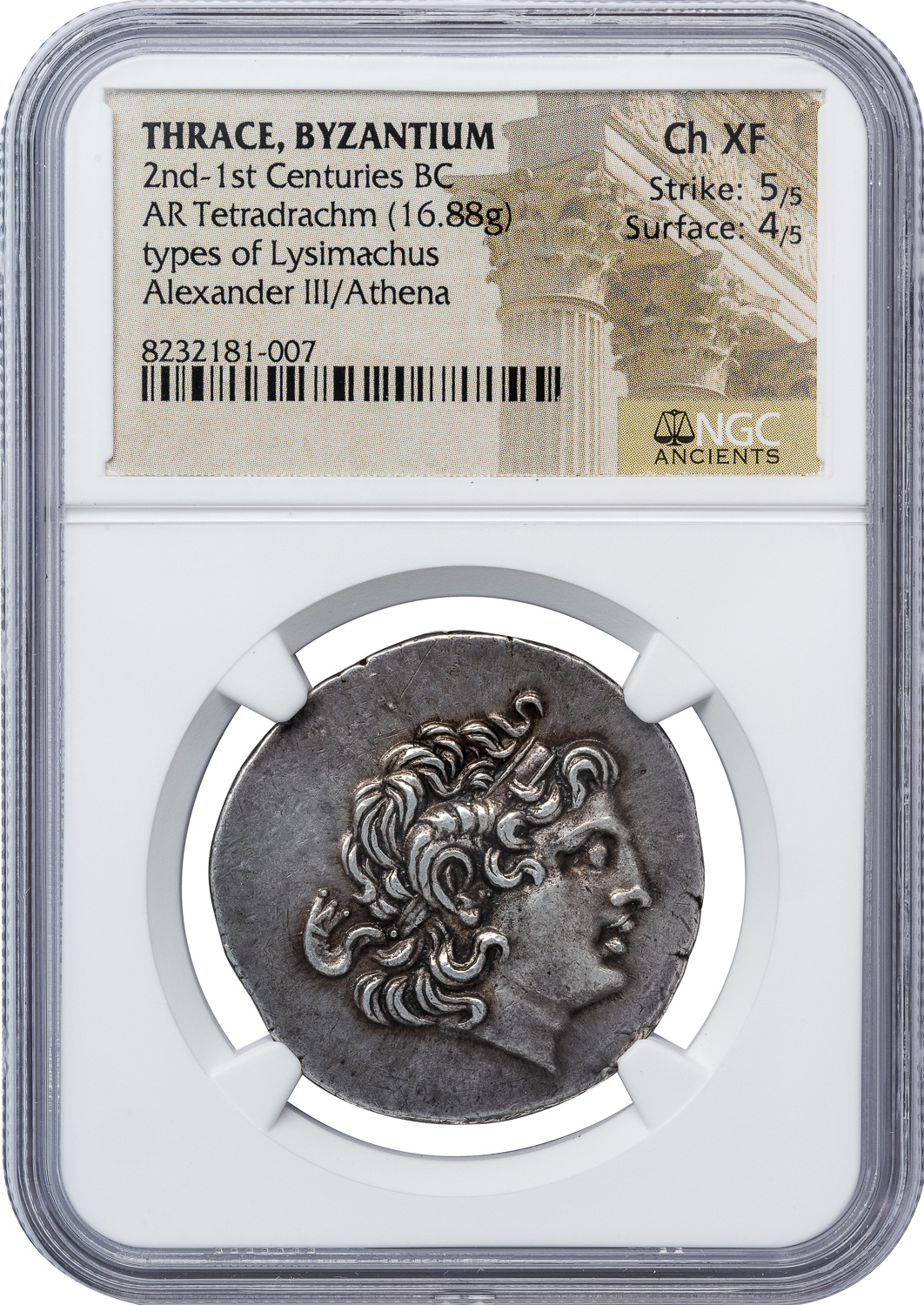
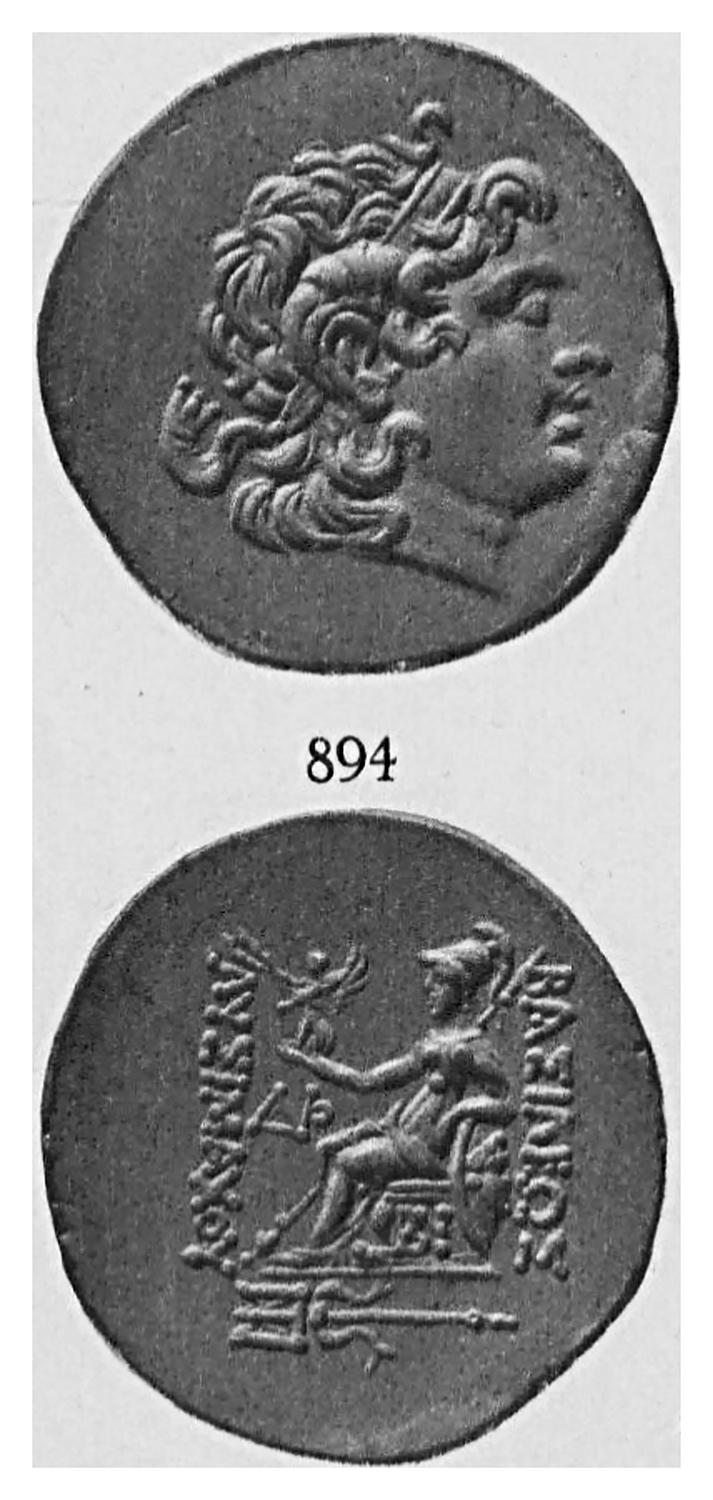
LYSIMACHUS SILVER TETRADRACHM OF BYZANTIUM – EX GUADAN AND CLARENCE BEMENT COLLECTIONS AND PUBLISHED BY MARINESCU AND CALLATAY – CHOICE XF NGC GRADED GREEK THRACE COIN (Inv. 20173)
$4,500.00
20173. KINGDOM OF THRACE. KING LYSIMACHUS, 305-281 BC
Silver Tetradrachm, 16.88 g, 32 mm. Posthumous issue of Byzantium, ca. 130-120 BC.
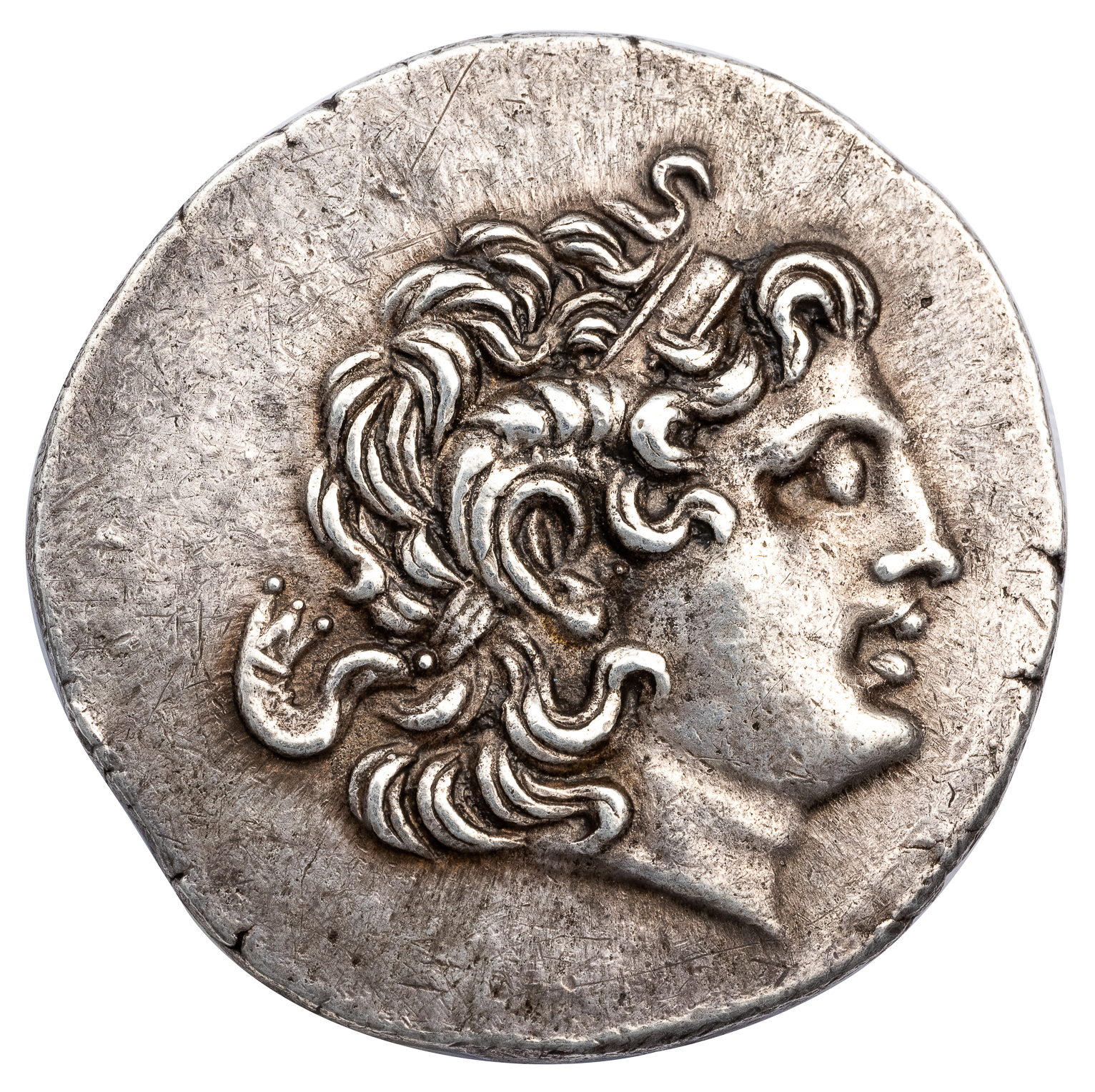
Obv. Head of deified Alexander the Great right, with the horn of Amon. Rev. BAΣIΛEΩΣ ΛΥΣIMAXOΥ, Athena enthroned left, holding a Nike crowning Lysimachus’ name, ΔIO monogram in left field, BY on throne, trident in exergue.
Published: Marinescu, Making and Spending Money along the Bosporus: the Lysimachi Coinages Minted by Byzantium and Chalcedon and their Socio-Cultural Context (Columbia University Dissertation, 1996), Issue 152, no. 536.7 (this coin listed); Callataÿ, Guerres Mithridatiques, p. 121, group 2A, D15/R2.b (this coin listed).
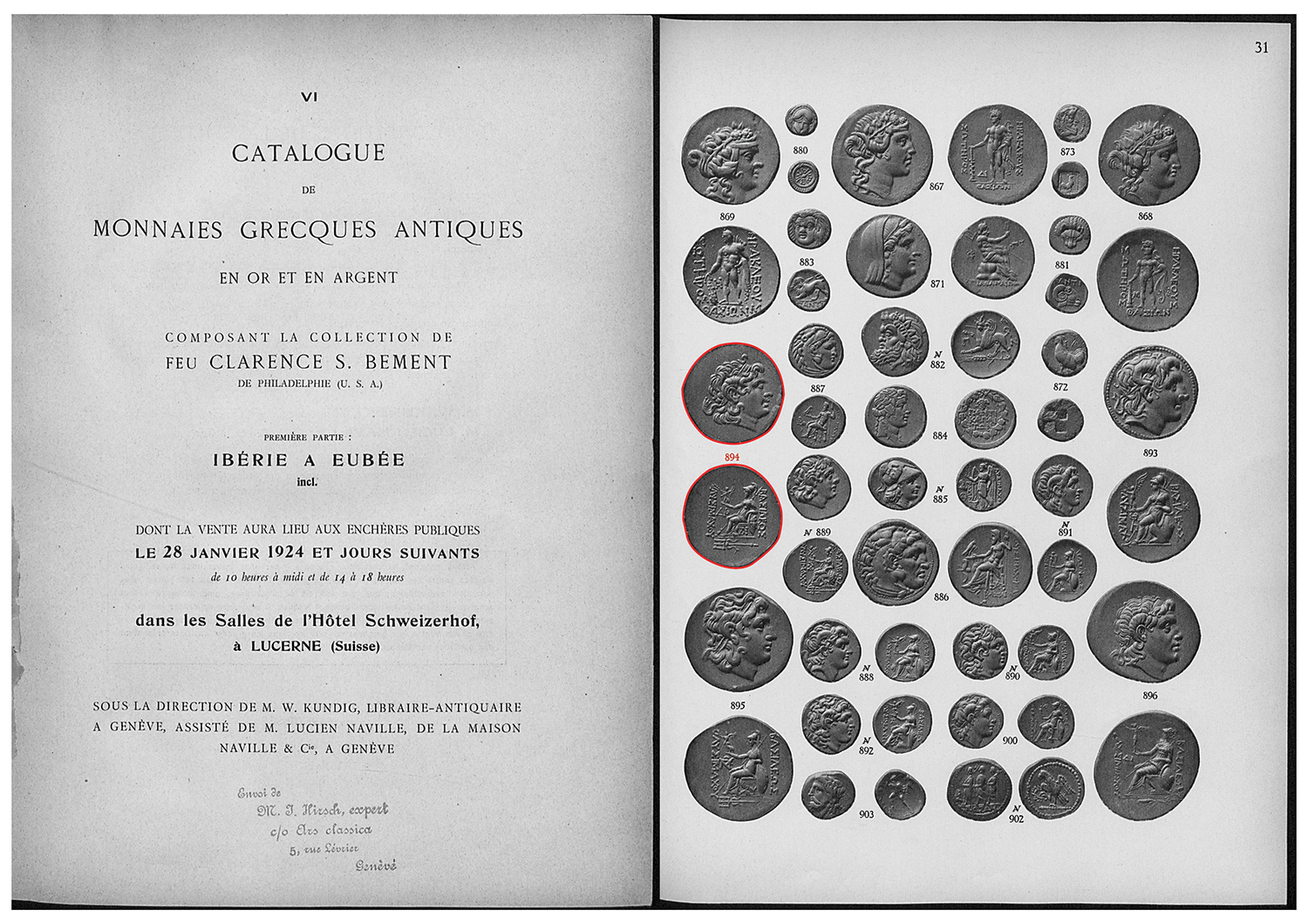
Ex Antonio M. de Guadán Collection (personal inventory number 1871), Jesus Vico 159, 7/20/2021, lot 394 = ex Clarence S. Bement Collection, Naville VI, 1/28/1924, 894.
NGC graded CHOICE XF, Strike 5/5, Surface 4/5.
Antonio M. de Guadán was a well-known author and researcher of Iberian coinage. He published several works on this topic, including Numismática Ibérica e Ibero-Romana in 1969. He was an avid collector, and his holdings included numerous Greek coins which he was hoping to publish one day. The inventory number referenced here is his own, although the manuscript was never published (and Vico was unable to acquire when he sold the collection). This coin also previously belonged to the noted collector Clarence S. Bement of Philadelphia. Hadrien Rambach wrote the following about Bement: “Clarence Bement had taken over his father’s successful business in machine tools. 370 of his Greek coins were published in 1921, and then his collection of Greek coins was sold in 1909 lots by William S. Kündig and Lucien Naville in auctions VI-VII (1924). Naville also sold Bement’s Roman coins: 1770 lots sold in auction VIII. Bement had also collected European and American coins (notably Colonial and large cents, sold by Henry Chapman in 1916 and 1918), prints and books (many of which are now in the Widener Library at Harvard), and minerals: his collection of over 12,500 specimens was purchased by J.P. Morgan for $100,000 to be given to the Museum of Natural History in New York City.”