
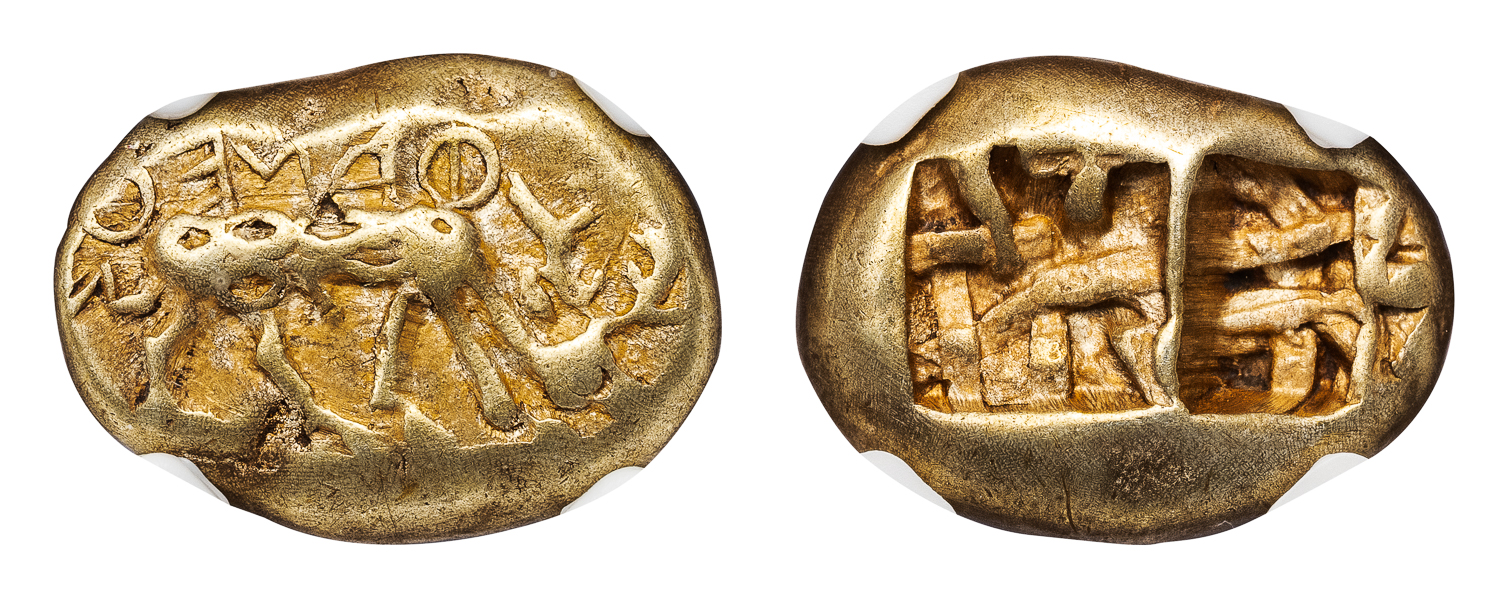
PHANES ELECTRUM TRITE – FIRST GREEK COIN TO NAME AN INDIVIDUAL – NGC CH VF GRADED GREEK IONIA COIN (Inv. 21943)
$78,000.00
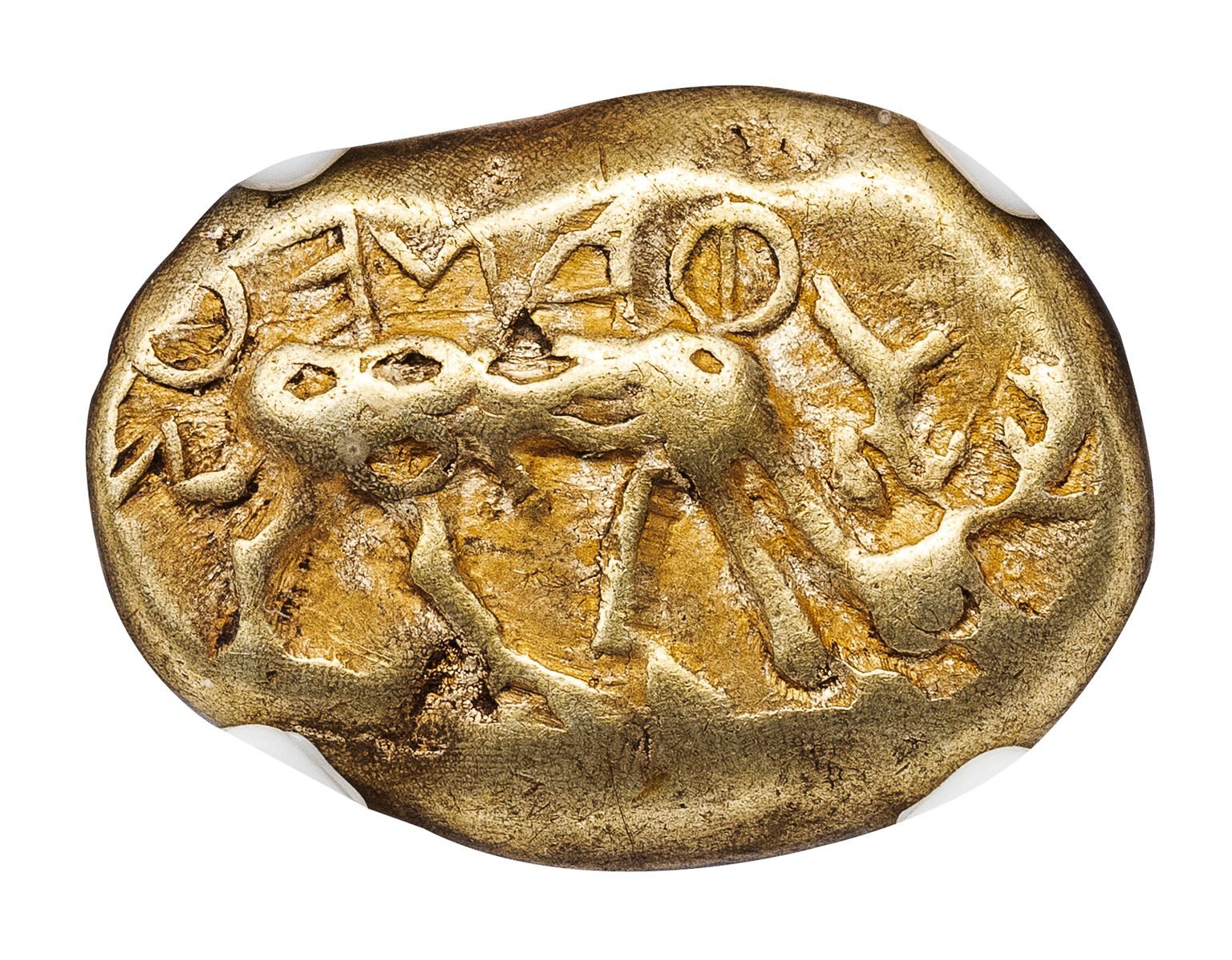
21943. IONIA. EPHESUS. PHANES, ca. 625–600 BC
Electrum Trite (1/3 Stater), 4.67 g, 14 mm.
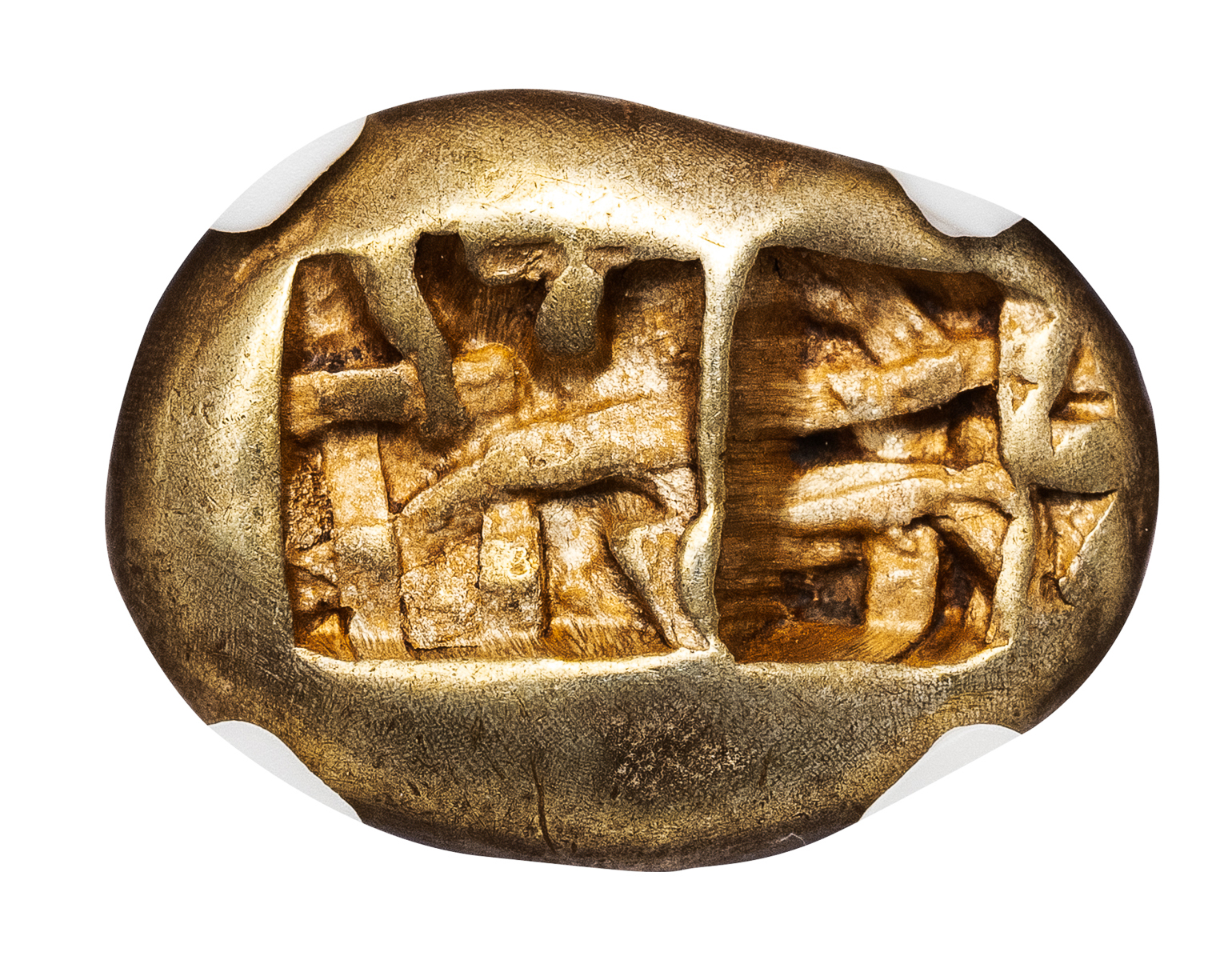
Obv. ΦANEOΣ (retrograde), stag grazing right, with “spots” on its body. Rev. Two incuse squares with linear designs.
Fischer-Bossert, Phanes 6; Weidauer 40; SNG München 14; ACGC 54.
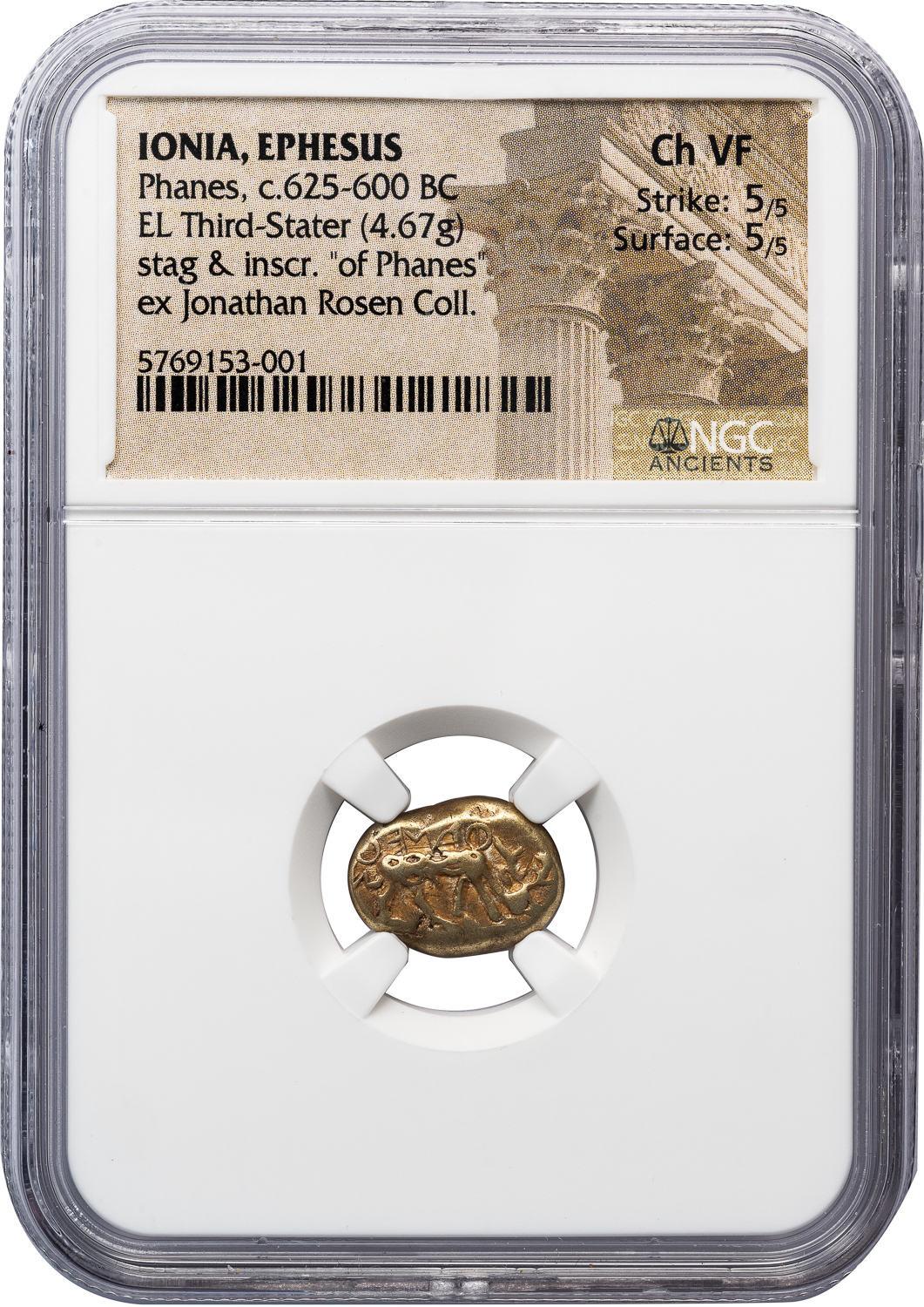
Ex Richmond Collection, acquired from Vilmar Numismatics (inv. 15207) in 5/2020, formerly in the Jonathan Rosen Collection.
NGC CH VF, Strike 5/5, Surface 5/5, Rosen provenance noted on label, very rare and historically important.
This electrum trite belongs to a famous early electrum series that includes staters inscribed with a Greek legend that makes the obverse type speak for itself, saying “I am the badge of Phanes.” On the trite this legend is reduced to “of Phanes.” The Phanes pieces represent the very first time that an individual is named in Greek on a coin. The Lydian kings Gyges (Kukas) Alyattes (Walwet), who are also named on coins, are slightly earlier, but their inscriptions are in a different script, not Greek. Unfortunately, we do not know exactly who Phanes was, although it has sometimes been suggested that he was Phanes of Halicarnassus, a mercenary commander in the service of the Egyptian pharaoh Amasis II and the Persian Great King Cambyses, mentioned by Herodotus. While there is no agreement regarding the identity of the Phanes responsible for the coinage, it is generally believed to have been struck at Ephesus, a city that frequently depicted a kneeling stag on its later coinage. The stag was an animal sacred to Artemis, the Greek goddess of the hunt, who had a famous temple—the Artemision—in the territory of Ephesus.