SYRACUSE SILVER TETRADRACHM – DOUBLE SIGNED ISSUE PUBLISHED BY FISCHER-BOSSERT AND WITH LONG PROVENANCE BACK TO 1913 – GOOD VF GREEK SICILY PROVENANCED AND PUBLISHED COIN (Inv. 21051)
$9,000.00
21051. SICILY. SYRACUSE. Ca. 400–390 BC.
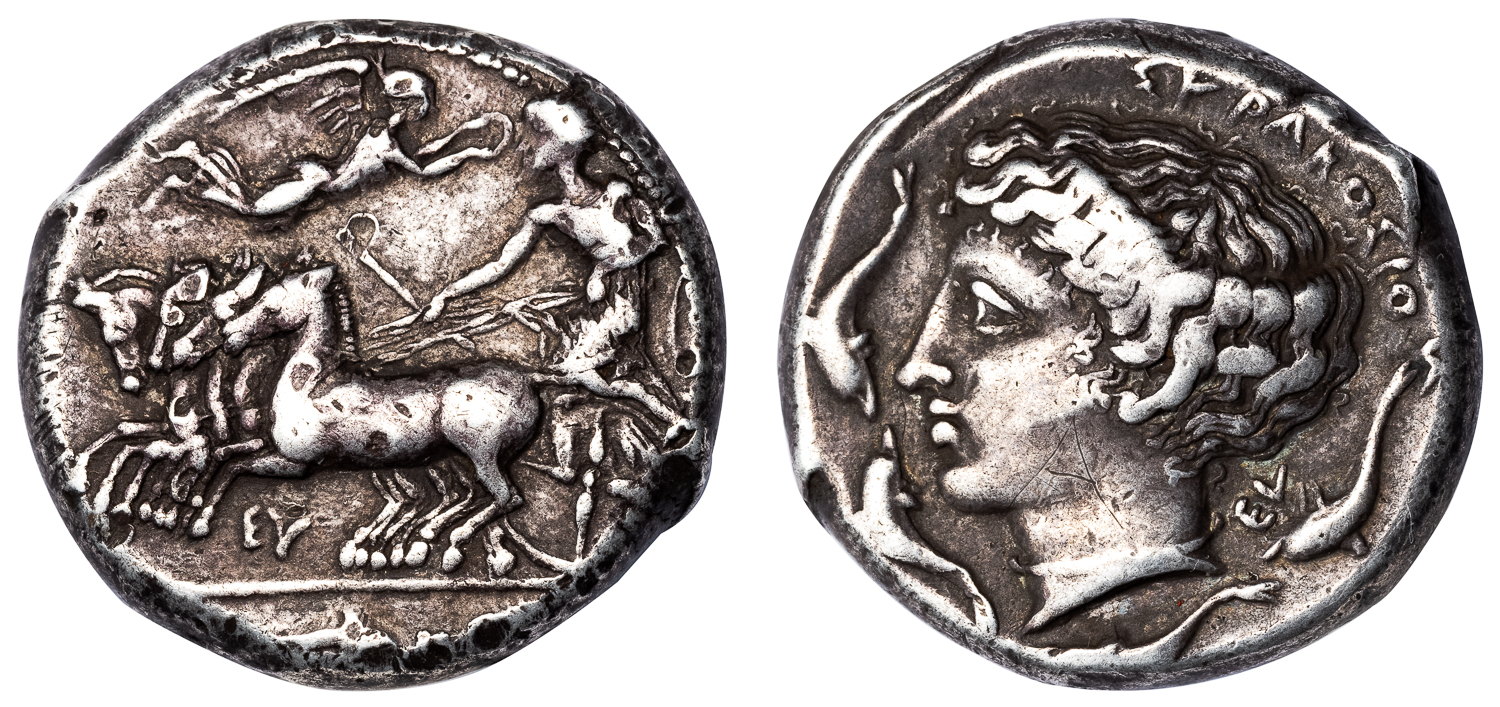
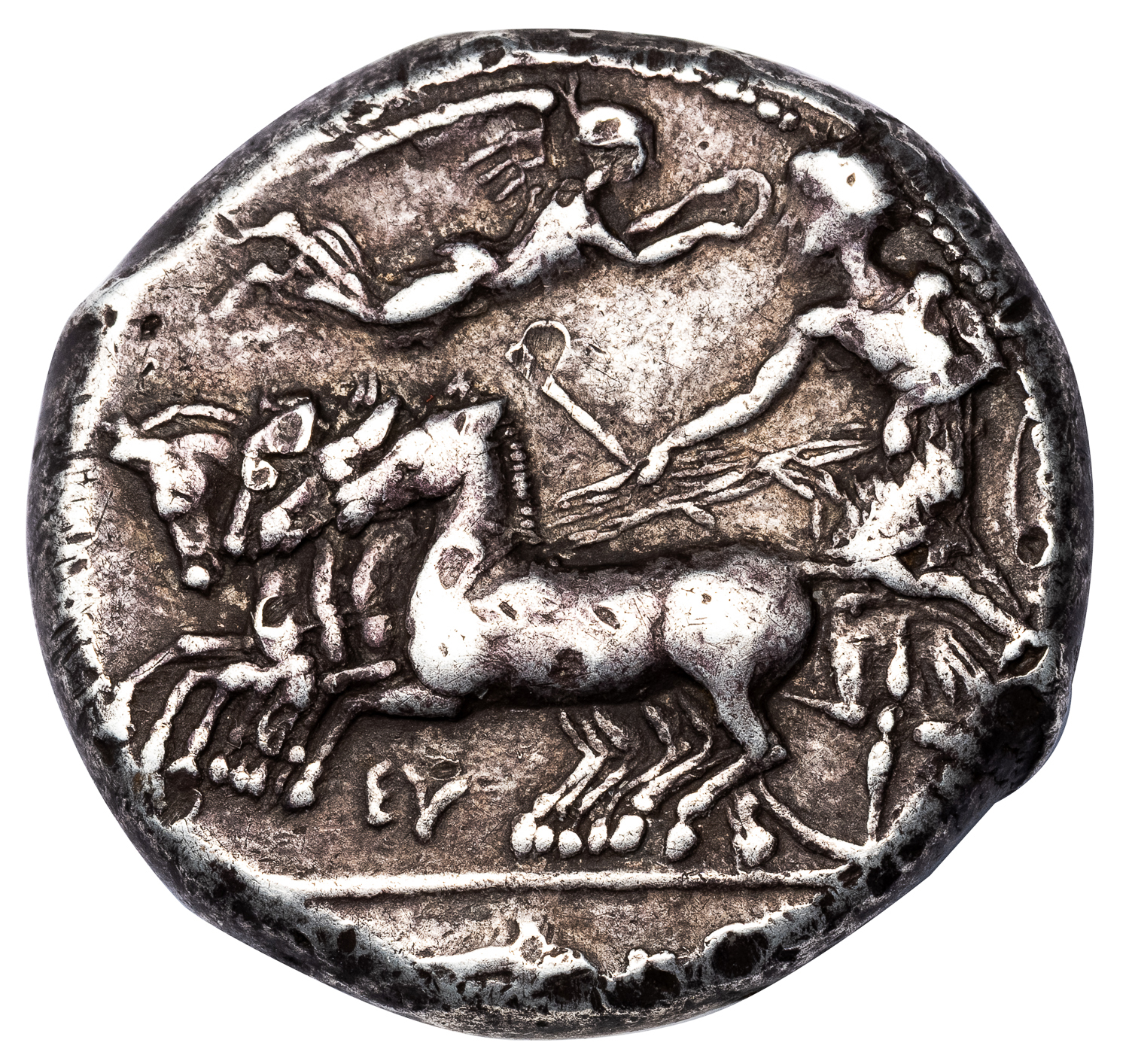
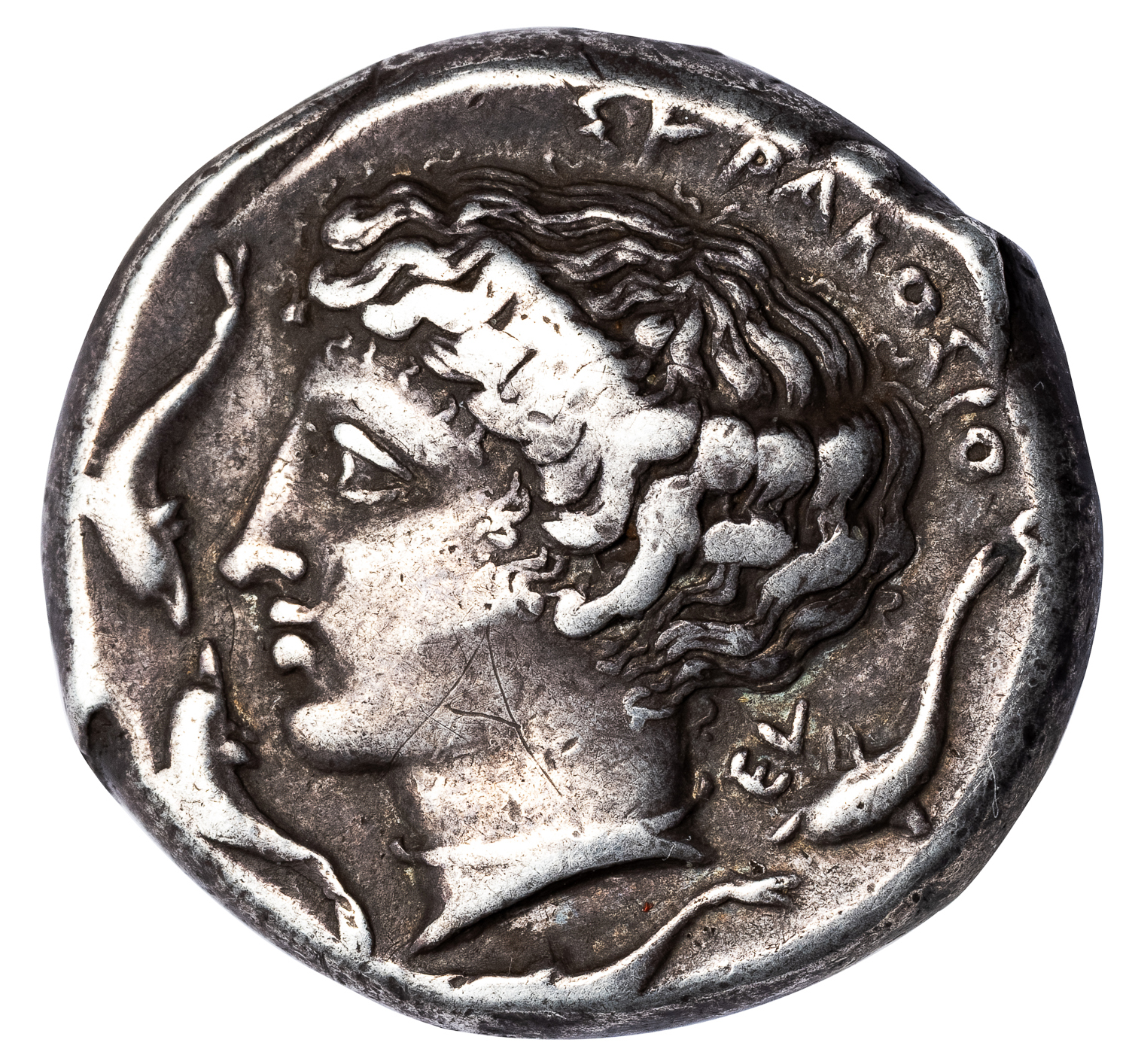
Silver Tetradrachm, 17.25 g, 24 mm. Issue struck from signed dies of Eucleidas and Eumenes (?).
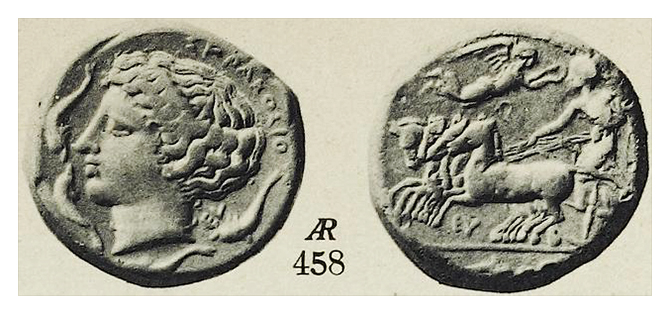
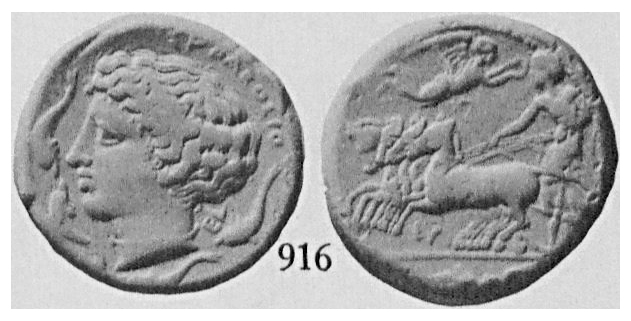
Obv. Charioteer driving quadriga left, Nike flying above right, crowning driver, EY below, pair of confronted dolphins in the exergue. Rev. ΣΥΡΑΚΟΣΙΟΝ, diademed head of Arethusa left, surrounded by four dolphins, EY in lower right field.
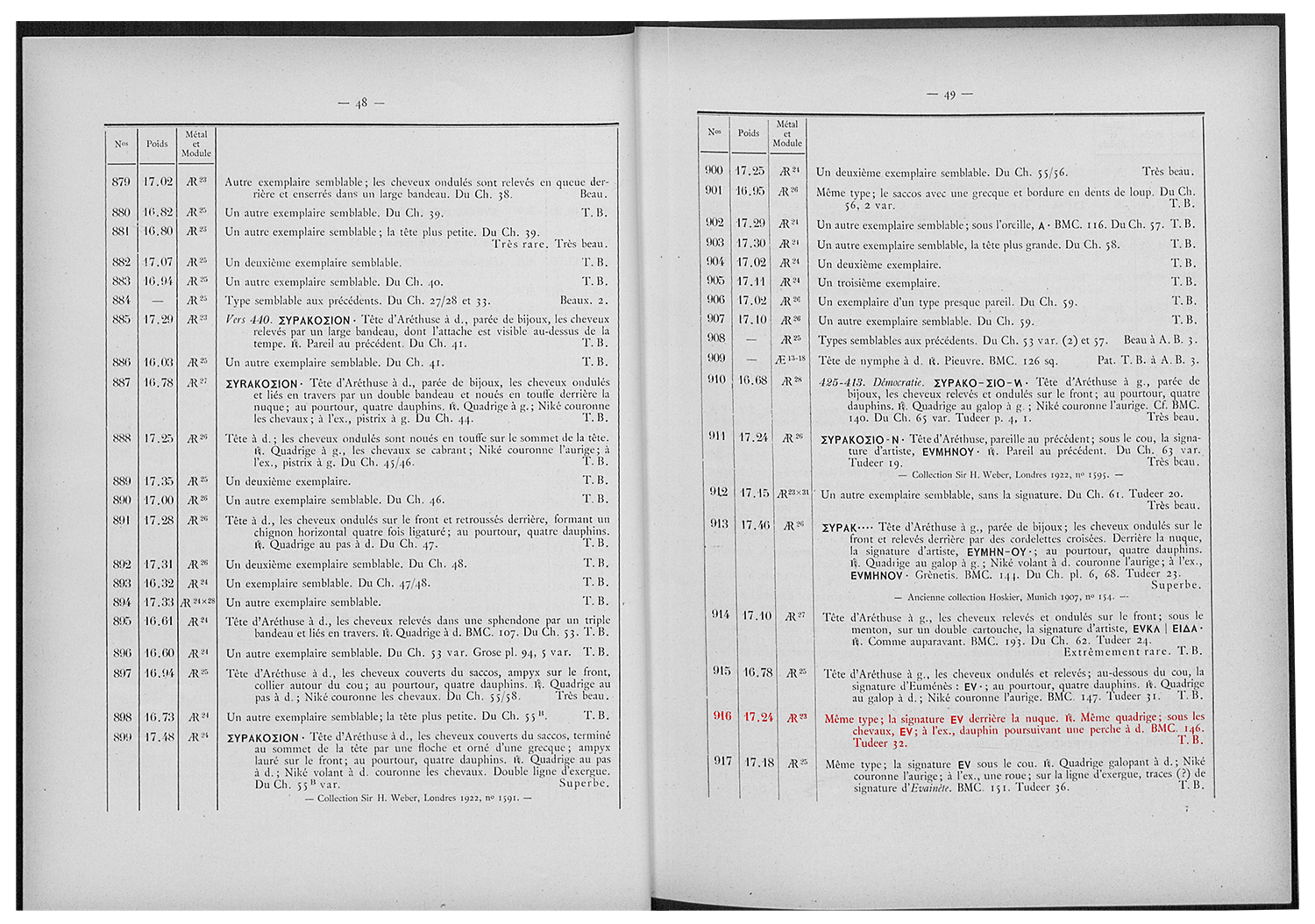
HGC 2, 1328; Tudeer 32.
Published: Fischer–Bossert, Coins, Artists, and Tyrants, 32d (O11/R 22, this coin listed).
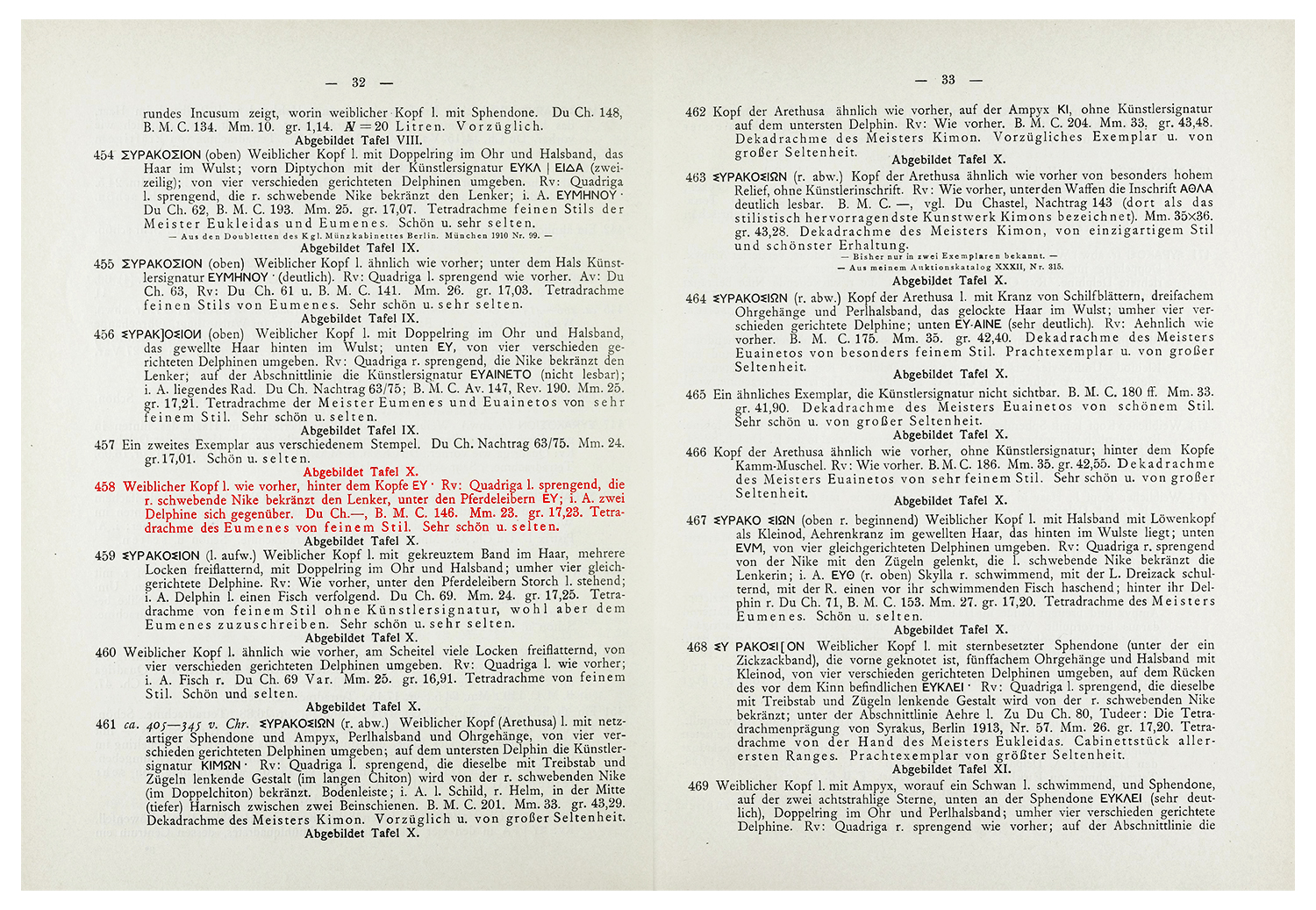
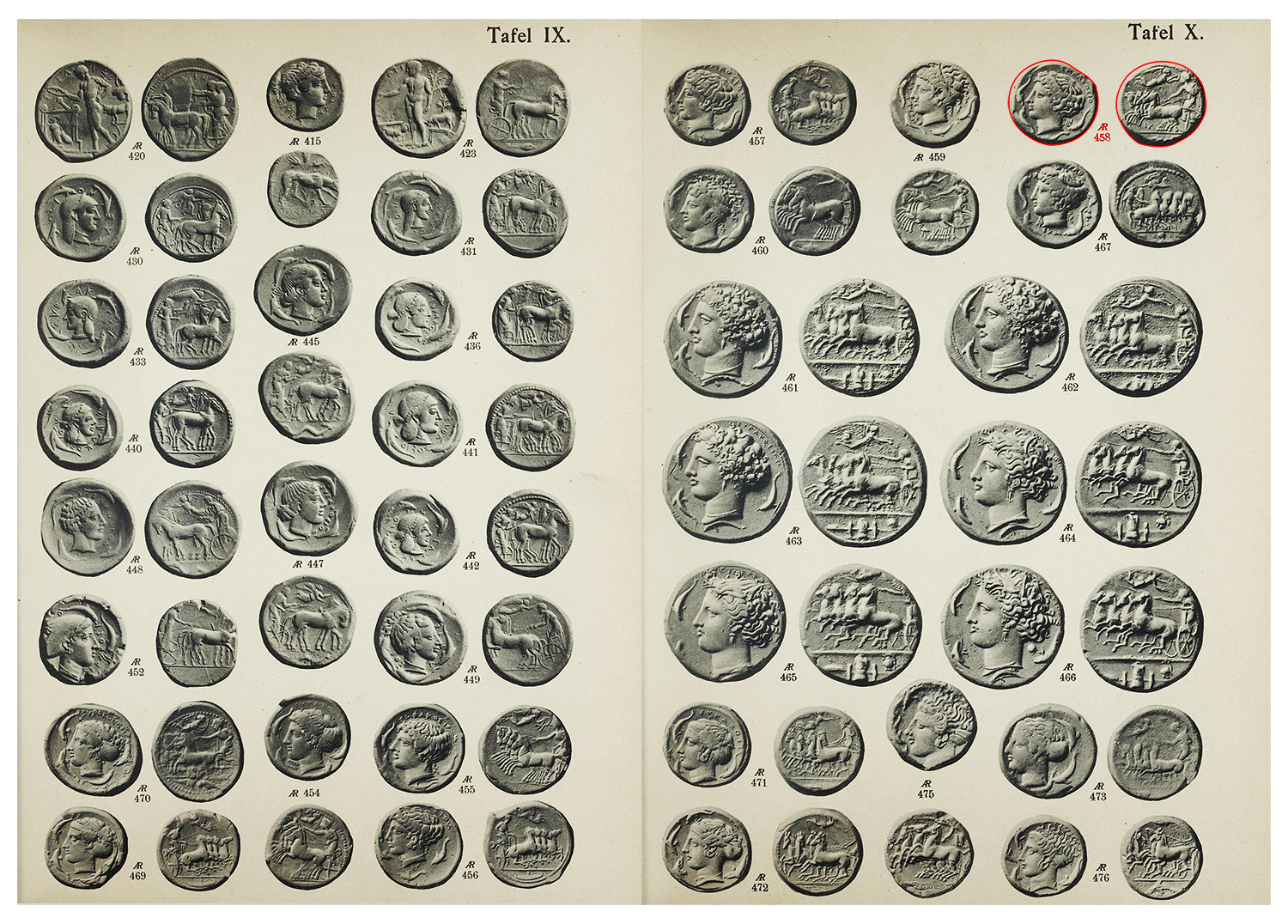
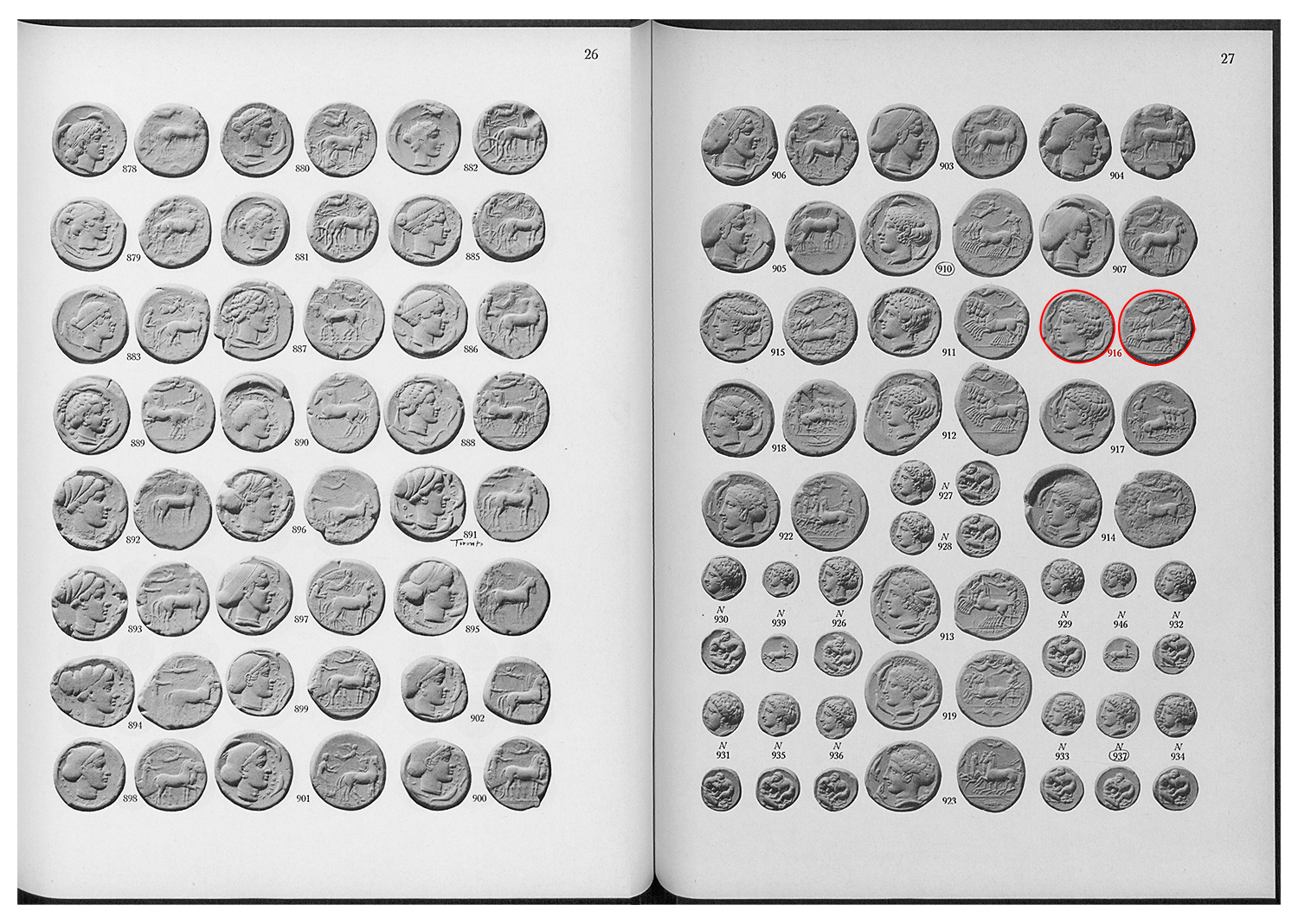
Ex Leu Auction 79, Zürich, 10/31/2000, lot 422 = ex Walter Niggeler, Bank Leu/Münzen und Medaillen, Basel, 12/3/1965, lot 156 = Ex Ars Classica XII (Bissen, Wertheim, Evans and others), 10/18/1926, lot 916 = ex Hirsch XXXIII (Collections of Baron Friedrich von Schennis from Berlin, Dr. B.K. [B. Körner] and a famous English Archaeologist [Sir Arthur J. Evans]), 11/17/1913, lot 458.
Good VF, old cabinet toning, A graffito on cheek.
The golden age of Syracusan numismatic art falls into the decades immediately following the crushing defeat of the Athenian expedition against Syracuse (415–413 BC), spurred by the opportunity for coinage provided by the extensive plunder taken from the Athenians. In this period, Syracusan die engravers experimented with the traditional quadriga and Arethusa types of their city to develop new and vibrant creations, and, filled with pride in their work, frequently signed their dies. In the case of the present tetradrachm, the dies are signed with the abbreviated names of Eucleidas (reverse) and another artist who may be identified with the engraver Eumenes.
In contrast to the earlier issues of Syracuse, which feature a slow quadriga on the obverse, here the chariot is given a more dramatic appearance as it races across the coin. Eumenes has given the scene greater character by eschewing the traditional representation of the horses moving strictly in parallel. Now the horses become individual animals with heads and legs in more varied positions. The artist’s decision to include a dolphin in the exergue is also a nice touch, establishing visual continuity with the reverse and its four dolphins.
The reverse depiction of Arethusa with rolled hair is the work of the celebrated engraver Eucleidas. The upward flow of the nymph’s hair gives the subtle impression that she is under water, prefiguring his master work—a die featuring Arethusa with her hair in a sphendone with the loose locks clearly floating upward as if she were submerged. The four dolphins that swim around Arethusa’s head here further increase the impression that she is in the deep. The one on the lower left seems to show a greater interest in the beautiful nymph than the others, perhaps trying to decide whether he should steal a kiss from her lips.